Why Victor Willis's exit is a small referendum on how politics borrows pop culture
The Village People frontman who made "Y.M.C.A." a presidential campaign staple died at 74. His life is also a quiet case study in who gets to own a song once it becomes a political prop.
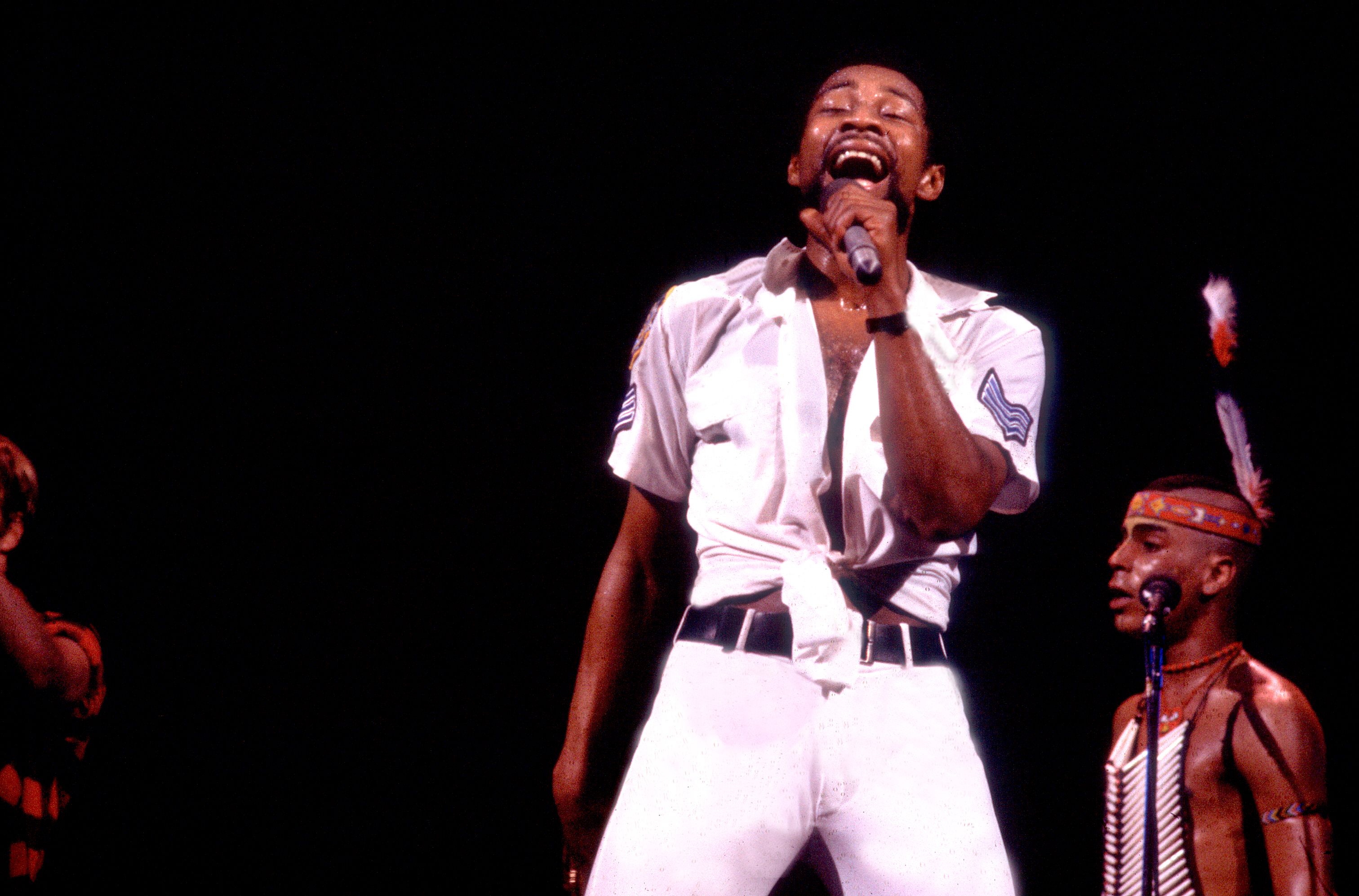
Victor Willis, the singer and co-writer behind "Y.M.C.A.," "In the Navy" and "Macho Man," died on Wednesday at the age of 74, one day before what would have been his seventy-fifth birthday. His death, confirmed by his spouse and reported first by French state broadcaster France 24, prompted an immediate, slightly dissonant kind of attention: tributes from fans who grew up with disco, and a second wave of political-media chatter about the song he spent years trying to wrest back from political stagecraft.
Willis's career was the kind that survives the people who don't listen closely to it. He was the lead vocalist and, importantly, the lyricist of the songs that carried the Village People from a Greenwich Village novelty act to the soundtrack of late-1970s American leisure. He was also, more recently, the author of a long, mostly successful legal campaign to control how those songs could be used — including a public effort, dating back at least to the 2024 U.S. election cycle, to stop Donald Trump from performing "Y.M.C.A." at rallies.
The Village People frontman was a careful steward of his catalogue at exactly the moment when catalogue songs became cheap political scenery. That contradiction is a better way to remember him than the rally-loop gag.
A song that became a campaign
"Y.M.C.A.," released in 1978, has been a Trump campaign staple for years, performed at rallies to a crowd-pleasing singalong that became its own kind of folk ritual. By 2024, Willis's position had hardened. According to reporting compiled by France 24, Willis was "initially against Donald Trump using the song," and his public objection was not a one-line quote — it was a multi-year position expressed through cease-and-desist letters and on-record interviews in which he distinguished between endorsing a candidate and tolerating relentless, uncompensated use of his work.
The political-comedy framing of "Y.M.C.A." — that the now-president and his crowds genuinely did not notice, or pretended not to notice, what Willis was saying about it — is the joke that writes itself. But the joke conceals a real legal fight. Songwriters in the U.S. have specific rights over public performance and synchronization that performers and venues often blur. Willis's quiet insistence on those rights is the kind of musician-versus-machine story that usually ends with the machine winning.
Pop as borrowed capital
It is worth stepping back from the rally footage. Modern campaign politics depends on a vast, mostly uncompensated pipeline of borrowed culture: songs, memes, video clips, sneaker silhouettes, dance moves. The pipeline works because the legal exposure for a campaign using a song is small relative to the earned-media value of mass singalongs. Artists who object are routinely told, in effect, that the publicity is compensation enough.
Willis's situation made that dynamic more legible than most. The Village People's audience is unusually cross-generational, the song is unusually hooky, and the politician who adopted it is unusually visible. The arithmetic — exposure versus control — has been fought over in cease-and-desist correspondence that, by Willis's own telling in the France 24 report, never fully stopped the use.
The structural fact here is that the modern campaign-industrial complex has learned to treat older hits as free infrastructure. There is no countervailing institution with enough leverage to change that. The music industry has, in effect, deputised a small number of well-known rightsholders — and Willis, by virtue of litigation and persistence, was one of them.
Who owns a chorus
There is also a generational component that the obituaries will mostly skip. Disco's commercial peak is now nearly fifty years in the past. The audience that bought those records in 1978 is aging out. The audience that chants "Y.M.C.A." at political rallies is, on average, considerably younger than the song. The cultural object and the constituency that claims it have drifted apart, which is why a singer can spend a decade publicly opposing a use of his own song and the use continues regardless.
Willis, by his own account, eventually stopped objecting and started performing — including a turn at the 2025 presidential inauguration, where his appearance was itself a kind of de facto settlement. That detail, more than the legal filings, captures the political economy of catalogue music in the social-media era: the rightsholder is eventually absorbed into the event he tried to keep his distance from.
What remains uncertain
Several points have not been independently documented in the publicly available reporting on Willis's death and political wrangling. The precise terms of any settlement with the Trump campaign, the status of any still-pending licensing claims, and the long-term disposition of the Village People catalogue were not addressed in the tributes circulated on 1 July 2026. The legal picture is fragmentary; the cultural picture is not.
What is clear is that Willis spent the last years of his career trying to be more than a meme, and that the institutional setup of American political media made that harder than it should have been. A singer who wanted control of his chorus got, instead, a permanent place in someone else's campaign loop. The Village People catalogue will outlive the argument, but the argument is the part worth keeping.
This piece asks whether obituary framings have flattened Willis into a one-joke political prop. In the wire cycle, the headline is his death; the more durable story is who got to keep the chorus.