Tehran rebuffs Centcom: Araghchi ties regional stability to an end of foreign military presence
Tehran’s foreign minister told state outlets that regional calm hinges on the departure of foreign forces, while Iran’s acting defence minister warned of a “decisive response” to any ceasefire breach. The doctrine, carried by Tasnim and Mehr, awaits a Western-wire counterpart that has not yet materi
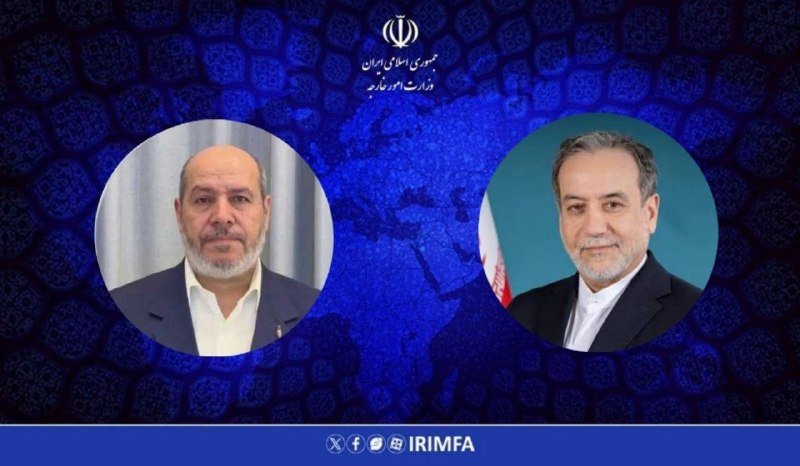
Tehran’s foreign ministry spent the first week of July converting a regional security complaint into a doctrinal declaration. On 2 July 2026, Foreign Minister Abbas Araghchi answered a US Central Command (Centcom) social-media post by tying any talk of regional stability to the withdrawal of American military forces from Iran’s neighbourhood. The exchange, carried in identical wording within seconds by the Iranian state outlets Tasnim and Mehr, marks the clearest formulation yet of a position Tehran has been edging toward for months: that a stable Persian Gulf and a continued American footprint are mutually exclusive propositions.
The Centcom message Araghchi rebuffed was a routine reassurance aimed at regional partners. Iranian state media’s decision to treat it as the occasion for a doctrinal broadside is itself the story. Tasnim and Mehr, both operating inside the Iranian state-aligned media ecosystem, did not bother with the usual diplomatic hedging. They packaged the foreign minister’s response as a categorical condition: regional calm in exchange for the departure of foreign troops. That sequencing matters. It reframes a tactical complaint about a routine Pentagon messaging campaign into a strategic ask about the architecture of US presence in West Asia.
What Araghchi actually said
The line pushed by both outlets was deliberately elevated. Araghchi’s argument runs that Iran does not accept the premise of the Centcom post, because the source of regional instability is not the absence of an American reassurance campaign but the presence of foreign militaries in the neighbourhood. The corollary, never spelled out in those exact words but obvious from the framing, is that American naval assets in the Gulf, airbases in the Gulf Cooperation Council (GCC) states, and the wider infrastructure of US force projection in West Asia are themselves the destabilising variable. Araghchi, a career diplomat who served as chief negotiator in earlier nuclear talks, has spent the last several months positioning himself as the public face of an Iranian foreign policy that speaks in regional rather than bilateral terms.
Two contextual facts sharpen the message. First, the Acting Iranian Defence Minister used the same window to declare that Iran does not trust the United States and will give a “decisive response” to any violation of the Iran–US ceasefire memorandum of understanding, as carried by Press TV on 4 July. The convergence of the two statements is not coincidental: a foreign-minister framing that names the end-state (departure of foreign forces) and a defence-minister framing that warns against any breach of an interim arrangement amount to a layered doctrine. Diplomacy sets the horizon; the military enforces the floor.
Second, the timing. The statements landed during a week of mass mourning inside Iran for the late Supreme Leader Ali Khamenei. Araghchi told Middle East Eye that representatives from more than 70 countries attended commemorations for the former leader. The BBC’s world service, citing authorities, said up to 20 million people were expected to attend ceremonies across Iran and Iraq over the coming days. Russian former president Dmitry Medvedev, in remarks circulated after attending the farewell, called the Strait of Hormuz a weapon for Iran “no less powerful than nuclear weapons,” a phrase he also described in his own framing as “thermonuclear.” Read together, the farewell atmosphere has provided the political backdrop for the most expansive articulation of the foreign-minister doctrine in months.
The Western wire gap
The asymmetry in sourcing is worth naming. The substantive claim that Araghchi rebuffed a Centcom message and tied regional stability to an end of foreign military presence is documented in two Iranian state-aligned outlets, Tasnim and Mehr, whose Telegram channels posted near-identical text within seconds. Western wire coverage of the underlying Centcom message is not currently visible on the public record in a form the Monexus desk can cite. That gap is not filled in by inference here: the doctrinal content stands on Iranian sources, and the specific Centcom post Araghchi answered has not been independently verified in English-language wire text as of 2 July. Readers should hold the formulation as the official Iranian position, not as a confirmed bilateral exchange.
That caveat is not just procedural. It changes the analytical weight one can place on the statement. A doctrinal line carried exclusively by Iranian state media, however tightly worded, can be a trial balloon, a negotiating posture, or an internal audience signal dressed up for foreign consumption. Without a Western-wire confirmation of the underlying Centcom text, the episode reads more as a Tehran-initiated policy statement that used a US military channel as a pretext than as a back-and-forth in a genuine bilateral exchange. The framing of the headline, which uses the verb “rebuffs,” is therefore faithful to the Iranian accounts but not equivalent to a confirmed exchange of equal-weight messages.
A regional, not bilateral, doctrine
The substance of the position is older than the July messaging. Tehran has spent much of the post-ceasefire period arguing that the security architecture of the Gulf should be organised without extra-regional powers. Araghchi’s July statement gives that argument a sharper edge by tying it explicitly to the American footprint rather than to a generic call for “dialogue among regional states.” The distinction matters because the latter formulation, favoured by China and by several GCC foreign ministries, leaves room for continued US basing under a regional umbrella. Araghchi’s formulation does not. It treats the presence of foreign forces as the variable to be removed, not the constant to be managed.
That framing also explains why the Iranian message was paired with a defence-minister warning about any MoU violation. The combination is a posture suited to a moment when Tehran wants to remind Washington that any tactical re-engagement happens against a backdrop of strategic non-recognition. Iran is willing to police the ceasefire line, the argument runs, but the ceasefire is not the goal. The goal, as the foreign minister phrases it, is the eventual end of foreign military presence in the region. Acting Defence Minister statements about a “decisive response” then become the credible commitment device behind the foreign-minister horizon.
The regional read
For the GCC capitals, the formulation lands in an already crowded week. A Reuters thread the same day reported on Gulf states rethinking priorities, with defence and pipelines increasingly favoured over prestige spending. The Syrian transitional President Ahmed al-Sharaa, on 4 July, used his congratulatory message to Trump on the 250th anniversary of US independence to make a separate point about the durability of bilateral ties. Both items suggest that the regional order the Iranian statement presumes to describe is itself under renegotiation. A doctrine that names the departure of foreign forces as the price of stability assumes a Gulf that is willing to pay that price. The available wire evidence does not show it lining up to do so.
Iraq, host to substantial US forces and to the political infrastructure of several Iran-aligned militias, sits at the intersection. Tasnim’s English channel on 4 July published what it framed as an exclusive conversation with the general secretary of Iraq’s Seyyed al-Shohada battalions, run during the farewell ceremonies. The placement is symbolic: an Iraqi armed faction speaking through an Iranian outlet during a moment of national mourning in Iran is itself a kind of doctrinal display, a reminder that the network of aligned forces Tehran references when it talks about “regional” actors reaches well beyond Iran’s borders.
What to watch
The next test of the doctrine is whether it survives contact with the operating ceasefire. Acting Defence Minister warnings about a “decisive response” to any MoU violation set a high bar for incidents at sea, in Iraq, or along any of the corridors where Iranian and American forces continue to operate within visual range of each other. The foreign-minister framing, by contrast, sets a long horizon: the end of foreign military presence is not a negotiable endpoint, in this telling, but a condition for the eventual normalcy of the region. The two timelines do not need to converge for the doctrine to function as messaging. They need only to be plausible inside the Iranian domestic conversation, which the farewell atmosphere has made unusually receptive.
Two practical questions follow. The first is whether any Western wire outlet will publish the underlying Centcom text and confirm the specific exchange Araghchi claims to be answering. The second is whether the GCC, which has spent the same week recalibrating its own defence and energy spending priorities, will publicly endorse, reject, or simply absorb the Iranian formulation. The doctrine is now on the record. Whether it becomes a regional negotiating position or remains a Tehran-internal creed depends on those answers, not on the next Iranian press release.
Sources: Tasnim News English (Telegram, t.me/tasnimnews_en); Mehr News (Telegram, t.me/mehrnews); Jahan-e Tasnim (Telegram, t.me/JahanTasnim); Press TV (Telegram); Middle East Eye live coverage (middleeasteye.net); BBC World (Telegram, t.me/BBCWorldoffl); Reuters (x.com/reuters); Fars News International (Telegram, t.me/FarsNewsInt); Rybar (Telegram, t.me/rybar_in_english); Indian Express (Telegram, t.me/IndianExpress); OSINTdefender (Telegram, t.me/osintlive); Bellum Acta News (Telegram, t.me/BellumActaNews).
Desk note: Monexus has read this exchange primarily through two Iranian state-aligned outlets, Tasnim and Mehr, which carried identical wording within seconds of one another. Western-wire confirmation of the underlying Centcom message is not currently visible to the desk and is acknowledged in the piece rather than filled in by inference.