Zelensky visits Kyiv strike sites, says Russia is 'losing this war'
Zelensky toured Kyiv districts still scarred by Russian missile strikes and declared that Russia is 'losing this war,' using the visit as a deliberate pushback against the war-weariness frame gaining ground in some Western capitals.
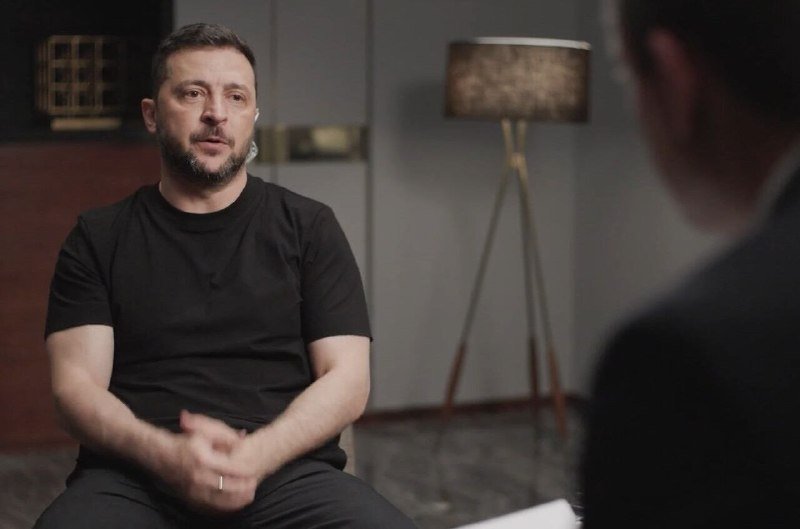
Volodymyr Zelensky stood in a Kyiv district where Russian missile debris still blackened the facades of ordinary apartment blocks and told reporters that Russia is "losing this war." The visit on 2 July, photographed at multiple strike sites in the capital, was organised as much as a political signal as a damage assessment: Ukraine's president in a ruined courtyard, the wreckage of someone else's shelling behind him, the message unmistakable. Local emergency services were still working the surrounding districts as he spoke.
The political wager behind the image is straightforward and worth taking seriously. Zelensky is staking his public case for continued Western support on the proposition that the war is moving in Ukraine's direction, not stalling, and that Russia's bombing campaign is the symptom of a position eroding rather than a campaign that can dictate terms. It is a more confident reading than the one carried in some Western commentary, which has begun treating the conflict as a grinding attritional stalemate and Western aid as fatigue-driven charity. Ukraine's leadership is signalling the opposite: that the fight is being prosecuted with intent, that the politics are still being shaped in Kyiv rather than negotiated around it.
The Kyiv strike, in the round
The visit came after another punishing night of Russian strikes on Ukrainian cities. TSN and other Ukrainian outlets carried footage of damaged residential buildings across multiple districts of the capital, with emergency crews working through the morning. The strike pattern is now familiar: long-range missile and drone attacks aimed at urban infrastructure and residential areas, calibrated to impose continuous civilian cost while remaining below the threshold of a single headline-grabbing atrocity. Zelensky's decision to inspect sites personally rather than brief from the presidential compound is a deliberate rebuttal to that strategy, putting human consequence in the foreground.
Reporting from Kyiv Post and Ukrainian regional authorities named Zaporizhzhia as another city hit in the same wave, where a residential building lost an exterior wall from the first to the fifth floor. At least three people, including a child, were reported among the casualties. Russian-aligned channels described the country's targeting differently. The Rybar digest for early July framed Russian operations as strikes on "enemy rear and military infrastructure" combined with offensive operations on "several sectors of the front," the standard Russian framing that locates civilians on the wrong side of a military perimeter. Western-wire reporting treated the Kyiv and Zaporizhzhia damage as the visible outcome of an active bombardment campaign, with civilians as the primary documented casualty.
What the Russian-aligned record actually says
The counter-claim matters because it is the picture Russian state-adjacent media wants carried into Western conversations. Read in full, the Rybar channels and the Russian-language chronicle of the "special military operation" describe a campaign rolling forward on multiple axes, with strikes on logistics nodes and Ukrainian rear areas presented as supporting offensive momentum. There is no mention of a degrading strategic position. The frame is one of patient escalation, with the implication that pressure will compound.
Ukrainian reporting carries the inverse. Ukrainian outlets including TSN and Kyiv Post have tracked a separate kinetic story: a sustained Ukrainian strike campaign against Russian logistics in occupied territory, including the energy grid of occupied Crimea, with commercially available satellite imagery showing a marked reduction in nighttime lighting over a one-year comparison. That record, taken together with Russian acknowledgement of continued high weapons expenditure and continued recruitment pressure, supports a reading under which Russia's strike tempo is increasingly a substitute for battlefield effect it can no longer generate in the same volume it once did. The contradiction is not evidence both sides are right; it is a contest of interpretation in which the side that is actually being struck on its own territory has the more legible claim.
Political will, not fatigue
The Western coverage that Zelensky's visit implicitly pushes against has increasingly leaned on a war-weariness frame. The structural story in those accounts is a familiar one: Western publics tiring, aid packages narrowing, electoral calendars producing leaders with weaker mandates for the kind of long-horizon support the war requires. Zelensky's positioning in Kyiv is the contrary argument: that the war's direction still warrants the kind of support Ukraine has received, that the Ukrainian population is still engaged in the fight on its own terms, and that the political clock is worth paying attention to in Kyiv, not in donor capitals.
That signal travels through multiple channels. Reporting flagged on the President\u2019s office feed points to ongoing leadership-level contact between Kyiv and Washington, alongside parallel contact between Moscow and Washington, with the diplomatic traffic around security forums reframed in Ukrainian-language coverage as confirmation that the war continues to be treated as a live strategic question rather than a managed confrontation. The point is less about any single phone call than about the volume and frequency of contact: sustained senior engagement tends to correlate with sides expecting the strategic picture to move, not with sides hunkering down for a frozen line.
The deeper read
Zelensky's "losing this war" claim is not a tactical boast. It is a thesis about the kind of war being fought. The proposition is that Russia is losing the war it actually chose to start, a multi-year campaign of territorial conquest and political subjugation of a large neighbour, rather than the war Western commentary often slips into describing, which is a slow, local, geographically confined conflict manageable by sanctions and arms deliveries in measured doses. The bomb damage in Kyiv, Zaporizhzhia and elsewhere is real and severe; the Ukrainian strike campaign against Russian rear areas is also real and documented; the question of who is closer to their declared political objective is the one the next phase of the war will answer.
Ukrainian domestic politics is partly driving the framing. Inside Ukraine, the politics of the war have become more openly contested, with arguments about mobilisation, about the cost of continued fighting, and about whether the available terms ever converge on a settlement compatible with declared Ukrainian red lines. Zelensky's public positioning in front of the wreckage is intended to set the terms of that domestic argument: continued fight, Western support, no negotiated settlement that ratifies Russian territorial gains. He is staking the rest of his political capital on the proposition that the line still bends in Ukraine's direction. Watch the next tranche of Western aid decisions, and the next set of strikes on Ukrainian cities, against that wager.
Sources
- https://t.me/Kyivpost_official (Kyiv Post official Telegram channel; residential strike in Zaporizhzhia, 4 July 2026)
- https://t.me/TSN_ua (TSN Ukraine official Telegram channel; Kyiv strike coverage, early July 2026)
- https://t.me/ClashReport (Clash Report Telegram channel; cross-checking of strike footage and reporting, early July 2026)
- https://t.me/hindustantimes (Hindustan Times Telegram channel; international coverage roundups, early July 2026)
- https://t.me/rybar_in_english (Rybar English digest, 4 July 2026; Russian-aligned counter-claim framing)
- https://t.me/Tsaplienko (Andriy Tsaplienko Telegram channel, 4 July 2026; reporting on Zelensky-Trump and Putin-Trump phone traffic)
Desk note Monexus treats the Kyiv strike as a Ukrainian-civilian event with Ukrainian sources in the lead, Russian-aligned channels in a clearly labelled counter-claim role, and Western wire reporting as corroboration. The piece deliberately avoids the war-weariness frame that has crept into some Western coverage, the operative fact on 2 July is that the war is still being fought and that Ukrainian political will is being signalled, not withdrawn.