Russia pounds Kyiv with combined missile-drone barrage overnight, killing at least two
Overnight strikes on Kyiv killed at least two residents and injured more than a dozen, as Russian ballistic and cruise missiles plus drones hit residential buildings and a landscaping enterprise in the southeast of the capital.
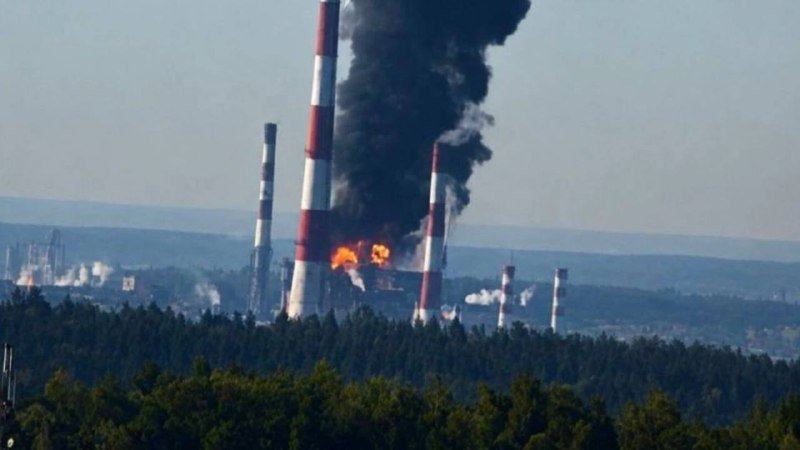
Russia launched a combined drone, cruise and ballistic missile strike on Kyiv overnight on 2 July 2026, killing at least two residents and injuring more than a dozen, with multiple large fires burning across the capital by dawn. Reuters, citing its own reporting, said drones and missiles struck residential buildings and started a fire in a "hot" — its dispatch truncated mid-sentence — part of the city, while German state broadcaster Deutsche Welle reported multiple explosions in the capital as Russian drones and missiles hit it. The wave is the latest in a serial tempo of long-range strikes the Kremlin has used against Ukrainian cities well behind the front line, and it lands less than a day after a series of similar air attacks across multiple oblasts.
The pattern matters more than any single impact crater. Russia has spent the past year converting its strategic aviation and Black Sea/Fleet cruise-missile inventories, supplemented by an expanding one-way attack drone pipeline, into a low-cost but politically potent tool of coercion aimed squarely at Ukrainian civilians. The overnight barrage fits that template: a salvo combining slow decoy drones designed to exhaust air-defence magazines with high-value cruise and ballistic missiles aimed at hardened targets. Kyiv's defenders have grown sharper at downing the drones and many of the missiles, but the salvo architecture is built to overwhelm, and it leaks through. When it does, the cost is paid in apartment blocks and small businesses, not in military infrastructure.
What the wire and the channels show
Reuters framed the strike as a combined attack on residential and unspecified "hot" infrastructure, with at least two dead and more than a dozen injured. Deutsche Welle's overnight audio wire, the most institutional of the foreign-language dispatches, recorded "multiple explosions" in the capital as drones and missiles hit it. Telegram channels monitoring the strikes filled in the visual and geographic detail. AMK_Mapping, an open-source channel that routinely geolocates Russian cruise-missile impacts, published footage of two Kh-101 air-launched cruise missiles striking what it identified as a landscaping enterprise in southeastern Kyiv at the coordinates 50.421487, 30.661218. The same channel separately reported that around 50 ballistic and cruise missiles impacted the city during the night, with multiple large fires burning across Kyiv by early morning. The @wfwitness account circulated mobile-phone footage of additional impacts in the capital, and @intelslava posted video of missiles striking the city.
The reporting pulls in one direction: a deliberate, combined-arms strike on a capital city, with civilian harm both intended and accepted as a feature of the weapon system, not a by-product. The wire services did not single out a strategic target in their public lines; the channels name one — a small landscaping business in the southeast of the city, a civilian commercial site with no obvious military function. Kyiv's air-defence umbrella, layered around Patriot, IRIS-T and NASAMS batteries, has steadily improved interception rates, but the salvo volume is calibrated to a saturating logic in which even a small leak through that umbrella produces measurable casualties and one more column of smoke on the morning news.
The counter-narrative and its limits
Russian-language and Russian-adjacent channels — including the @intelslava feed that reposted impact footage — framed the same event as a strike against legitimate military-industrial infrastructure, a long-standing Moscow line in which residential harm is portrayed as collateral or staged. The channels do not name a specific military target; the geography points the other way. The landscaping enterprise at the coordinates AMK_Mapping flagged sits in a low-rise commercial and residential belt in southeastern Kyiv, several kilometres from the kind of hardened defence-industrial sites the Russian Ministry of Defence typically claims to hit in its overnight summaries. Russian state-aligned outlets have, in past barrages, retroactively asserted that struck apartment blocks were hosting Ukrainian military communications equipment or drone-production workshops; no such assertion has been published in the wire material reviewed for this piece.
The sceptic's read is that any large city struck by fifty ballistic and cruise missiles will produce both military and civilian hits, and that sorting out which was which takes time and wreckage-level forensics Kyiv's emergency services are still running. That read holds at the margins. It does not hold as a stand-alone explanation for a strike on a landscaping business in a south-eastern residential district, with no published Russian-side identification of a military target at that address, and with Reuters and DW both flagging residential buildings and a fire that is plainly visible in the Telegram footage. The evidence base tilts toward what the visuals show: a civilian area, hit hard.
Structural frame: the missile economy behind the barrage
Behind every overnight barrage is a supply chain. Kh-101 air-launched cruise missiles are carried by Russian strategic bombers — Tu-95MS and Tu-160 aircraft flying out of Engels air base and other deep sites, often launching from airspace over the Caspian or the Barents Sea to extend their kinematic range. Ballistic missiles in the salvo mix, per open-source tracking, have included Iskander-M short-range systems fired from inside Russian-occupied territory and, periodically, longer-range systems outfitted for the role. The one-way attack drones are Shahed-type Iranian-design airframes, the bulk of them now produced inside Russia under licence, a localisation that has cut unit cost and lifted monthly output into the high hundreds. The combined salvo is therefore not a single system: it is three or four industrial pipelines, each with different cost-per-effect ratios, fired in a coordinated night raid.
This is the structural pattern worth naming. Russia has shifted from indiscriminate area bombardment with tube and rocket artillery — the pattern of February–March 2022 — to a more discriminate-but-still-civilian-flavoured strategic strike model in which cruise missiles, ballistic missiles and drones are mixed to defeat air-defence economics rather than to destroy specific military targets. The aim is to make defending Ukrainian skies more expensive than firing into them. The fact that a landscaping enterprise in southeastern Kyiv took a direct hit from two Kh-101s is, in that reading, not an anomaly but the design: the salvo is sized to leak, and where it leaks, the camera is already rolling.
Stakes and what to watch next
The forward question is whether the salvo template is escalating or settling into a baseline tempo. The relevant inputs to watch are the ratio of cruise to ballistic missiles (ballistic being faster, harder to intercept, and more politically provocative), the geographic mix of strikes (the capital versus the energy grid versus the port cluster at Odesa), and whether Ukrainian long-range strikes on Russian rear areas continue to constrain the launch architecture. Ukraine's domestic air-defence production, particularly drone interceptors and IRIS-T-class systems delivered with European partners, has been the rate-limiting factor in what gets through; a slippage in interceptor supply would show up first as higher leak rates in capital-city barrages like the one overnight.
For civilians, the more immediate arithmetic is brutal. Two confirmed dead, more than a dozen injured, multiple large fires, and a city told to stay in shelters through the night. The institutional toll — damaged housing stock, strained emergency services, displaced households — will run into the hundreds once the rubble cools. The pattern, more than the count, is the story: a capital city hit, night after night, by an adversary that has decided the cost of firing exceeds, in its calculation, the cost of the political isolation it accumulates for firing. That asymmetry of price is the underlying policy problem, and it does not resolve on the ground in Kyiv. It resolves in the slow, contested politics of air-defence resupply and in the question of whether the West treats the long-range strike campaign as an act of aggression requiring a strategic answer, or as a feature of the landscape to be managed.
Desk note: Monexus ran the wire copy from Reuters and Deutsche Welle against the Telegram geolocation channel AMK_Mapping and eyewitness footage from @wfwitness and @intelslava. Russian-aligned framing on the strike target has been noted, but the available evidence — coordinates, visuals, and the absence of a named Russian-side military target — supports the civilian-impact reading. Casualty figures are wire-confirmed and may rise as rescue operations continue through the day.
Wire provenance
This editorial synthesis draws on the following public wire/social posts:
- https://t.me/AMK_Mapping
- https://t.me/AMK_Mapping
- https://t.me/wfwitness
- https://t.me/wfwitness
- https://t.me/intelslava