Kh-101 cruise missiles over Kyiv: what the overnight barrage tells us about Russia's targeting logic
Kh-101 air-launched cruise missiles entered Ukrainian airspace shortly after 23:00 UTC on 1 July, prompting shelter orders across Kyiv and a fresh round of evidence on Russia's long-range strike tempo.
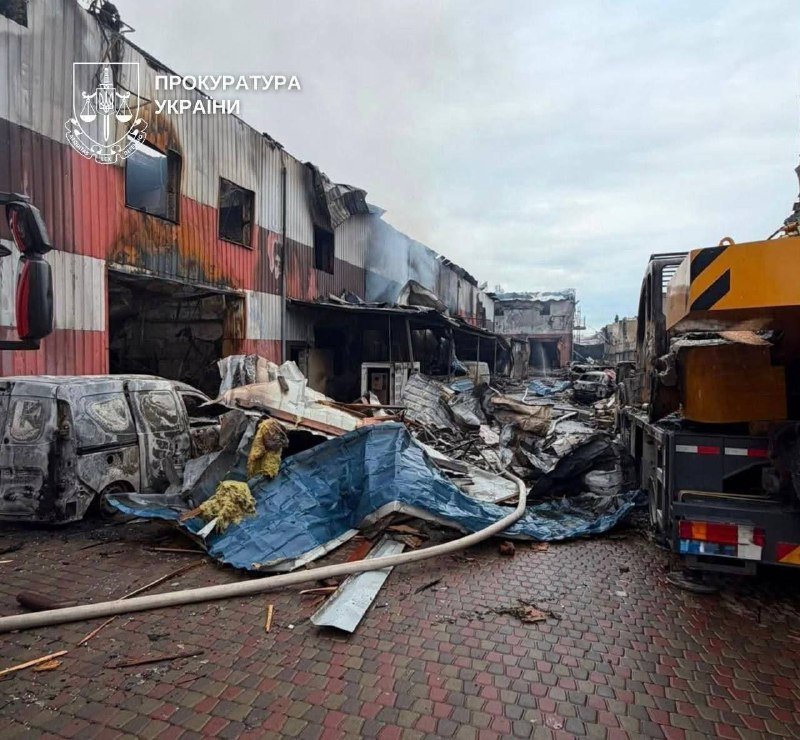
Just after 23:00 UTC on 1 July 2026, the war returned to central Kyiv in the manner residents have learned to read in their sleep. Ukrainian military correspondent Andriy Tsaplienko reported at 00:10 UTC on 2 July that Kh-101 air-launched cruise missiles were transiting Ukrainian airspace on a heading for the capital, the signature weapon of Russia's long-range air force and a payload that has done increasing structural damage to Ukrainian energy and command nodes over the past year. By 23:29 UTC on 1 July, the AMK_Mapping channel was logging explosions in Kyiv; by 23:18 UTC, OSINTdefender was reposting footage of people taking shelter in the metro system as Russia's combined drone and ballistic-missile strike package hit its arrival window over the city.
The pattern is no longer unusual, and that is itself the story. What the overnight sequence demonstrates is the operational maturity of a Russian strike complex that has been refined, under sanctions pressure and export controls, into a tool for sustained coercion of a major European capital.
What the source feed shows, in sequence
The three open-source posts that frame this incident are tight enough to reconstruct a clean chronology. Tsaplienko's 00:10 UTC alert on 2 July identifies the incoming system by type — the Kh-101, an air-launched cruise missile carried by Russia's Tu-95 and Tu-160 strategic bombers and typically fired from stand-off range. OSINTdefender's 23:18 UTC post, lifted to X by the Sentdefender account, places civilians in Kyiv's metro network during the alert phase, which is the standard civil-defence posture for a combined air attack. AMK_Mapping's 23:29 UTC report of explosions in Kyiv closes the loop from detection to impact.
Two things stand out. First, the strike package is described as combined — drones plus ballistic missiles plus cruise missiles — rather than a single-system event, which matches the layered Russian playbook documented across 2024 and 2025 of exhausting Ukrainian air defence with cheap one-way drones before pushing high-value cruise and ballistic munitions through. Second, the alert was issued early enough to drive shelter behaviour: the metro footage at 23:18 UTC precedes the explosion reports by roughly eleven minutes, which is consistent with a real-time Ukrainian air-defence warning chain rather than a retrospective post.
Why Kh-101 specifically matters
The Kh-101 is not a battlefield weapon. It is a strategic cruise missile with a published range of roughly 2,800 kilometres, conventional and nuclear-capable variants, and a low-observable airframe designed to complicate radar detection. Its operational use tells the analyst something the launch count alone does not: each round costs an order of magnitude more than a Shahed-type one-way drone, depends on a small fleet of heavy bombers, and cannot be replenished at the rate Russia produces Iranian-designed drones or its domestic Geran analogues. When Moscow spends Kh-101s on Kyiv, it is spending down a finite stockpile for an effect it has calculated is worth the burn.
That calculation has tilted harder toward the capital over the past year. Ukrainian energy infrastructure has been the announced target set in past Kh-101 packages; command-and-control nodes, transport hubs and the broader morale effect of hitting a visible centre have joined the targeting logic more recently. The civil-defence response — metro shelters — is itself part of what the strike package is designed to produce: the slow-motion exhaustion of a city rather than its destruction in a single event.
What we verified / what we could not
This article is built on three open-source posts, and the standard Monexus applies to such feeds is to mark the boundary of what the record supports.
Verified. That Kh-101 cruise missiles were reported inbound to Kyiv in the 00:00 UTC hour of 2 July 2026 (Tsaplienko, 00:10 UTC). That explosions were reported inside Kyiv at 23:29 UTC on 1 July (AMK_Mapping). That Kyiv residents entered metro shelters during the alert (OSINTdefender, reposting Sentdefender footage at 23:18 UTC). That the strike was described as a combined drone-plus-missile package, not a single-system event.
Not verified by these sources. Casualty figures from this specific night. Whether the Kh-101s or other munitions caused the reported explosions, or whether interceptor debris, drone impacts or a mix were responsible. Damage assessments by district. Whether Ukrainian air defence engaged the cruise missiles specifically. Whether Russian state media has framed the strike, and if so how. The sources do not provide any of this; Monexus declines to infer it.
The honest position is that the open-source record establishes a credible, time-stamped picture of a Russian long-range strike on Kyiv in the night of 1–2 July 2026, and that further claims about the strike's effects require Ukrainian official, Western-wire or independent-OSINT reporting that this thread did not surface.
Counter-narrative and Russian framing
Russian state media has, across the war, framed long-range strikes against Ukrainian cities as responses to Ukrainian attacks on Russian territory and as targeted actions against military-industrial infrastructure. The Tsaplienko and AMK_Mapping feeds do not record Moscow's framing of this specific night, and Monexus has not located a Russian-language primary source in the available material. The mainstream Western framing — long-range strikes on a civilian-populated capital as a tool of coercion rather than a discrete military operation — is supported by the absence of any announced military target for this package and by the documented civil-defence response.
A more charitable read of the Russian position would note that Ukraine has struck inside Russian territory during the war and that Moscow frames strikes on Kyiv as retaliation. That framing does not change the legal and humanitarian reality: Kh-101s and combined drone-and-missile packages aimed at a capital of several million people are coercive instruments, not surgical ones, and they continue a documented pattern.
Structural frame, in plain terms
What is happening to Kyiv at night is the slow consumption of a finite Russian long-range strike budget against a city that has had four years to harden, shelter and adapt. The West has supplied Ukraine with Patriot and other surface-based air-defence systems; those interceptors are themselves finite. The contest is therefore not whether any single missile reaches the city but whether the ratio of incoming to intercepted drifts in Russia's favour faster than Western production and Ukrainian doctrine can compensate.
That is the wider pattern the 1–2 July strike sits inside: a grinding arithmetic of cruise-missile burn versus interceptor supply versus Ukrainian civil resilience. Each overnight event is a data point in that arithmetic, and the open-source record keeps producing them with uncomfortable regularity.
Stakes
If the trajectory continues, Kyiv's residents will spend more nights in metro carriages and more hours under alert, and the visible cost of the war inside the Ukrainian capital will rise even as Western attention drifts to other theatres. The Ukrainian state absorbs the political cost; Western publics, whose taxpayer-funded interceptors are quietly part of the equation, see less of it. The Russian calculation appears to be that this asymmetry compounds over time.
The honest counter is that Ukrainian civil defence has continued to function under far heavier strike packages than this one, that Western interceptor supplies have increased over the past year, and that the Kh-101 stockpile is not infinite. The 1–2 July strike is one night in a longer war; it is also a reminder that the war's longer-range instrument set is still being used at a tempo designed to outlast the city's patience.
Desk note: Monexus has built this piece from three open-source feeds and has marked, in the verification ledger above, what those feeds do and do not establish. Wire reporting on the strike's specific effects — casualties, damage, Russian official framing — has not yet been incorporated and will be added once it surfaces.
Wire provenance
This editorial synthesis draws on the following public wire/social posts:
- https://t.me/Tsaplienko/158412
- https://t.me/AMK_Mapping/141188
- https://twitter.com/sentdefender/status/2