Europe Quietly Concedes the Strait of Hormuz — and Admits It Was Always Going To
After years of sanctions theatre, Europe's capitals have stopped pretending: crossing the Strait of Hormuz now means paying Tehran. The shift is small in dollars and enormous in meaning.
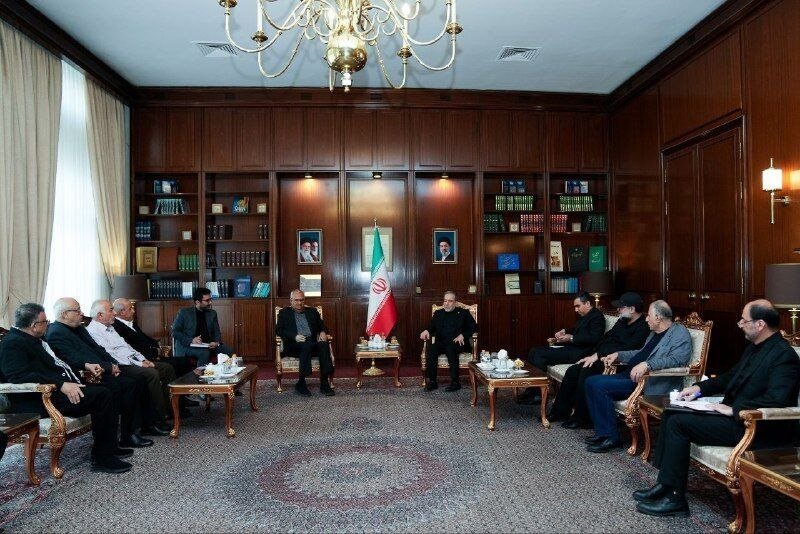
On 2 July 2026, several European governments privately concluded that the era of pretending Iranian tolls in the Strait of Hormuz were a problem to be solved was over. The 21-mile chokepoint through which roughly a fifth of the world's traded oil passes would, in practice, cost more to cross — and the bill, increasingly, would go to Tehran. The reporting that surfaced the shift came not from a European capital but from a Bloomberg story carried the same day by Iran's Tasnim News Agency: several European countries have changed their approach and accepted that fee arrangements with Iran, and with neighbouring Oman, are now an operational fact of maritime commerce through the strait. A separate channel, Middle East Spectator, framed the same shift more bluntly: European nations have made peace with the fact that Iran will impose fees in the Strait of Hormuz, viewing it as 'inevitable' and urging that Iran does not discriminate between vessels by flag.
The concession is small in cash and large in signalling. For two decades, Western policy in the Gulf treated Iranian tolling, inspection or harassment in the strait as a contingency to deter, not a market to accept. European negotiators, privately, now treat it as cost-of-business — closer to a Suez canal fee than to a blockade. That is not a change the West planned to make.
What changed
The proximate trigger is the slow accretion of Iran's maritime enforcement over the past two years: heavier inspections of tankers linked to European shipowners, intermittent seizures of commercial vessels, and a steady tightening of rules-of-transit that Iranian naval and Revolutionary Guard units can enforce at will. Europe's shipping associations have, in parallel, grown tired of waiting for a multilateral answer that never arrived. The new posture — accepting tolls in exchange for predictable passage — is what governments do when they have lost the argument at sea and need the oil flowing before winter.
The omens have been visible in traffic data for months. A Reuters broadcast on the day of the report carried a live tracker of vessels moving through the strait, the kind of infrastructure monitor that only becomes interesting when ships stop moving, or start paying for the privilege of moving. By 15:59 UTC on 2 July 2026, the flow was steady; the asymmetry had simply been conceded.
The counter-narrative
Western governments, naturally, will not announce this as a concession. The line almost certainly going to run through Brussels and the foreign ministries in Berlin, Paris and Rome is that any arrangement is technical, temporary, designed to keep lanes open while "maximum pressure" continues elsewhere. Iranian state media will print the opposite: that Europe has finally accepted the legitimacy of Iranian control over the chokepoint, an acknowledgement that decades of sanctions and isolation never broke Tehran's leverage over energy flows. Both framings are self-serving; both contain a piece of the truth.
There is also a Tehran counter-argument that deserves its own airtime. From Iran's vantage, the strait is a sovereign waterway in which foreign tankers have for decades transited at near-zero cost while Iranian insurance, port and labour economies were throttled by secondary sanctions. A regulated toll regime, Iranian negotiators say privately, is no different in kind from what the Omani side of the strait already charges for port and pilotage services. The structural complaint — that a state sitting on the world's most important energy transit lane is poorer than the fleets passing through it — is not propaganda, it is a balance-of-payments fact.
The structural frame
Strip the rhetoric away and a familiar pattern emerges. The dominant maritime powers spent twenty years insisting that a particular chokepoint be regulated under Western-led norms — flag-state jurisdiction, Lloyd's insurance, dollar clearing — and produced, in return, a system the littoral state found intolerable. When the littoral state built an alternative enforcement capacity, sanctions held firm in name but accommodation followed in practice. The lesson is mundane and uncomfortable: control of physical geography tends to outlast control of financial geography. A state that can board a tanker does not need the dollar to extract revenue from one.
That does not mean the dollar's role is finished. It means the geography of energy chokepoints no longer defers to it the way it did in 2006, when Iranian banking was a tap and tanker insurance lived in London. The move in the Hormuz tolls is a tariff on a tariff: a cost added on top of the existing insurance and freight market that already prices political risk into every barrel passing east-to-west.
The stakes
If the European posture holds, the practical consequences are narrow but real: marginally higher delivered cost of Gulf crude and LNG into European refineries, a few hundred million euros a year in aggregate toll payments flowing to Iranian and Omani accounts, and a quiet re-routing of European energy diplomacy toward Oman in particular. Iran gains revenue it can spend under sanctions, and a precedent that other littoral states — from Indonesia to the Bosphorus — will study closely.
The symbolic stakes are larger. Every capitulation that begins as "technical" and ends as policy weakens the proposition that Western-led order in the Gulf rests on anything other than the willingness of the United States to keep using its fleet. When European governments stop pretending that Iranian tolls are a problem to be solved rather than a price to be paid, they are conceding not just passage but the framing of passage. The next negotiation — whether over sanctions relief, nuclear constraints or tanker seizures — will be conducted from a Tehran that knows Brussels has already cleared the throat.
This publication framed the shift as a concession in plain economic terms, where Bloomberg reporting carried by Tasnim cast it as European realism and Middle East Spectator framed it as Iranian inevitability — the three lenses together describe a much smaller policy move than the language around it suggests, and a much larger one than Western capitals will admit.
Wire provenance
This editorial synthesis draws on the following public wire/social posts:
- https://t.me/Middle_East_Spectator
- https://t.me/tasnimnews_en