Ankara sharpens its line on Israel — and quietly moves to reclaim the F-35
Turkey's foreign minister called Israel a destabilising force and tied the return of the F-35 to the lifting of US CAATSA sanctions, signalling Ankara is willing to mix diplomatic invective with transactional pressure.
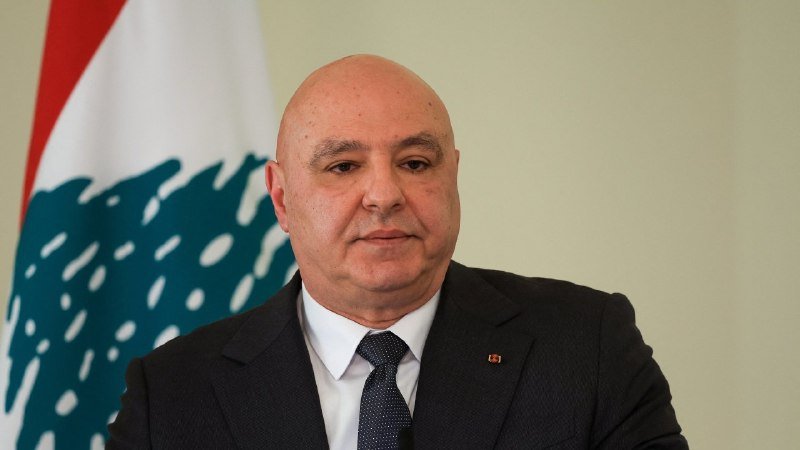
At a public appearance carried on 2 July 2026, Turkish Foreign Minister Hakan Fidan delivered Ankara's bluntest recent line on Israel: that the Jewish state, "by the international community's virtually unanimous assessment," is a destabilising force led by a "reckless clique." Within minutes of that remark, he pivoted to a different audience entirely — Washington — and tied any future delivery of the F-35 fighter to Turkey to a prior condition: the lifting of the US sanctions imposed under CAATSA, the 2017 law that targets countries that buy major Russian military equipment.
The sequence matters. Ankara is signalling, in a single sitting, that its Middle East posture and its defence-industrial entente with the United States are not separate dossiers. They are one file, and Turkey intends to negotiate them together.
A diplomatic invective, then a transactional pivot
Fidan's characterisation of Israel was unusually direct for a senior NATO member's foreign minister and went beyond the routine criticism Ankara has voiced since the Gaza war began. The phrasing — "destabilising force," "reckless clique" — placed Turkey inside a diplomatic minority that includes much of the Arab and Muslim-majority world, parts of the Global South, and a smaller bloc of European governments that has grown more willing to publicly contest Israeli policy.
The Israeli frame, by contrast, treats Turkish rhetoric of this kind as both predictable and unhelpful: a Turkish government that postures on Gaza while building commercial ties with Israel across other sectors. That reading has weight. But it understates how far Ankara's regional alignment has shifted in the past two years — toward a Middle East in which Israel is increasingly described, in capitals from Ankara to Riyadh to Pretoria, as the actor upsetting the regional equilibrium rather than defending it.
The second half of Fidan's remarks, on the F-35, was where the policy content sat. Turkey was removed from the F-35 programme in 2019 after it acquired Russia's S-400 air-defence system, triggering CAATSA penalties. Ankara has argued since that the punishment is disproportionate and that its NATO membership entitles it to be re-admitted to the programme. Fidan's line on 2 July — that "the lifting of the ban on F-35 sales to Türkiye will come after the CAATSA sanctions are lifted" — frames the trade the way Ankara has privately wanted to frame it for years: CAATSA first, F-35 second, in that order.
The structural frame: alliance as ledger
The deeper story is not what Fidan said about Israel. It is how Ankara is reading the alliance.
For most of the post-Cold War era, Turkey accepted a quiet bargain: tolerate US preferences on the major files — Israel, Cyprus, the Kurds, Russian defence ties — in exchange for continued integration into Western arms programmes and security architecture. That bargain frayed after 2016, after 2019, and again after October 2023. What replaced it is a more transactional arrangement in which Ankara expects to be paid, in equipment and political recognition, for each unit of alignment it offers.
The Fidan remarks sit inside that pattern. The subtext is that Turkey is no longer willing to be both a critic of Israeli policy and a disciplined buyer of the alliance's premier weapons platform. If Washington wants the F-35 question resolved, it has to resolve the CAATSA question first. If Washington wants Turkey's diplomatic tone on Israel to soften, it has to deliver on the hardware.
A third strand — Fidan pointedly noting that "the United States sells vast amounts of weapons and ammunition to many countries that are neither NATO members nor share such extensive strategic interests" — widens the grievance. The implicit comparison is to Israel itself, which receives tens of billions of dollars of US military aid while Turkey, a NATO ally with the alliance's second-largest standing army, sits under sanctions for buying Russian air defence. The framing is designed to embarrass: you arm the country Ankara is publicly rebuking, then sanction the country you are supposed to be defending with.
Counter-read: why Washington may not bite
The structural reading has a counter-read, and it deserves airtime.
The US Congress has been the harder obstacle on CAATSA relief, not the executive. Lifting sanctions under CAATSA requires a determination that the country in question has substantially reduced its reliance on Russian equipment. Turkey's S-400s are still operational, and the US Air Force has been explicit for years that any F-35 in Turkish service alongside the Russian system presents an unacceptable intelligence risk to the platform. No executive-branch workaround has so far survived that technical objection.
There is also the Israeli lobby question, which the Turkish framing studiously avoids. Whatever the merits of Ankara's case, a US administration that moves on CAATSA relief while Fidan is publicly describing Israel as led by a "reckless clique" will be asked, by a bipartisan Congressional coalition, what it received in return. The transactional bargain Ankara is proposing therefore has a domestic-US cost that Fidan's remarks, on the same day, raised rather than lowered.
Stakes
For Turkey, the stakes are concrete. Re-entry into the F-35 programme restores a capability gap in Turkish air power that is widening as peer air forces modernise, and it removes a public affront that successive governments have used as evidence of unequal treatment inside NATO. Failure to re-enter leaves Ankara structurally dependent on a Russian air-defence system that is itself becoming harder to maintain and integrate with Western platforms.
For Israel, the stakes are diplomatic and reputational rather than material. Turkey is not going to break relations — the two countries normalised ties in 2022 and the trade relationship is too valuable to either side. But the normalisation is now visibly conditional, and Fidan's remarks make that conditionality public.
For Washington, the test is whether it can hold an alliance together when one of its most capable members is openly accusing a third partner of regional destabilisation, and is tying continued cooperation on the alliance's flagship weapons programme to the resolution of a sanctions regime that was, at the time, imposed as punishment for an act of strategic autonomy.
What remains uncertain
The public reporting does not specify whether Fidan's remarks were coordinated with President Recep Tayyip Erdoğan's office in advance, or whether they reflect a deliberate escalation in Turkish signalling. The thread material does not specify which bilateral channel, if any, Turkey has used to communicate its preferred sequence to Washington. The Turkish position on the F-35 is also contingent on congressional dynamics in the United States that no single ministerial statement can move.
What is clear is that Ankara has decided to make its Middle East posture and its defence-industrial relationship with the United States legible as a single negotiation. Whether Washington treats that as a useful consolidation or an unacceptable linkage is the question that will define the next phase of the relationship.
This article frames Ankara's diplomacy through its own public statements and the structural bargain it is signalling; the wire treatment has tended to treat the Israel and F-35 files as separate stories.
Wire provenance
This editorial synthesis draws on the following public wire/social posts:
- https://t.me/ClashReport
- https://t.me/ClashReport
- https://t.me/ClashReport
- https://t.me/ClashReport