France, Italy and the United States move to formalise a southern Lebanon force, Al-Arabiya reports
Al-Arabiya reports that Paris, Rome and Washington are drafting a coalition force for southern Lebanon, a framework Tasnim reads as a 'new military alliance' and that no government has yet confirmed on the public record.
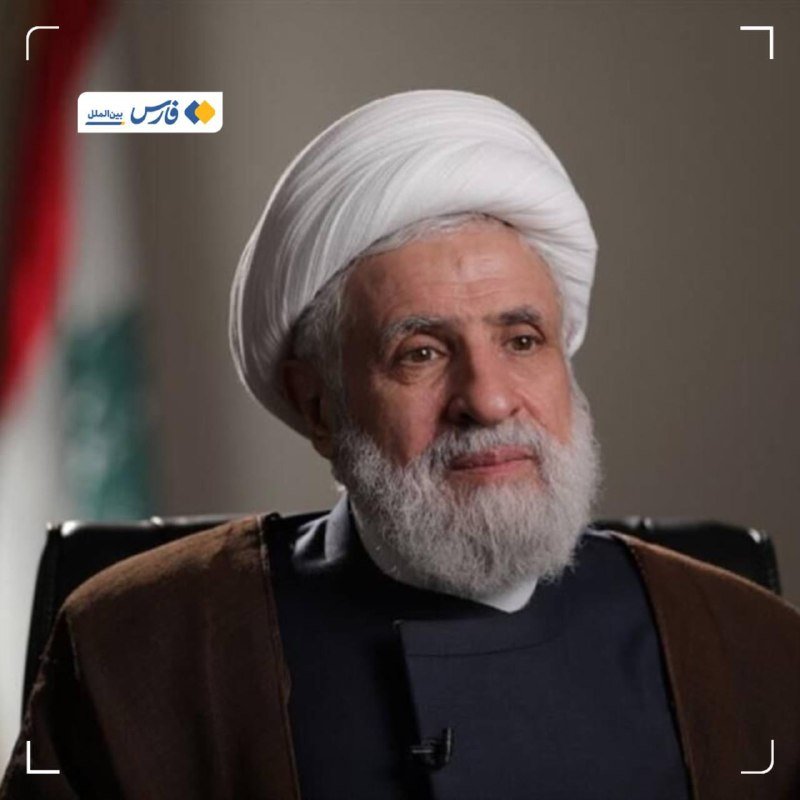
On 2 July 2026, Al-Arabiya's newsdesk moved a dispatch that, if the channel's sourcing holds, reframes the diplomatic geometry of the Israeli-Lebanese border: France, Italy and the United States are working to formalise a multinational deployment to southern Lebanon, a task force that would sit in a security space currently occupied, in name only, by the United Nations Interim Force in Lebanon. The proposal, as relayed downstream by Iran's Tasnim News Agency and the parallel Jahan Tasnim feed, is being read in two registers: as the routine rebuilding of an international stabilisation mission under a new coalition template, or as the scaffolding of a military alignment that follows the model of the November 2024 ceasefire from a different runway.
The Al-Arabiya report is the originating wire for this story in the open thread, and no government in Paris, Rome or Washington has confirmed the framework on the public record that Monexus could verify. That absence of formal on-camera confirmation is itself the story. A multinational force in southern Lebanon is not a fresh invention; it is a return to a script that has been written, rewritten, and left on the shelf since United Nations Security Council Resolution 1701 first authorised an international presence south of the Litani in August 2006, after a 34-day war between Israel and Hezbollah.
UNIFIL is the institutional anchor inside that script. The force was established by that resolution and has been renewed annually, with a current posture of about 10,000 peacekeepers drawn from dozens of contributing countries. The mandate asks for a buffer between Israel and Lebanon, the disarming of non-state actors in the area of operations, and humanitarian access. By any conventional reading, the mission has been sclerotic for the better part of two decades, a bureaucracy that observes and reports while the armed non-state actor it was meant to disarm rearmed, fortified, and in late 2023 opened a northern front in solidarity with Hamas. The ceasefire of November 2024, negotiated through a US-French diplomatic channel with Qatari facilitation, did not translate UNIFIL's mandate; it layered a separate understanding on top of it, one whose texts were largely owned by Washington and Beirut rather than the Security Council.
A force that is not UNIFIL
The Tasnim framing, picked up by Jahan Tasnim and circulated in Farsi-language channels, is sharper than the Al-Arabiya lede. It reads the proposal as the construction of a "new military alliance" along the frontier, a coalition with a combat-capable footprint rather than the traditional blue-helmet observation mission. The Monexus read of the open-source thread treats Tasnim's framing as the stronger interpretation, because Tasnim is reporting against the grain of its own editorial line: Tehran's press organs have institutional reasons to characterise any Western-led deployment as a hostile alignment, and the fact that they are doing so here is itself evidence that the proposal being floated has more teeth than a routine UN force refresh.
The thin evidentiary record does not yet let Monexus assign nationality to the combat troops implied, place a number on the contingent, or disclose the command-and-control arrangement under negotiation. What the record supports is narrower, and it is enough. A trilateral channel of senior diplomats is in motion, the working language of the proposal is "formalisation," and the political signals from Washington in early July point away from a re-hatting of the UN blue helmets and toward a coalition-with-a-mission template of the kind the United States and France have run together on the African continent and that Italy has a colonial-era record in the Levant of staffing. That previous deployment is the Italcontingent in south Lebanon of the early 1980s, a mission that ended in retreat; the institutional memory of that withdrawal is in the Italian defence ministry's archives and in the political caution of Italian parliamentary majorities whenever a new southern deployment comes around.
What the November 2024 ceasefire actually does
The most direct precedent for any "formalisation" in southern Lebanon is the 2024 arrangement itself. It was negotiated in the closing weeks of the Biden administration through Amos Hochstein and his French counterpart, in a sprint that produced an understanding without a Security Council resolution. Its operative provisions track the logic of 1701. Hezbollah fighters are to withdraw north of the Litani. Israeli forces are to withdraw south of the border proper. Civilians on both sides are to return to homes from which they had been displaced. The Lebanese Armed Forces are to deploy into the vacated area, with international support.
What the 2024 text conspicuously lacks is a standing international combat force. It rests on the Lebanese army plus UNIFIL plus monitoring. By the time of this Al-Arabiya report in July 2026, the monitoring layer has thickened and the Lebanese army has been visibly stretched, while Israeli forces have continued to detonate residential buildings in border towns, in footage that PressTV carried on 4 July from the Al-Doura neighbourhood of Bint Jbeil. That footage, broadcast on Iranian state media and amplified by Jahan Tasnim, frames the operation as Israeli demolition of Lebanese civilian housing. Whatever its tactical justification, the political reality is that every detonation south of the Litani is a depreciation of the ceasefire's hold. Any "formalisation" worth the airtime now has to answer a question the 2024 text ducked: who is present, with what authority, on the day the next detonation happens.
The political geometry around it
The southern Lebanese force is being negotiated inside a region whose other files are moving in parallel. The July 2026 working week, as the open-source thread records it, included a 90-minute phone call between Vladimir Putin and Donald Trump, with Russia reading out Ukraine and West Asia as the two agreed topics, and a Zelenskyy-Trump call following on the same day, with air-defence and inspection arrangements on the table. The same week saw Iranian outlets, including PressTV, relay an Iranian acting defence minister's warning that any violation of the Iran-US ceasefire understanding would draw a "decisive response," and a parliamentary statement from Speaker Mohammad Baqer Qalibaf that the Iranian resistance had inflicted a political and military defeat on the United States and Israel during the recent war. A Washington Post passage circulated by social posts in the same window argued that, contrary to Trump's stated goal of regime change in Tehran, the Iranian regime has grown stronger under sustained pressure.
Read together, those threads place the Lebanon file inside a wider negotiating atmosphere in which the United States is dealing simultaneously with Tehran, Moscow and Kyiv, and in which Tehran is projecting confidence rather than vulnerability at home. The southern Lebanon force is the part of that atmosphere in which three Western capitals with distinct relationships to Beirut are trying to lock down something durable on a border that has been declared fragile for the better part of two years. The political logic for Paris and Rome is a stabilisation track they can show domestically as a contribution to European security. The political logic for Washington is rather different: it is the room the United States can offer Israel when Israeli forces again detonate buildings in southern Lebanese towns, and the room it can offer Saudi Arabia and the Gulf when the next round of regional diplomacy convenes, evidence that the United States is, in fact, the indispensable broker of the Levant.
What no one has confirmed
It is worth recording what is not in the public record. No government source confirms the framework, the national contingents, the rules of engagement, or the legal status of the force under existing UN auspices. The framing is bilateral diplomatic reporting, originating in Al-Arabiya, downstreamed by Tasnim, and not yet visible in any wire copy from Reuters, AFP, the BBC, the Guardian, Al Jazeera English, or any of the outlets Monexus treats as wire of record. The single strongest claim that can be made on the present record is that a trilateral political track exists and is being reported as a "formalisation" rather than a routine UNIFIL refresh. Any further reading is interpretation, and Monexus names it as such.
The next data point to watch is the textual one. A Security Council renewal of UNIFIL's mandate is owed before the end of August, in line with the annual cadence of resolutions that has kept the mission in business since 1978. Any "formalisation" worth the name will have to either ride that renewal, lapse into it as a footnote, or compete with it as an alternative. The first of those three paths would harden the force into the existing UN architecture. The second would constitute a quiet bureaucratic amputation of UNIFIL. The third would be the first competitive international force structure that southern Lebanon has seen since the 1983, and a decided break from the practice of two decades.
The 2006 resolution is twenty years old this August, and the mission it authorised has spent most of those two decades in suspension rather than execution. A new force in southern Lebanon is not, in that sense, a novelty. It would be an admission that the older one, however loudly renewed, did not in fact do the work that the world asked of it in the late summer of 2006.
Sources
- Al-Arabiya (originating wire), via Jahan Tasnim relay: https://t.me/JahanTasnim
- Tasnim News Agency (English-language feed): https://t.me/tasnimnews_en
- OSINTLive monitoring thread: https://t.me/s/osintlive
- United Nations Interim Force in Lebanon, institutional and mandate history: https://en.wikipedia.org/wiki/United_Nations_Interim_Force_in_Lebanon
- United Nations Security Council Resolution 1701, the original framework for UNIFIL and southern Lebanon: https://en.wikipedia.org/wiki/United_Nations_Security_Council_resolution_1701
- 2024 Israel-Hezbollah ceasefire, operative texts and diplomatic provenance: https://en.wikipedia.org/wiki/2024_Israel%E2%80%93Hezbollah_ceasefire
- PressTV, footage of Israeli detonations in Bint Jbeil: https://t.me/presstv
- Fars News International, on Vance-Rubio dynamics and the Lebanon file: https://t.me/FarsNewsInt