UN chief offers fresh condolences to Iran after reported assassinations, signalling diplomatic choreography on a contested chapter
UN Secretary-General António Guterres telephoned Foreign Minister Abbas Araghchi on Thursday to renew condolences, an exchange Iran-aligned outlets framed around the 'martyrdom' of senior figures. The call lands inside a contested diplomatic moment.
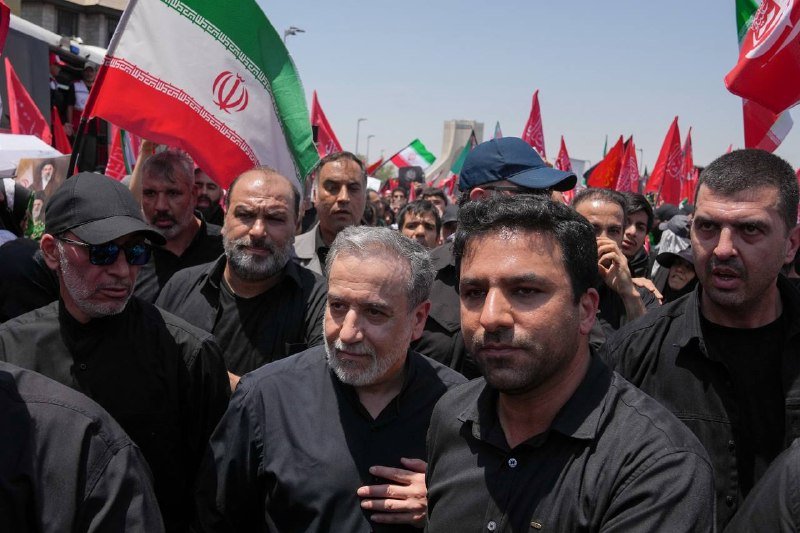
United Nations Secretary-General António Guterres held a telephone conversation with Iranian Foreign Minister Seyyed Abbas Araghchi on Thursday evening, 2 July 2026, in which he "once again expressed his condolences" to the Iranian government and nation. The call, logged by Iranian state outlets within minutes of each other between approximately 19:53 and 20:16 UTC, frames itself around the "martyrdom" of senior Iranian figures — language the Iranian state uses to characterise senior security and political deaths it attributes to foreign action.
The exchange is small in surface terms — a diplomatic condolence call, the kind that passes through UN switchboards most weeks — and large in what it signals about the choreography now underway between Tehran and the world body. It is also the kind of item where the wire-versus-state framing matters: how the call is described determines whether it reads as routine diplomatic courtesy or as a quiet calibration of the UN's posture at a moment of acute tension.
What was actually said, and where it is sourced from
Iran's Fars News Agency, Press TV, Al-Alam and Tasnim each carried short bulletins on the Araghchi-Guterres call within roughly twenty-three minutes of one another. Tasnim's English wire, timestamped 19:53 UTC, described Guterres as having "talked and consulted" with the Iranian foreign minister. Press TV, at 20:01 UTC, ran the conversation with a photograph of Araghchi and an explicit reference to "martyrdom." Al-Alam and Fars, the latter at 20:16 UTC, both framed Guterres's remarks as renewed condolences to the Iranian nation and government.
The four wires are not independent — they are state or quasi-state outlets that reproduce each other's framing — but they also constitute the only contemporaneous record of the call available at the time of writing. Independent Western-wire reporting on the substance of the conversation had not surfaced in the thread. That fact matters: every claim about what Guterres said is, for now, an Iran-channel-sourced claim.
The word "martyrdom" — used by Press TV and echoed by Fars — is itself a piece of framing. It is the term Iranian state communications use to describe senior Iranian security figures whose deaths they attribute to adversaries. Read literally, it tells the reader that someone senior has been killed. Read as Tehran intends it, it is also a signal about who Tehran regards as responsible.
Why the call happens now
Iranian condemnations of the UN Secretary-General have a long history, but so do UN-Iran condolence calls. What makes Thursday's exchange worth pause is that it is being staged publicly. Iranian outlets are pushing it into their prime-time news cycles, with photograph and headline. That itself is editorial behaviour: Tehran wants this read at home as evidence that the Secretary-General has reiterated his stance, and that Iran's framing of recent events has international standing.
From Guterres's perspective — and he has not, in the available reporting, been quoted beyond what the Iranian wires relay — a call of condolence to a member state after the reported loss of senior personnel is the kind of step a UN chief takes when he wishes to avoid being seen as taking sides, either by his silence or by sharper language. He has done this before, with comparable brevity. The Iranian outlets give it more weight than the UN's own communicators typically do at this stage.
There is also a quieter possibility: that Tehran is calibrating which senior deaths the UN will publicly mourn. By foregrounding its own framing — "martyrdom," blame on an unnamed adversary — and securing its presence in a UN channel, Iran forces onto the diplomatic record an Iranian reading of events that Western wire coverage is often slower to engage with.
The framing gap, plainly stated
Western reporting on Iranian security deaths, where it exists, tends to use neutral or hedged language: "reportedly killed," "described by Iran as," "according to Iranian state media." The Iranian state vocabulary is more assertive. It does not hedge on who is responsible. The call this Thursday illustrates the gap in real time: Iran's channels describe Guterres as expressing condolences for martyrdom, while Guterres himself — to the extent he has spoken about the call — has not, on the evidence available, been quoted as endorsing that framing.
It is worth saying the obvious. UN officials do not usually endorse one party's framing of a contested event in condolence language. They express sorrow at loss of life. Whether Thursday's call departed from that practice — and whether Guterres privately conveyed anything sharper than his Turkish-cinema-of-diplomacy public language would suggest — is not in the record. The thread provides the Iranian framing, not the UN's own read-out.
What this leaves unresolved, and what to watch
Three things remain unclear from the four-source thread. First, the UN's own institutional read-out. The Office of the Secretary-General routinely issues its own summaries of senior calls. None appears in the available thread. Second, the identity of the figures referred to by "martyrdom" — Iranian state media does not, in the items in evidence, name them. Third, the timing relative to any wider diplomatic track — whether the call is part of a longer sequence of UN-Iran contacts around a particular file (nuclear, regional security, consular cases) or a one-off.
The trajectory worth watching is straightforward. If UN read-outs begin to converge with the Iranian framing, the diplomatic equation shifts. If they diverge — as is more typical — the call becomes a piece of optics useful to Tehran at home, less so abroad. Either way, the choreography now underway is being conducted in public, with Iran's state outlets as the loudest instruments. The facts on the ground, as ever, remain harder to pin down than the framing around them.
— Monexus filed this piece working only from contemporaneous Iranian-channel reporting available in the 19:53–20:16 UTC window. Where the thread contained a single Iranian framing, that framing is reported as such, not endorsed.
Wire provenance
This editorial synthesis draws on the following public wire/social posts:
- https://t.me/farsna
- https://t.me/presstv
- https://t.me/alalamfa
- https://t.me/tasnimnews_en
- https://en.wikipedia.org/wiki/Office_of_the_Secretary-General_of_the_United_Nations