Tehran's Hormuz Warning Is Not About Hormuz
A day before a Geneva accord signing, Iran is signalling that the Strait of Hormuz will be policed on its terms — a reminder that the world's busiest oil chokepoint is governed by whoever can enforce the rules.
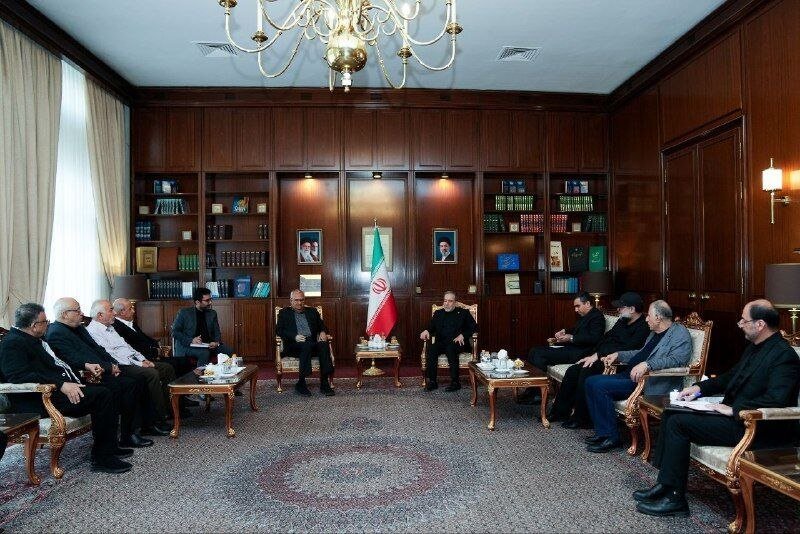
The timing is the story. On 2 July 2026, the same day Western and Iranian negotiators confirmed a peace accord would be signed in Geneva on Friday, Tehran put two parallel signals on the wire: a warning that vessels failing to use Iranian-approved transit corridors through the Strait of Hormuz would meet a "forceful response," and, via an Iranian Kurdish opposition group, an acknowledgment that six Kurdish fighters had been killed in clashes with Iranian security forces.
Both messages are aimed at the same audience. The Geneva ceremony sells a public story — détente, de-escalation, a managed end to a crisis cycle. The Hormuz warning and the Kurdish counter-insurgency push are the operational story underneath it. They tell any operator in the Gulf, and any planner in Washington or Riyadh, that Iran's coercive toolkit remains fully intact even while diplomats are smiling for the cameras.
What Tehran actually said
The maritime warning travelled through Fars, the Iranian state-affiliated news agency, and was aggregated by Middle East Eye's live blog at 18:34 UTC on 2 July: Iran reserves the right to act against any ship that does not follow "approved" Hormuz transit routes, and reserves a separate response to any US intervention in the strait itself. The word "approved" is doing all the work. It implies a regulated corridor system — backed, presumably, by the Iranian Revolutionary Guard Corps Navy — in which compliance is determined by Tehran, not by the International Maritime Organization or by Combined Task Force 153, the multinational Gulf patrol that has long asserted freedom-of-navigation policing in the same waters.
The second signal landed earlier the same day. At 17:03 UTC, Middle East Eye's live coverage flagged a Kurdish opposition group claiming six of its fighters had been killed in clashes with Iranian forces. Iran's long-running war with Kurdish insurgents along its western frontier is a separate file from the nuclear file, but it travels through the same security state. The decision to keep that pressure on, the day before a Geneva signing, is itself a signal.
Why the timing matters
A diplomatic settlement that leaves Iran in operational control of a transit corridor through the world's most consequential oil chokepoint is not the same agreement as one that does not. Roughly a fifth of global seaborne oil passes through Hormuz, and the route is narrow enough that even a partial interdiction pushes benchmark crude prices sharply higher. If Iran's "approved routes" language is taken literally, shipowners and underwriters are being asked to price a regime in which Iranian fast boats, anti-ship missiles, or simply bureaucratic harassment become a calculable cost of doing business — a cost that flows through to gasoline bills in Jakarta and Lagos, not just in Houston.
The Western wire line on a US-Iran deal of this shape tends to frame any concession to Tehran as the price of avoiding a war that neither side wants. The structural read is more uncomfortable: a settlement that legitimises Iranian enforcement of transit rules in Hormuz entrenches a precedent. Future chokepoints — Bab el-Mandeb, the Taiwan Strait, the Bosphorus — get renegotiated against a template where the littoral power is the de facto regulator and external navies are guests.
What the counter-narrative looks like
The Iranian counter-narrative is straightforward and not unserious. Tehran's argument is that Hormuz is its coastline, that the strait has been militarised for decades by a foreign naval presence that does not represent regional states, and that a regulated, corridor-based system — policed by the country that actually borders the water — is more legitimate than the present arrangement, in which US Fifth Fleet assets set the implicit rules. From the vantage point of the Global South, and from the vantage point of states that have argued for years that Western navies have overstepped in waters far from their own shores, that argument has structural weight even when the messenger is uncomfortable.
There is a harder version of the same read in Western capitals: that Tehran is bluffing, that any sustained interdiction would invite the kind of retaliation the IRGC Navy cannot survive, and that the Fars language is bargaining position rather than policy. That is a plausible read, but it has to contend with the fact that Iran's Hormuz playbook — fast-boat harassment, tanker seizures, the 2019 limpet-mine campaign — has been operational, not theoretical, for years.
What remains uncertain
The Geneva accord is signed on Friday. What "approved routes" means in practice — whether the language survives translation into the joint communiqué, whether it survives the first tanker dispute, whether the US accepts it on the page and rejects it at sea — is not knowable from the public record on 2 July. The Kurdish casualty claim comes from an opposition group with its own interest in the framing; the Iranian side has not, in the source material available, confirmed the six-figure toll. The Hormuz warning is sourced to Fars via aggregation, and the line between official Iranian policy and Fars editorial register is thinner in some readings than in others.
What can be said without overreach is this. On the day a deal is being sold as a peace story, Iran is reminding every operator in the Gulf that the operating environment in Hormuz remains, at the margin, an Iranian-controlled variable. That is the point of the warning. Whether it is also the point of the deal is the question the next thirty days will answer.
Desk note: Monexus framed this as a story about the operational subtext of a diplomatic event, rather than as either a deal-skepticism piece or a Tehran-skepticism piece. The Western wire line emphasises the Geneva ceremony; the Iranian wire line emphasises the Fars warning; the structural question — who regulates the strait, on what authority, at whose cost — runs under both.
Wire provenance
This editorial synthesis draws on the following public wire/social posts:
- https://x.com/unusual_whales/status/2072643966936174592