Israeli jets strike southern Lebanon town, the third such incident reported since the ceasefire
Lebanese sources aligned with Hezbollah and Iranian state media reported an Israeli drone strike on al-Mansouri on 2 July 2026, the third such incident since the ceasefire. No Western wire or Israeli military statement has yet confirmed the strike.
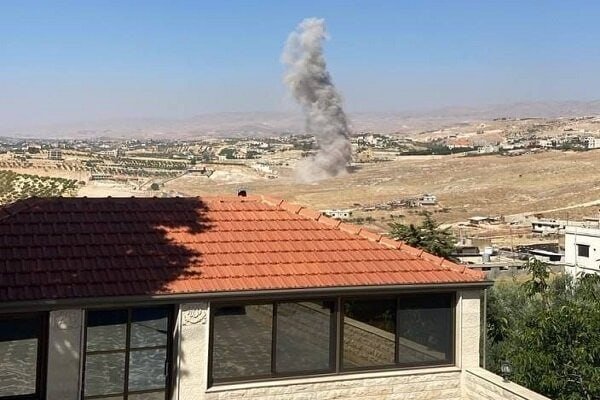
Lebanese sources aligned with Hezbollah and Iranian state media reported on 2 July 2026 that Israeli aircraft struck the southern town of al-Mansouri, in what they framed as the third such incident since the ceasefire along the Israel–Lebanon border took hold. The claim surfaced through Fars News International, Tasnim and PressTV channels in the hours after the strike, with each outlet attributing the report to "news sources" on the ground rather than to the Lebanese Army, UNIFIL or to Israeli military spokespeople. No independent Western wire has yet carried the strike on al-Mansouri as a confirmed event, and the Israeli military has not issued a public statement on the incident in the materials available to Monexus at the time of publication. The pattern, not the punch, is the story: when only one side of a conflict publishes, the record becomes whatever that side decides to file.
Al-Mansouri sits inside the band of villages south of the Litani River where UN Security Council Resolution 1701, adopted in August 2006 after the month-long Israel–Hezbollah war, was supposed to keep armed groups other than the Lebanese Army and UNIFIL off the streets. The resolution set out a simple architecture: no armed personnel south of the Litani except the recognised state forces, no civilian incursion across the Blue Line, and a long monitoring presence that has outlived every round of fighting since. In practice the architecture has been bent, broken, and patched back together more than once, most recently after the Israel–Hezbollah flare-up of 2023–2024, which ended in a ceasefire whose terms both sides accuse the other of violating almost weekly.
The reporting pipeline that surfaced the al-Mansouri strike is itself a piece of evidence. Fars News Agency, Tasnim News Agency and PressTV are Iranian state outlets; Al-Manar, the television arm of Hezbollah, runs parallel framing in Arabic. Their coverage of events inside southern Lebanon tends to be first because they have reporters on the ground there and because Hezbollah's own media infrastructure has historically been the most prolific chronicler of cross-border incidents in villages like Bint Jbeil, Beit Yahoun and the cluster of border-adjacent towns south of Tyre. That does not make the reports false. It does mean a reader relying on them alone is reading a single editor's eye, with the counter-narrative either absent or relegated to a wire line buried three paragraphs down.
Western and Israeli sources have been slower to corroborate the 2 July strike. The Israeli military's daily border summary for the period, where it exists in public, has not addressed al-Mansouri specifically. Reuters and AFP, the two wires that typically lead on cross-border incidents because they staff both the Lebanese and Israeli sides, have not posted a confirmation on this event in the material available to Monexus. UNIFIL's communications channel, which routinely acknowledges Israeli overflights and ground activity inside Lebanese territory, has not yet logged an incident report against al-Mansouri for 2 July. Until one of those three independent voices logs the strike, the strike remains a Hezbollah-aligned and Iranian-state claim about an Israeli operation, not a confirmed incident in the international record.
The "third since the ceasefire" framing matters because it places the strike inside an arithmetic. Each side in southern Lebanon keeps its own count, and each count is weaponised. Israel publishes a tally of Hezbollah rocket and drone launches, including attempted infiltrations of drone squads into Israeli airspace, to argue that the militant group's disarmament commitments under the ceasefire have not been honoured. Hezbollah-aligned outlets publish a tally of Israeli overflights, demolitions and what they call assassination strikes inside Lebanese territory, to argue the opposite. Both tallies are accurate within their own sourcing and unverifiable in real time. The al-Mansouri claim joins a queue of similar claims waiting for one of two things: an Israeli military comment that confirms the strike and contextualises it, or a UNIFIL incident report that places it on the map.
The structural problem here is not unique to Lebanon. It is the same problem that recurs whenever an event takes place in a jurisdiction where independent journalism has been thinned out, intimidated or killed, and where the most prolific local chroniclers are affiliated with one of the armed parties. The event becomes real the moment one side reports it, contested when the other side disputes it, and confirmed only when a third-party institution with standing on both sides of the Blue Line weighs in. Until then, the al-Mansouri strike lives in a parallel record kept in Tehran and Beirut's southern suburbs, and the international community treats it the way it treats most things in southern Lebanon in the absence of corroboration: with caution, with a footnote, and with an eye on the next wire cycle.