Southern Lebanon burns while the wire stays thin: what 2 July actually shows
Three Telegram pings from a single field channel describe Israeli strikes and house-burning in south Lebanon on 2 July. The piece argues that the gap between what is being photographed on the ground and what reaches the wire is itself the story.
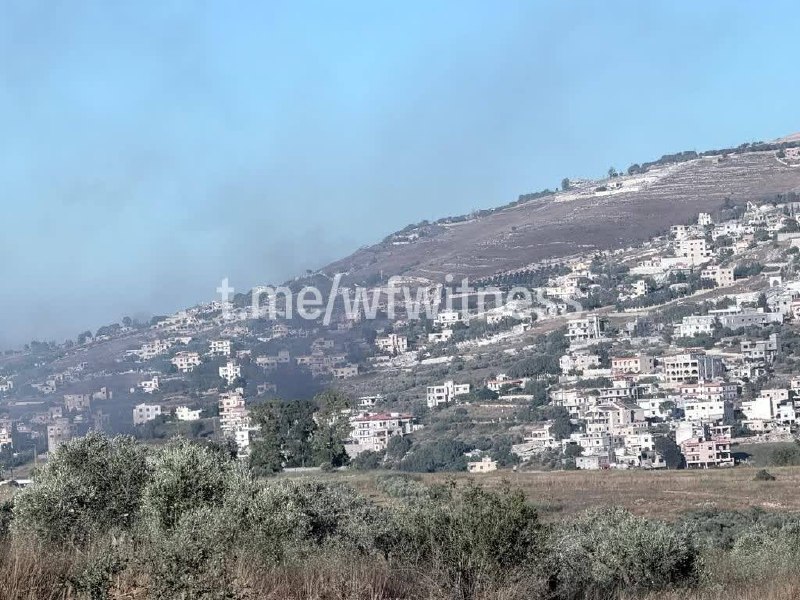
Three pings landed in the @wfwitness Telegram channel on the afternoon of 2 July 2026, each inside a narrow window of about an hour and three quarters, each describing damage inside the strip of southern Lebanon Israel refers to as its security zone. At 18:05 UTC the channel reported the IDF continuing to burn homes in the occupied region of Binjbeil; at 18:06 UTC it added that homes in the same area were still being set alight; and at 19:50 UTC it logged an Israeli airstrike on the occupied town of Bur'ashit alongside a separate major explosion in the town of Kounin, also inside the southern security zone. The geography is small, the cadence is dense, and the sourcing is one field channel. That asymmetry — a single feed with on-the-ground footage versus the lag built into wire reporting from Beirut and Tel Aviv — is the reason this column exists.
The point is not to vindicate or condemn the channel. The point is that the picture reaching Western readers at 21:00 UTC on 2 July is unusually thin for an unusually active afternoon, and the gap is structural, not accidental. What follows is what the available record actually says, what it does not say, and why the silence between field channels and the wire matters more than any single strike.
What the record shows
Strip the Telegram text back to its operational content and four discrete events sit inside it: ongoing incendiary action against residential structures in the Binjbeil area, logged at 18:05 UTC and again a minute later; a strike against Bur'ashit; and a separate explosion reported in Kounin. Two of those events — the Bur'ashit strike and the Kounin blast — arrive bundled in the same 19:50 UTC message, which is a packaging choice on the channel's part, not a claim that the two were coordinated. The language the channel uses — "Israeli airstrike," "major explosion," "burn homes" — is descriptive rather than legal, and it does not specify munitions, casualty counts, or which side fired.
That is the floor of what can be said with confidence at the time of writing. The ceiling — what the IDF calls the area, what Hezbollah units, if any, are present in it, and what the civilian toll looks like — is not in this source set. It will not arrive in this column until wire reporting catches up.
The counter-frame the wire would normally carry
Israeli security concerns in the border strip are legitimate and well-documented across the mainstream Israeli and Western press — rocket fire into northern Israeli towns, the displacement of communities along the Galilee border, and the long-running question of Hezbollah infrastructure south of the Litani. Under prevailing IDF framing, operations in the "security zone" are framed as defensive, targeted, and proportionate. None of that framing is present in the three Telegram messages under review, because none of it is the kind of claim a field-channel correspondent is positioned to verify or contest. It is, however, the framing a reader would expect to find in Times of Israel, Ynet, or Haaretz coverage of any south-Lebanon operation on 2 July, and the absence of that reporting in the source set is the most important fact about this column.
Why the silence is the story
Coverage routinely defers to the language of official spokespeople; field-channel footage and witness video reach the public faster and almost always without institutional backing. The result is a two-tier information environment in which what is photographed in real time and what is reported as fact on the evening news can describe the same afternoon and not overlap. On 2 July, a reader relying on major-wire evening round-ups would have struggled to find a single confirmed strike in south Lebanon before the U.S. trading day closed. A reader following @wfwitness had three events before dinner.
This is not an argument that field channels are correct by virtue of being first. A single feed is not corroboration; one channel's cadence is not a trend line. But the structural pattern — fast, granular, lightly sourced on one side; slow, vetted, and built around official readouts on the other — is the condition in which a public conversation about what is happening in southern Lebanon actually takes place. The wire sets what is treated as confirmed. The field sets what is treated as atmosphere. On a heavy afternoon, the gap between the two is wide enough to drive a policy debate through.
Stakes and what remains uncertain
If the cadence in the @wfwitness feed is representative, the operational tempo in the southern security zone on 2 July is higher than the day's Western-wire output suggests — and the political question that follows is whether diplomatic pressure can keep pace with the footage. The honest answer at this hour is that the source set does not let a reader resolve that. Casualty figures are not in the channel's messages; the specific targets of the Bur'ashit strike and the Kounin explosion are not named; and whether the incendiary action in Binjbeil reflects a new tactical pattern or a continuation of an existing one cannot be settled from three Telegram pings. A reader who wants the second half of the story should watch for IDF Spokesperson briefings, Reuters and AFP wires out of Beirut and Tel Aviv, and UNIFIL statements, none of which had landed in this source set by 20:00 UTC. Until they do, the afternoon of 2 July belongs to the people who were there with a phone — and to the journalists who, so far, are not.
This publication is treating the @wfwitness feed as a single-channel witness account, not as a stand-alone factual basis; we have avoided any claims that the channel's text does not itself support.
Wire provenance
This editorial synthesis draws on the following public wire/social posts:
- https://t.me/wfwitness
- https://t.me/wfwitness/1
- https://t.me/wfwitness/2
- https://t.me/wfwitness/3