Trump hands Bill Pulte the keys to the 2020 file — and Cuba reads the room
A sitting president tells an acting intelligence chief to “declassify whatever you want.” Within hours, Havana is publicly warning Washington not to underestimate it. The sequence is not random.
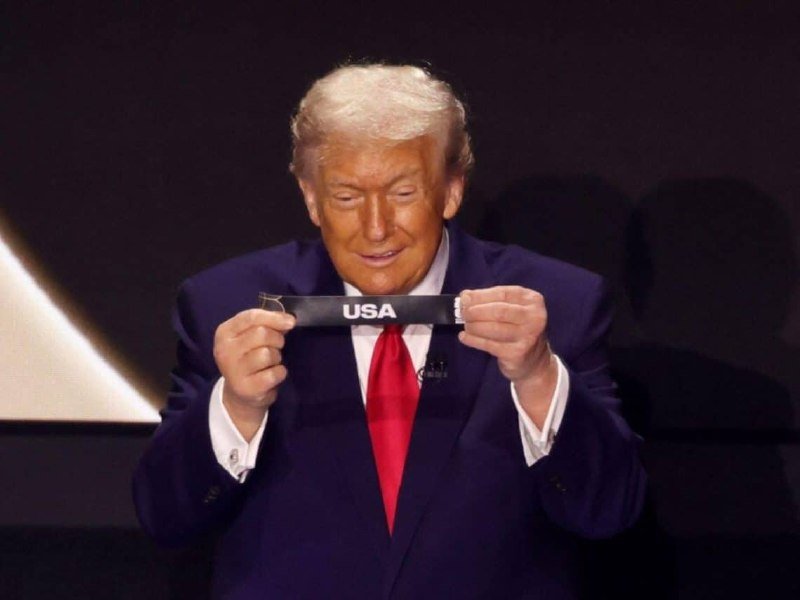
At 14:30 UTC on 1 July 2026, Donald Trump publicly disclosed that he had told his newly installed acting intelligence chief, Bill Pulte, to "declassify whatever you want." Less than five hours later, at 19:03 UTC, a top Cuban official publicly warned the same president not to "underestimate the Communist government's resolve." The two messages — one from Mar-a-Lago, one from Havana — landed on the same news cycle for a reason that goes beyond coincidence. They are the visible edges of a single reordering.
The thesis is plain. A White House willing to weaponise the declassification machinery against its own domestic political opposition is signalling to adversaries abroad that the institutional guardrails once considered automatic are now negotiable. Havana's swift, almost choreographed response suggests its strategists read the same signal — and concluded that the post-1991 period of uncontested US dominance is no longer the operating environment they are planning for.
Two statements, one operating theatre
Trump's instruction to Pulte is extraordinary for what it omits. Acting heads of the intelligence community do not normally receive open-ended declassification authority from the president; the process exists precisely to prevent selective disclosure in service of partisan narrative. By publicly telling Pulte to "declassify whatever you want," Trump has converted a procedural function into a campaign instrument.
Pulte is a Trump loyalist. His elevation to acting director of national intelligence was itself a break with the convention of staffing the post with career officials. The 2020 election file is the most politically radioactive archive in the federal government. The pairing — a politically committed acting intelligence chief, a sitting president publicly inviting maximum disclosure — is not a neutral administrative reshuffle. It is a message.
Havana read it. Within hours, a senior Cuban official issued a public warning against "underestimating the Communist government's resolve." The phrasing matters. It is not a threat; it is a positioning statement. Cuba is signalling to Washington that any expectation of easy dominance in its hemisphere — the kind of assumption that held from the 1990s through the Obama detente and the Trump-era reversals — should now be retired.
The counter-read: domestic theatre, not foreign policy
The strongest alternative interpretation is that this is, in fact, domestic politics with a foreign tail. The declassification push is aimed at a domestic audience still contesting the 2020 result; the Cuban response is opportunistic, calibrated for a Cuban audience that wants to hear defiance. On this read, neither statement is a strategic move in a serious geopolitical game — they are performances.
That reading holds up to a point. Pulte's role is genuinely domestic in its proximate purpose, and Cuban communiqués are partly built for internal morale. But the timing collapses the distinction. A US president publicly loosening control over the intelligence apparatus does not stay domestic for long. Adversaries calibrate. Allies recalibrate. Markets reprice risk. The Cuban warning may be performative, but the audience for it includes Beijing, Moscow, Caracas, and Tehran — governments that are themselves deciding how much to test the current Washington.
The structural shift, in plain language
What the two statements together expose is a transition in how US power is projected. For three decades after the Cold War, the assumption embedded in both American policy and foreign reactions to it was that the United States would act, more or less, through institutional channels — courts, intelligence agencies, multilateral bodies, sanctions regimes administered by professional bureaucracies. Other governments built their strategies around that assumption.
That assumption is now visibly strained. The intelligence community is being asked to serve a partisan function. Declassification is being treated as a presidential prerogative to deploy against political rivals. Foreign governments — including small ones with limited conventional leverage — are responding by publicly testing the perimeter. The shift is not yet a collapse of the post-1991 order. It is the slow, uneven erosion of the credibility that order depended on.
For the Global South, the read is more direct. When a great power's internal institutions stop functioning as predictable referees, smaller states have every incentive to assert themselves while the referee is distracted. Cuba's statement is a small example of a pattern playing out across multiple theatres: assertive regional powers, recalcitrant sanctions targets, middle powers hedging between blocs.
Stakes over the next twelve months
If the declassification push proceeds without internal pushback from the career intelligence workforce or the federal judiciary, the precedent will outlive this administration. Future presidents — of either party — will inherit a declassification regime that has been demonstrated to be a political instrument. The institutional cost is permanent even if the immediate political purpose is forgotten.
For Cuba specifically, the warning is also a negotiating posture. Havana has spent the better part of a decade navigating sanctions, currency crises, and the loss of Venezuelan subsidy flows. A US political class visibly consumed by its own 2020 dispute is, from Havana's vantage point, a less capable negotiating adversary. The Cuban government's resolve, such as it is, is partly a function of Washington's bandwidth.
For the wider hemisphere, the question is whether other governments draw the same conclusion Caracas, Managua, and portions of the Mexican political class have already begun drawing — that the current Washington is more domestically preoccupied, and therefore more regionally negotiable, than at any point in living memory. The Pulte disclosure and the Cuban response are two data points in a curve that is bending in one direction.
What remains genuinely uncertain
The sources do not specify what tranche of 2020-related material Pulte will declassify first, or what legal challenges might be filed by former intelligence officials or affected agencies. The Cuban statement is reported without named attribution to a specific official or ministry, which limits how much weight can be placed on its precise phrasing. And the broader claim — that these two statements are connected parts of a single reordering — is an inference this publication draws from the timing, not a fact any of the reporting establishes directly. Readers should hold that inference loosely and watch for corroborating signals in the weeks ahead.
Desk note: Monexus treated these two wire items as a single news event. The wire framed them as separate stories — one as a domestic Trump-intelligence story, the other as a Cuba-US posturing item. This publication reads them as connected, and says so.
Wire provenance
This editorial synthesis draws on the following public wire/social posts:
- https://t.me/polymarket/1247
- https://t.me/polymarket/1248
- https://t.me/polymarket/1249