Tuchel's England survive a scare they should never have needed
England came from behind to beat DR Congo 2-1 and reach the round of 16, but the performance did little to settle the underlying question about Thomas Tuchel's squad construction — a question that will not wait politely until the knockout rounds.
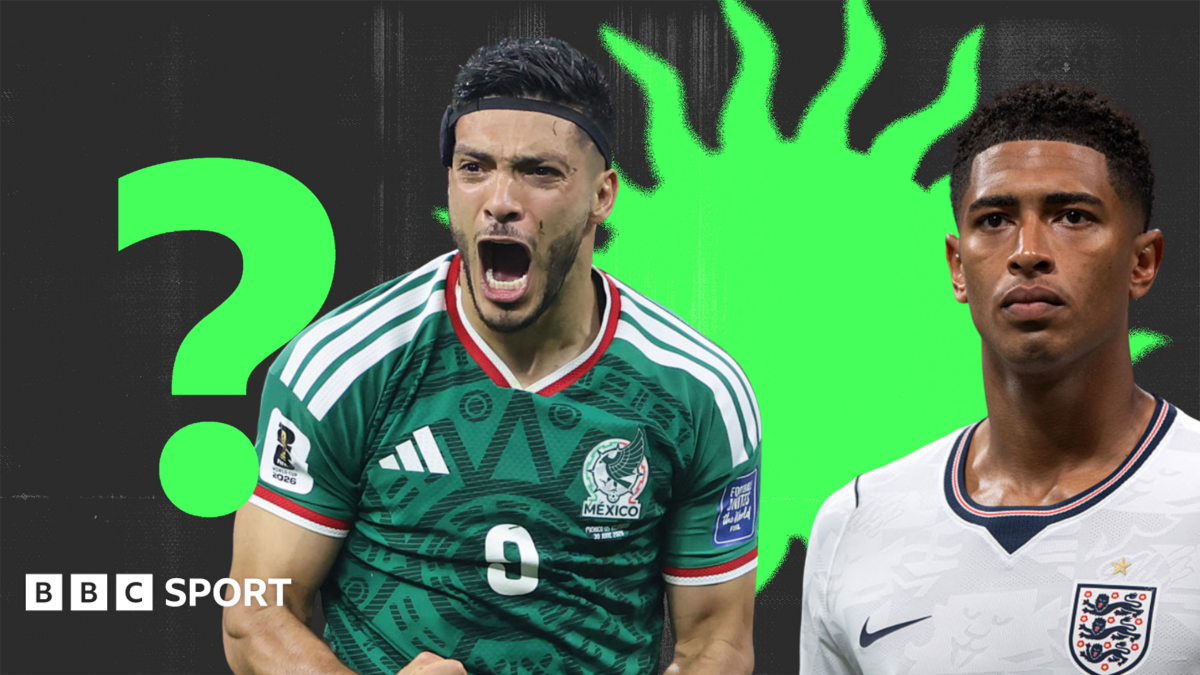
England arrived at the 2026 FIFA World Cup with the unmistakable scent of expectation — and on 1 July 2026, Thomas Tuchel's side delivered a result that looked straightforward on paper and rather less so on grass. DR Congo, the lowest-ranked side left in the tournament's group phase, took a 1-0 lead before England clawed back a 2-1 win and the round-of-16 berth that comes with finishing alive. The comeback kept the Three Lions in the competition. It did not settle the debate that has been building inside the English camp for weeks.
The question is no longer whether England can win a knockout game. It is whether the squad Tuchel has constructed can survive a tournament of shocks, where the floor of opposition quality rises sharply and the margin for second-guessing shrinks. Two moments, one in each half, captured the gap between result and performance: the slack defending that allowed DR Congo to lead, and the substitutes — or the adjustments that followed — that dragged England back across the line.
A win that masked the warning signs
The structure of the match told a familiar story for England-watchers. Tuchel's side dominated possession, conceded the first goal, and then leaned on individual quality and a dressing-room response to recover. The manager himself praised that response. "Energy and team spirit at the highest level," Tuchel said after the final whistle, framing the victory as confirmation that the squad's character holds when the scoreline turns hostile. By any reasonable reading, a comeback against a side England were expected to beat on 1 July is a small data point, not a verdict.
It is the underlying decisions — the personnel choices, the system, the trust shown in fringe figures over established starters — that have drawn sustained scrutiny. CBS Sports's reporting on 1 July put the matter plainly: Tuchel's "flawed" squad construction is already threatening to derail England's campaign before the knockout rounds have properly begun. The phrase "flawed" is editorial; the evidence behind it is the visible hesitation in selection that has followed Tuchel since his appointment, with regulars rotated and combinations altered from game to game.
A manager still searching for a first XI
BBC Sport's pre-match interactive on 1 July — inviting readers to pick the side they would field against DR Congo — functioned as an accidental referendum on Tuchel's tenure so far. The exercise only makes sense if a meaningful number of supporters believe they could select a stronger XI than the staff. Phil McNulty's chief football writer column, published earlier the same day, made the same point in plainer prose. The phrase Tuchel used internally — that he must "now play his strongest hand" in a "World Cup danger zone" — is the right one. Twelve months out from the tournament proper, the manager wanted flexibility. Three games in, he needs clarity.
The closer the tournament moves to its high-stakes rounds, the louder the complaint about squad construction has become. England's depth is, on paper, exceptional: the issue is not talent but minutes, familiarity, and trust. A side that has rotated extensively through the group phase does not suddenly find cohesion in a knockout game. That is the structural worry — not that any individual is underperforming, but that the relationships between them have not been allowed to set.
Where the counter-reading sits
There is a defensible alternative reading, and it deserves its own space. Tuchel's argument — the one he has made throughout, and the one implicitly carried by the post-match remarks about "team spirit" — is that rotation builds a squad that can absorb injury, suspension, and the sudden form-drops that a long tournament always produces. A manager who names his strongest XI in game one and rides it to the final is a manager who has bet everything on a single configuration. The cost of being wrong, with no tested alternative, is steeper than the cost of an awkward group phase.
That case holds up to a point. It falters in two places. The first is that the experiments have not yielded obvious gains — there is no selection choice in this tournament yet that looks like a discovery, only a series of starts and stops. The second is that the rotations have produced performances that, against opposition ranked far below England's ceiling, look unsettled rather than exploratory. A "strongest hand," to use the phrase McNulty reported, is meant to clarify. So far the hand has been held close to the chest.
What is actually at stake
The trajectory, if it continues, is straightforward to draw. England will face a side on 4 or 5 July 2026 that has spent the last fortnight solving the kinds of problems England have only encountered intermittently. The round-of-16 opponents are not DR Congo. They will be sharper in transition, more clinical in the box, more disciplined in the press. A side that needed a second-half response to escape the lowest-ranked side remaining in the tournament does not arrive at that fixture with momentum on its side.
The stakes are also reputational. Tuchel arrived as a serial winner at the highest level of European club football. He has not, in this tournament, built a side that looks like a serial winner. The next match is not a referendum on his entire career, but it is the next data point, and the room for "we're still finding our feet" explanations narrows quickly at this stage of a World Cup. A victory — any victory — buys another week. A loss begins a different conversation entirely, and one with a longer half-life.
Desk note: Monexus framed this less around the result than around the selection logic that produced it. The wire reporting on 1 July skewed toward the comeback narrative; the underlying question is whether Tuchel has built a squad that does not need one.