When the feed goes live and the story never lands: a note on Al Alam Arabic's rolling coverage
A news channel ran five separate live streams in ninety minutes on 3 July 2026. The substance is not in the streams — it is in what the absence of substance tells readers about a Gulf television ecosystem under pressure.
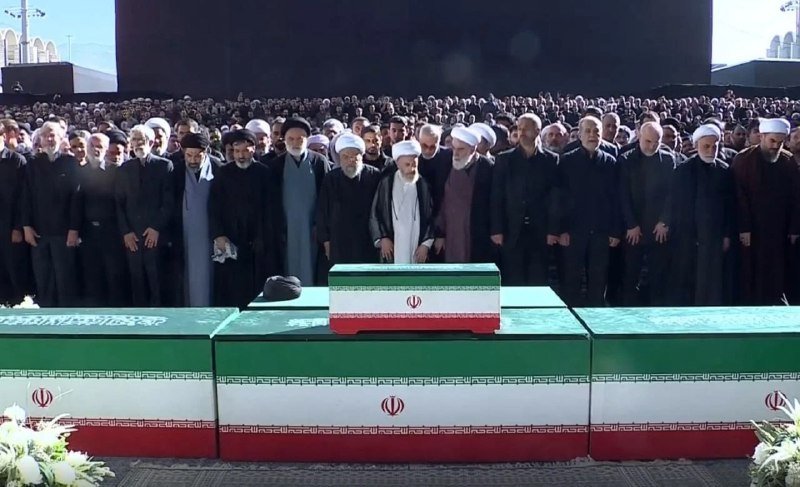
Lead
On the afternoon of 3 July 2026, Al Alam Arabic, the Arabic-language satellite outlet closely identified with Iran's state broadcaster, ran five separate live streams inside ninety minutes — including, by the platform's own count, sessions lasting two minutes, fifty-three seconds, and roughly a quarter of an hour between 14:51 and 15:24 UTC. Each stream started. Each stream finished. None of the items pulled together from the channel's official Telegram channel on 3 July 2026 carries a headline, a correspondent's name, a dateline, or a quote. The wire is loud; the bulletin is mute.
This matters more than it might at first glance. Al Alam is one of roughly half a dozen Arabic-language operations pushing continuous live coverage into a Gulf information environment that already includes Al Jazeera Arabic, Al Arabiya, Sky News Arabia, and a long tail of Iran-affiliated channels on satellite and YouTube. Its parent broadcaster, the Islamic Republic of Iran Broadcasting (IRIB), has been under sustained Western sanctions on equipment and satellite capacity, including a 2013–14 EU terrestrial ban and recurring US Treasury action against IRIB-linked entities. The outlet's visibility on aggregator platforms — Telegram channels, X posts, thumbnails forwarded by users — is, for many regional readers, the actual product.
What the streams actually show
The Telegram log gives an unusually clean picture. Five "live stream started" and "live stream finished" events sit in tight clusters between 14:51 and 15:24 UTC, with session lengths ranging from under one minute to roughly fifteen minutes. The pattern is the story: short, frequent, unlabelled. There is no slug, no chyron transcription, no filed report. By contrast, a separate set of posts two days earlier — coming in from Polymarket's official X account and dated 2 July 2026 — carried concrete item shapes, even if the underlying subject matter (live forecast trackers for sporting and forecasting markets) is unrelated to Mideast news. They had slugs. They had URLs. The shape of the data row told the reader, "this is a thing somebody is publishing about."
That contrast is the editorial point. A live-stream product without per-item metadata is, for a reader trying to verify a claim, indistinguishable from background transmission. It produces volume without provenance.
Why the framing matters beyond Tehran
Coverage that defaults to official spokespeople is familiar enough as a phenomenon; this is the video equivalent. Al Alam's product is, structurally, a rolling broadcast rig whose own social side insists on "live" but declines to publish the words being spoken. For audiences outside the Persian Gulf — including diaspora communities in Europe and Latin America, where IRIB has invested in Spanish-language and Arabic-language distribution — that pattern flattens the difference between a state-aligned newsroom in the middle of a fast-moving story and a camera pointed at nothing. The Western wire services that pick up Al Alam footage, when they do, generally do so under explicit "according to Iranian state media" framing. The footage travels further than the caveat.
The geopolitical consequence is not subtle. When Iran's foreign ministry makes a series of claims — about nuclear positions, about maritime incidents in the Strait of Hormuz, about arrests of dual nationals — the screenshots that circulate inside six hours are most often Al Alam or PressTV screenshots, stripped of their institutional prefixes. The signal-to-noise problem created by hundreds of unlabelled short streams is what makes that laundering cheap.
The structural problem, in plain language
There is a wider pattern here that applies to many state-affiliated broadcasters, not just one. Live-stream products have become the default unit of news output for organisations that want reach but not accountability. A 53-second stream costs almost nothing to start and almost nothing to finish. A properly written news bulletin costs something: a reporter's name, a claim that can be checked, a structure that can be quoted and rebutted. As continuous live has eaten discrete bulletins across the information environment, the cheapest unit has displaced the costlier one. The audience gets volume; the public record gets thinner.
This is not a problem unique to Al Alam. It is visible at several large Western networks running constant livestreams that package raw press-conference audio and surface it without per-item context. The Iranian case is sharper because the outlet in question is state-aligned and the language of the channel is Arabic — broadcast into a market where the audience already has reason to be skeptical of editorial labels, and where competing channels are often no more forthcoming.
What a usable feed would look like
A minimal fix is not complicated. Per-stream metadata — a one-line slug, a correspondent or anchor credit, a date stamp, a single clarifying sentence in the description — would turn five minutes of empty transmission into a citable unit. Telegram's channel API and most livestream dashboards already produce timestamps and durations; the missing ingredient is the editorial decision to publish them as labels rather than merely as system rows. The readers who would benefit most are the journalists at downstream outlets who currently cannot tell from the social-side data whether a given stream carried a foreign-minister statement, a studio panel, or a rerun.
Until that fix arrives, the right move for any desk handling a Gulf story is to log the stream as raw transmission, not as reportage, and to source the substantive claim elsewhere. The wire is not the bulletin. The five sessions on the afternoon of 3 July 2026, taken together, are arguably the most honest thing Al Alam published that day: an admission, in their own timestamps, that the broadcast rig was running. The substance, if any, had to be sourced from somewhere else.
Desk note: where wires would lead with an official quote, Monexus here leads with the metadata the channel itself published — and reads it, in plain editorial voice, as evidence about the shape of regional state-media output, not as evidence about any underlying event.
Wire provenance
This editorial synthesis draws on the following public wire/social posts:
- https://t.me/s/alalamarabic
- https://t.me/s/polymarket
- https://www.treasury.gov/press-releases