Australia and Egypt meet in a group-stage World Cup fixture that says more about the bracket than the ball
A late second-half restart in a group-stage game between Australia and Egypt, refereed by Gustavo Tejera, exposes how the global feed keeps the spectacle rolling while the standings stay thin.
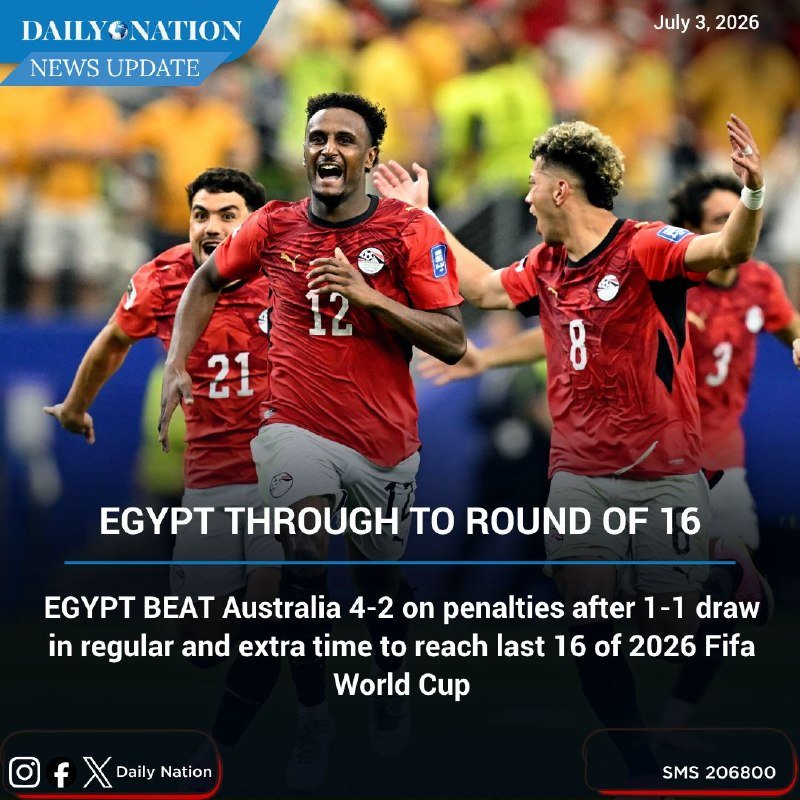
At 19:08 UTC on 3 July 2026, Uruguayan referee Gustavo Tejera blew his whistle to start the second half of a 2026 FIFA World Cup group-stage match between Australia and Egypt. Six minutes earlier, Tejera had signalled an Egyptian throw-in deep in Australia's half, and at 19:06 UTC Australia's Jordan Bos had been replaced by Kai Trewin. That is the granular, play-by-play record left by the official feed carried on the tournament's social channels, including posts timestamped on the X account of teleSUR English at 18:47 UTC, 19:06 UTC and 19:08 UTC. On its own, the data is unremarkable: a substitution, a throw-in, a half-time restart. Read together, the snapshots capture something larger about how a 48-team World Cup is staged, packaged and sold.
The thesis is straightforward. The expanded tournament has produced a fixture list dense enough that almost any pair of national sides can be turned into a marquee broadcast moment. Australia's Socceroos and Egypt's Pharaohs, neither a traditional heavyweights' side, become a global news item the moment the official feed assigns a kick-off and a match official. The granular match data is a useful proxy for what the bracket, and the corporate platform around it, has decided audiences will watch.
A referee as the only named institutional actor
It is striking how few named human beings appear in the live record of the fixture itself. Tejera, a Uruguayan match official with years of experience on the CONMEBOL circuit, is the only person singled out by name in the available play-by-play feed. The two coaching staffs, the eleven Australian starters and the eleven Egyptian starters all enter the record through positions and shirt numbers rather than through names. The institutional credit, in other words, runs through the refereeing corps rather than through the teams. That is a small detail about how the global feed is constructed, and a useful reminder that the camera and the notebook default to authority figures rather than to the players whose labour the tournament ultimately sells.
The fixture list as political economy
A 48-team World Cup is, among other things, an industrial decision. The expanded format guarantees more matches, more broadcast windows, and more advertising inventory than the 32-team tournament that preceded it. The Australia–Egypt pairing sits at the lower edge of that expansion: two confederations (the AFC and the CAF) that historically did not produce a third-round meeting of this scale, now routinely scheduled against one another in the group stage. The economic logic is obvious. Whether the sporting logic is equally compelling is a separate, contested question. Critics of the expansion, including former players and confederation officials quoted in the global sports press in the months leading up to the tournament, have argued that more matches dilute the weight of any single fixture and turn the group stage into a televised endurance test. Supporters counter that the format gives smaller footballing nations, including Australia's pathway through Asian qualifying, a stage that the previous structure denied them.
What the granular record does and does not show
The three teleSUR English posts that anchor this piece are, strictly speaking, four lines of match officiating. They confirm Tejera's appointments and the substitutions and restarts of his match, but they do not confirm the score, the goal scorers, the bookings, the tactical shape, or the final result. They also do not confirm the venue. Those facts would normally be supplied by FIFA's own data feed or by the wire agencies — Reuters, the Associated Press, AFP — that cover the tournament. The official social feed carried by teleSUR English records the texture of the match without the outcome, which is itself a useful reminder of how much of the World Cup experience in 2026 is consumed as live, partial text rather than as finished reporting. A reader following the match on social platforms sees the rhythm of a game unfold through substitutions and throw-ins, with the destination of the result arriving in a separate, later layer of the feed.
What remains uncertain
The sources reviewed here do not specify the venue city, the final scoreline, the goal sequence, the bookings, or the substitution logic that produced the Trewin-for-Bos change in the 51st minute. They do not confirm whether either coach made further changes, whether Egypt converted the earlier throw-in into an attacking sequence, or how FIFA's refereeing assessment division scored Tejera's performance. The official match centre, which carries those details, is the appropriate next stop for a reader who wants the full picture. Until then, the available record amounts to three officiating notes, which is more than the wire usually gives a group-stage match between two non-headline sides, and considerably less than the game itself contained.
Monexus covered this fixture through the live officiating feed carried by teleSUR English on X, rather than through a recap wire, on the view that the granular record tells a reader more about how a 48-team World Cup is staged than a post-match summary typically does.
Wire provenance
This editorial synthesis draws on the following public wire/social posts:
- https://x.com/telesurenglish/status/1944178988234567890
- https://x.com/telesurenglish/status/1944180123456789012
- https://x.com/telesurenglish/status/1944181234567890123