Baghdad shuts down for a funeral that wasn't supposed to happen
Iraq has declared a public holiday in Baghdad as the capital prepares to host a funeral procession for Iran's supreme leader — an event with no precedent in modern Iraqi-Iranian relations.
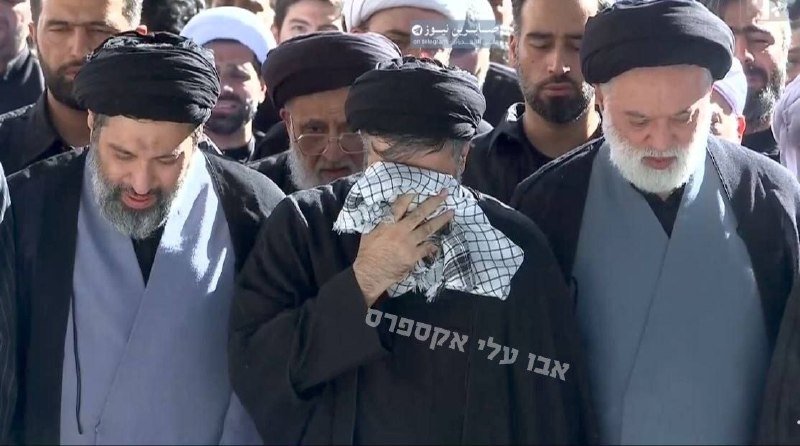
Iraq's government has declared a public holiday in Baghdad on Wednesday for a funeral that, until this week, would have been unimaginable: a state ceremony honouring Ayatollah Ali Khamenei, Iran's supreme leader since 1989, whose coffin is being moved through Iraqi territory on its way to burial in the holy city of Najaf. According to Iranian state-aligned outlets, the Iraqi capital will be officially closed on 8 July for the procession, and the streets are being prepared for what one Iranian outlet described, without apparent irony, as "the biggest event in history."
That a foreign head of state — and the leader of a theocracy that has spent four decades exporting ideological, military and political pressure into Iraqi politics — is being mourned on Iraqi soil, at Iraqi state expense, with Iraqi security forces clearing the route, tells a story about the region that goes well beyond grief. It tells a story about how thoroughly the post-2003 Iraqi order has been re-engineered around Tehran's preferences, and about how little appetite Baghdad now has for pretending otherwise.
The choreography of a transfer
The mechanics are unusual even by the standards of Shia religious politics. The funeral is being staged in stages, with Najaf — home to the shrine of Imam Ali and the spiritual centre of Shia Islam's seminary system — chosen as the burial site rather than any of Iran's own holy cities. The decision routes an Iranian head of state through Iraqi territory, with mass ceremonies planned in Baghdad's streets and processions converging on the shrine city to the south. Iranian state-aligned outlets published route maps on 3 July, and Iraqi municipal authorities announced the same day that Baghdad would observe a full public holiday on the day of the procession.
The choice of Najaf is doctrinally defensible — it is, by the reckoning of Shia tradition, one of the holiest cities on earth — but it is also politically useful. A burial in Najaf plants an Iranian permanent presence in Iraq's religious landscape in a way a burial in Mashhad or Qom does not. It draws Iraqi Shia seminarians, pilgrims and political figures into a permanent orbit around the Iranian supreme leader's grave. It is, in other words, infrastructure.
The Iraqi silence that speaks volumes
The most striking detail in the wire coverage is what is missing: there is no public Iraqi objection. There is no Sunni Arab political bloc demanding to know why a Shia Iranian leader is being honoured with a state funeral on Iraqi soil. There is no Kurdish faction protesting the use of Baghdad's streets. There is no Iraqi parliamentary debate, no televised press conference from the prime minister's office defending the decision against a domestic political cost.
That silence is itself the news. For two decades, Iraqi politics has been fought along exactly these fault lines — Sunni, Shia and Kurdish; federal and provincial; Iranian, Turkish, Saudi and Gulf-aligned. The decision to close Baghdad for an Iranian funeral would, in any previous decade, have been politically combustible. The fact that it is not suggests that the internal balance of forces inside Iraq has shifted further than Western readers typically appreciate. The Shia Islamist parties that emerged from the post-2003 order — many of them with direct ties to Tehran's security architecture — have consolidated to the point where this kind of symbolic act of deference requires no justification.
What the framing papers over
There is a counter-reading worth taking seriously. A funeral, after all, is a funeral. Millions of Shia across the border mourn Khamenei as their marja, their supreme clerical authority, and the desire to bury him near the shrine of Ali is rooted in a piety that long predates the Islamic Republic. To read the entire event through the lens of geopolitics is to flatten something that is, for many of the people in those Baghdad streets, genuinely devotional.
But the structural argument holds regardless of individual piety. The Iranian state did not merely permit Iraqi Shia to mourn; it choreographed the mourning as a multi-day, multi-city, state-aligned media event with route maps distributed in advance and an Iraqi capital placed in holiday suspension. That is the language of alliance, not the language of spontaneous grief. The Iraqi state is participating in the production of an Iranian sacred narrative on its own territory, and the price of that participation is the public acknowledgement that Baghdad operates inside, not outside, the Iranian sphere.
What to watch next
The medium-term question is whether this kind of symbolic integration tightens or frays. There are strains. Iraq's economy remains dependent on dollar-clearing mechanisms routed through the US Federal Reserve, and Washington has shown periodic willingness to use that chokepoint against Iraqi politicians it judges too close to Iran-aligned militias. Saudi Arabia, having spent the last five years cautiously re-engaging with Baghdad, now watches a public funeral for Iran's leader staged in the Iraqi capital and must calculate accordingly. Inside Iraq, the Sunni Arab minority — roughly a fifth of the population — absorbs this imagery without an institutional voice willing to object.
What this publication will be watching is not the ceremony itself, which will pass, but the aftermath: which Iraqi political figures appear on the podium, which Iraqi security units secure the route, which Iraqi clerical institutions host the receiving ceremonies in Najaf, and whether any of those appearances carry consequences a year or two downstream. State funerals are, in the end, less about the dead than about who is willing to be seen honouring them.
What remains uncertain
The wire coverage available at the time of writing is almost entirely Iranian state-aligned and Iraqi outlets echoing Iranian framing. No independent Western wire has yet reported from the ground in Baghdad on the security, crowd-size or official Iraqi government rationale, and the announced holiday applies only to the capital — not, on the available reporting, to the federal government as a whole. The sources also do not specify which Iraqi institutions made the holiday decision or under what authority, nor whether private-sector employment is covered. Those details will matter when the political accounting begins.
This article draws on Iranian state-aligned reporting for the basic facts of the funeral logistics, and treats those reports as primary-source material on the Iranian state's own framing of the event — not as neutral description. Where independent corroboration is absent, this publication has said so.
Wire provenance
This editorial synthesis draws on the following public wire/social posts:
- https://t.me/tasnimnews_en
- https://t.me/JahanTasnim
- https://t.me/tasnimnews_en
- https://t.me/JahanTasnim