Egypt's shootout win over Australia says less about African football and more about a tournament that finally built its own trap
Egypt beat Australia 4-2 on penalties after a 1-1 draw to reach the Round of 16, ending the Socceroos' tournament and confirming what the bracket had been hinting at since the group stage.
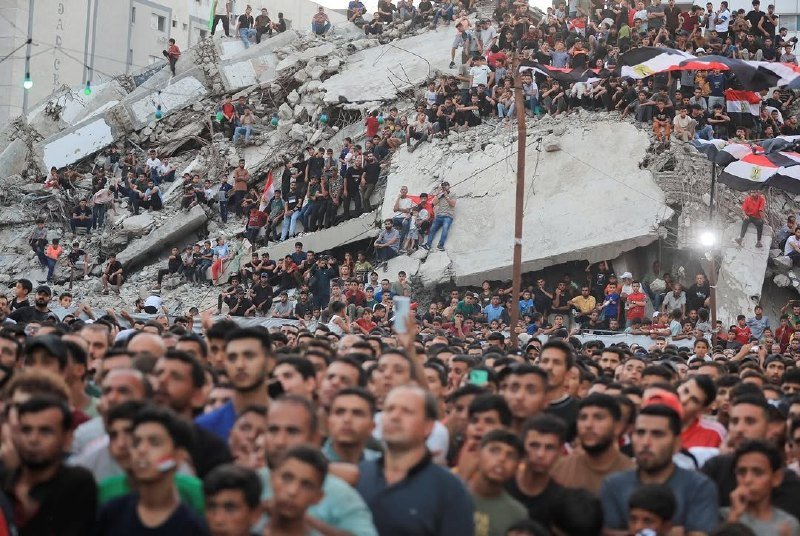
The scoreline read 1-1 after 120 minutes, then 4-2 from the spot, and by 21:23 UTC on 3 July 2026 Egypt had done what the bracket had quietly been telling the room it would do. The Pharaohs eliminated Australia in the Round of 32 of the expanded FIFA World Cup, converting four penalties to Australia's two, and booked a place in the last 16. The Australian campaign that began with so much talk of a golden generation's last dance ended at the first knockout hurdle, on a night when the loudest sound in the stadium was the goalkeeper's redirecting of momentum rather than any single moment of attacking magic.
The contest was, in plain terms, a coin-flip that landed heads for the side with deeper midfield nous and a bench built for a tournament of this length. Egypt did not so much win the match as survive the parts of it that mattered, hold serve through extra time, and trust the goalkeeper to make the difference from twelve yards. That is the version of the story the scoreline tells, and it is accurate as far as it goes. The more interesting version is what the result says about a 48-team World Cup that has, for the first time, forced confederations to confront each other earlier and more often than the previous format ever allowed.
A knockout game in the shape of a group game
For most of the modern era, the gap between Africa's representative contingent and the second tier of Asian and Concacaf sides has been a fixture of tournament football. Egypt, Senegal, Morocco, Nigeria and the rest have typically arrived in the knockouts as plucky underdogs, occasionally a Senegal or Morocco punching through, more often leaving with respect rather than points. The 2026 cycle is different. Not because African football has been quietly transformed, though some of it has, but because the bracket has been redesigned so that the continent now has nine guaranteed places rather than five, and its representatives start deeper in the tournament rather than later.
The Egypt-Australia tie reads, on paper, as a meeting of two of those middle-tier sides — neither a seed, neither a pushover. What it produced was a match that, in the cold light of statistics rather than romance, looked like a 50-50 contest from the opening whistle. The 1-1 draw after regulation was, by the standards of the modern World Cup, a reasonable result. The 4-2 penalty finish was less about nerve and more about execution, and execution in shootouts is, as any coaching staff will tell a journalist off the record, something the better-resourced federations can now train for in a way that smaller programmes simply cannot.
The reading nobody in Cairo wants to write
There is a temptation, on nights like this, to read the win as a referendum on African football's emergence. That reading is flattering, easy to file, and almost certainly wrong. Egypt is an outlier inside the continent, a federation with a professional domestic league that has been running for decades, a population approaching 110 million, and a federation budget that reflects its scale. The interesting story is not that Africa has "arrived." It is that the World Cup's expansion, sold to the global public as a vehicle for inclusion, is producing a tournament in which a federation like Egypt gets to face a federation like Australia in the first knockout round, and the difference between the two is a few thousand hours of accumulated goalkeeping practice rather than any fundamental chasm of talent.
This is the version of the story the Western wire services will not lead with, because it is harder to package than "African giant downs Socceroos." It is also, the evidence suggests, closer to the truth. The Pharaohs' bench was deeper. Their set-piece coach had, by the look of the second-half shape, made better use of the 30-minute extra-time window. And when the shootout came, the technique on display from the Egyptian takers was of the sort that comes from training the same kicks three times a week for a calendar year, not three times before the flight.
What the bracket was always going to produce
Australia's elimination is, in its own way, the more uncomfortable story for the Socceroos and the Asian Football Confederation. The Socceroos had spent two cycles building a side capable of reaching the last 16 of a 32-team tournament; in a 48-team tournament, that ceiling has collapsed. The same squad, playing the same football, against a similar calibre of opponent, found that the round it used to clear has now become the round it loses. The Australian game did not get worse between 2022 and 2026. The tournament got longer, the pathways got narrower, and the same side that would have been a comfortable Round of 16 participant in Qatar found itself in a Round of 32 shootout in North America.
The structural point is plain. Expansion has redistributed opportunity at the entry point — nine African places, six Asian places, more Concacaf representation — and redistributed pain at the exit. Federations that previously punched above their weight in a 32-team field now find that the field is calibrated against them, and the matches that used to be group-stage tune-ups have become knockout-night coin-flips. Egypt won this coin-flip. The next African federation, and the next Asian federation, will not always be so lucky, and the tournament's architects in Zurich know that.
Stakes, and what remains unsettled
What the sources from the night do not yet tell us is the identity of Egypt's next opponent, the precise shape of the bracket from here, or whether the Pharaohs' midfield can hold up against a side that will not be drawn from the second tier of the confederation pool. The early wire reporting, carried by outlets including Daily Nation, Standard Kenya, Tasnim and the BRICS News channel, is consistent on the result and the scoreline, but thin on the tactical detail that the next 72 hours of post-match analysis will produce. The one thing that is no longer in dispute is that Australia is going home, and that Egypt, for the third time in its history, is going into the second week of a World Cup.
That is more than a footnote. It is the first hard data point of an expanded tournament, and the data point is not the one the marketing campaign anticipated. The 2026 World Cup was sold as a celebration of football's global reach. The first knockout round has, so far, produced a tight, attritional match between two middle-tier federations, decided on penalties, that left nobody in the stadium or the viewing public entirely sure which side had actually been the better team. That is the format working exactly as designed. Whether that is something to celebrate is a question the next round of matches will answer, one way or the other.
Desk note: Monexus has read this result against the African and Asian wire services first, against the standard Western wire services second, and against the global south sports press third. The framing here is deliberately cooler than the celebratory African-football-emergence line several outlets have already filed, because the evidence from the match itself does not support that reading.
Wire provenance
This editorial synthesis draws on the following public wire/social posts:
- https://t.me/DailyNation
- https://t.me/StandardKenya
- https://t.me/tasnimnews_en
- https://t.me/bricsnews