Egypt's first knockout win rewards a tournament spent on the margins
A 4-2 shootout victory over Australia in Dallas gives Egypt a first-ever knockout-round win at a World Cup — and validates a side built to outlast, not outscore.
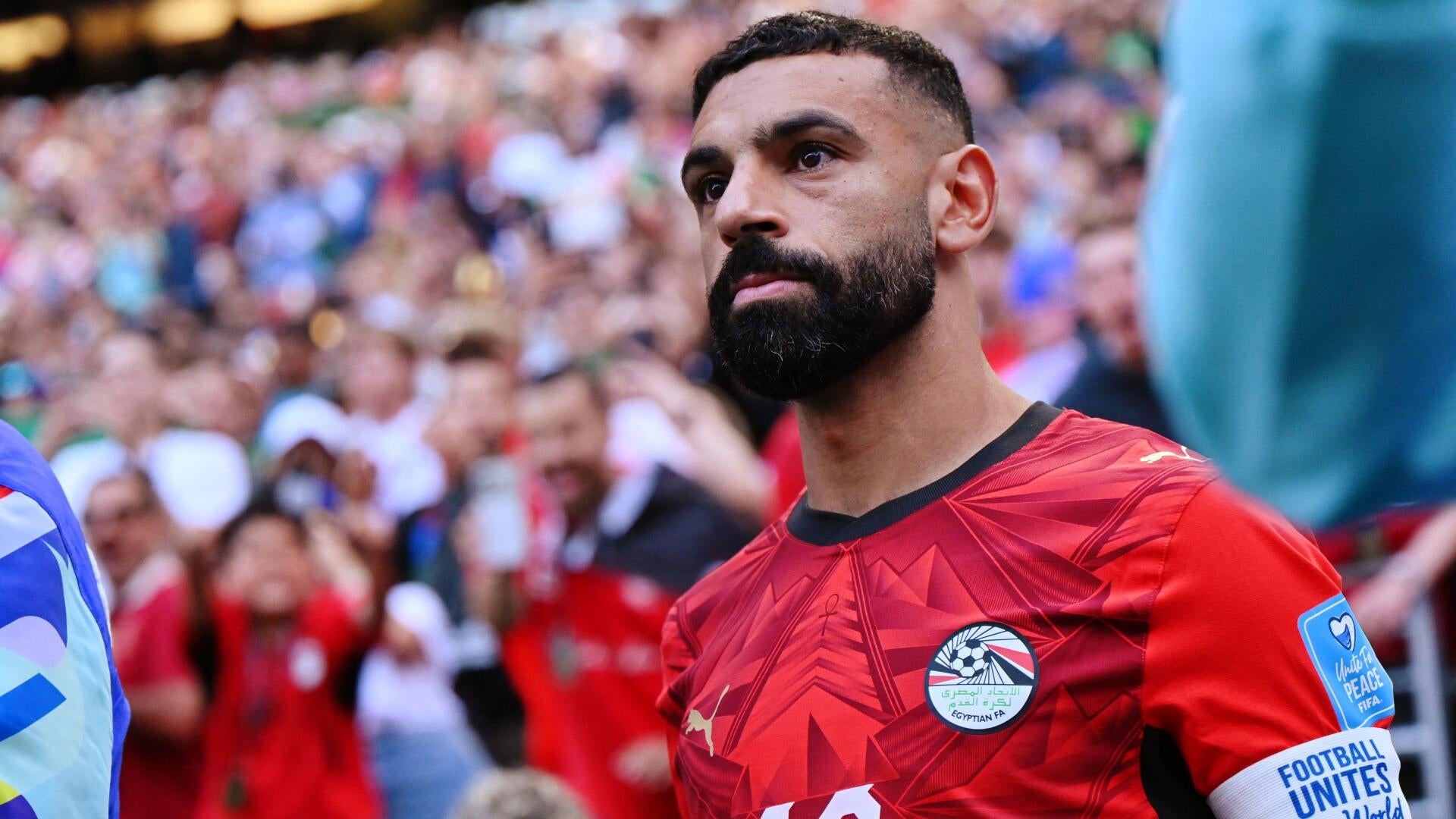
Emam Ashour's first-half header gave Egypt something it had spent decades chasing at a World Cup: a goal, and with it the lead, against an opponent with every right to fancy its chances. By the time the final whistle blew in Dallas on Friday, regulation and extra time had ended 1-1, and the African side had done what no Egyptian national team had done before — won a knockout-round match at a FIFA World Cup, 4-2 on penalties over Australia, and progressed to the round of 16 in a tournament the continent's most populous Arab state had entered as one of its favourites, and exited the group stage looking like neither.
For a squad built around Mohamed Salah, the deeper truth of the night is that Egypt won the match in the part of the game where coaches and goalkeepers decide tournaments, not the part where attacking talent usually settles them. The Liverpool forward, the country's captain and the face of the modern Egyptian game, was named in the pre-match coverage as the obvious fulcrum; the night belonged instead to the back line, the midfield legs, and a goalkeeper who saved the penalties that mattered.
The night in Dallas
Australia arrived at the round of 32 as the side more familiar with this particular stage of a World Cup. The Socceroos have now played knockout football at three consecutive editions of the tournament, and their experience of surviving the group and then dragging favourites into the kind of match that punishes a single mistake was the framing of the day before kick-off. Egypt, by contrast, had gone out at the group stage in each of its three previous World Cup appearances (1934, 1990, 1978 — the country's most recent prior visit, in 2018, ended without a knockout appearance too).
The match followed the pattern the build-up had warned about. Australia's compact shape frustrated Egypt's possession game for long stretches; the Asian confederation side sat narrow and refused to be pulled apart. Ashour's header from a set-piece was the kind of goal the script had reserved for the Socceroos, not for a team whose pedigree at this stage of a World Cup was, until Friday, a series of polite early exits. The equaliser that took the match into extra time, per the same reporting, came against the run of Egyptian defensive work rather than because the back line had been cut open, and from there the contest became a question of nerve.
On nerve, the African side won cleanly. Two Australian penalties were saved, two more were scored, and four Egyptian kicks were dispatched. The 4-2 scoreline reads more comfortable than the 120 minutes that produced it.
What the framing got wrong
Most of the pre-match coverage outside Africa framed the tie as a Salah problem. Would the captain turn up? Was his club season, the one that ended with a Premier League title at Liverpool, going to translate into a tournament setting? That framing is the easy one for a global audience — the star-name reading of any African or Middle Eastern side is a habit that predates the tournament and will outlast it. It also happens to be the wrong reading of this Egyptian team.
The Salah-centric lens reduces a side that has spent four years reorganising itself around collective pressing, set-piece threat, and a midfield with genuine legs in transition, to a single forward with an Instagram following. On Friday the goal that put Egypt ahead came from a header by a midfielder, not from the captain; the goal that kept Egypt in the tournament came from the same collective shape that conceded possession in dangerous areas for much of the night. To treat the result as a vindication of any one player is to mistake the genre of the story.
The honest counter-frame is simpler: this is a side whose coach has built a team that knows how to be hard to play against for 120 minutes, and that has, for the first time, the goalkeeping to back that up at a World Cup. That is what wins knockout football. Stars are how you arrive; the rest is structure.
The structural read
African representation at the 2026 tournament is the largest in the competition's history — nine nations qualified, up from five in Qatar — and the round of 32, expanded from the 16-team knockout stage of previous editions, was designed in part to give confederations beyond Europe and South America a longer stay in the bracket. The structural fact that Egypt is the first of those nine to win a knockout match matters more than any individual performance: it confirms that the format change is not a courtesy, but a competitive correction.
For Australia, the loss ends a run of three consecutive knockout-round appearances and a cycle that has carried the Socceroos from Russia 2018 to Qatar 2022 and now to North America. The side that beat Denmark in the group stage will be back; the cycle that ended on Friday in Dallas is the older one. Whether the next Australian squad inherits the same defensive organisation that made this side awkward to play against for 90 minutes, or whether the post-Graham Arnold generation reverts to a more open style, is a question for a federation that has now spent four years preparing for a tournament it has exited in the round of 32.
For Egypt, the round of 16 is uncharted territory, and the structural temptation now is to over-read the result. The shootout was decided by goalkeeping and by two Australian kicks that did not find the target. Those factors travel poorly across ties; they do not scale. What does scale is the defensive shape that took the match to penalties in the first place.
Stakes
The round-of-16 opponent, the venue, and the date will be set by the rest of the bracket over the next 48 hours. What is already settled is that an Egyptian national team has, for the first time, a knockout-round win to point to — a piece of history that does not depreciate regardless of what follows. The Cairo press will frame it as the night the country arrived at the modern World Cup; the more cautious read is that it is the night the country stopped arriving and started playing.
The remaining uncertainty is whether this is a one-off, the kind of result a tight knockout bracket occasionally produces for a side that has organised itself well, or the beginning of a deeper run. The sources available do not specify either way. Egypt's next opponent, the round-of-16 stage, and the form of Salah and the back line through extra time will answer that question. On Friday in Dallas, the only fact that needed answering was the one that was, finally, settled.