Egypt's shootout win lands it in the last 16 — and turns the team's political baggage into the story of the night
Egypt beat Australia on penalties to reach the last 16 at the 2026 World Cup, with Hossam Abdelmaguid's decisive spot-kick the moment the night will be remembered by — but the manager's politics kept dragging the spotlight elsewhere.
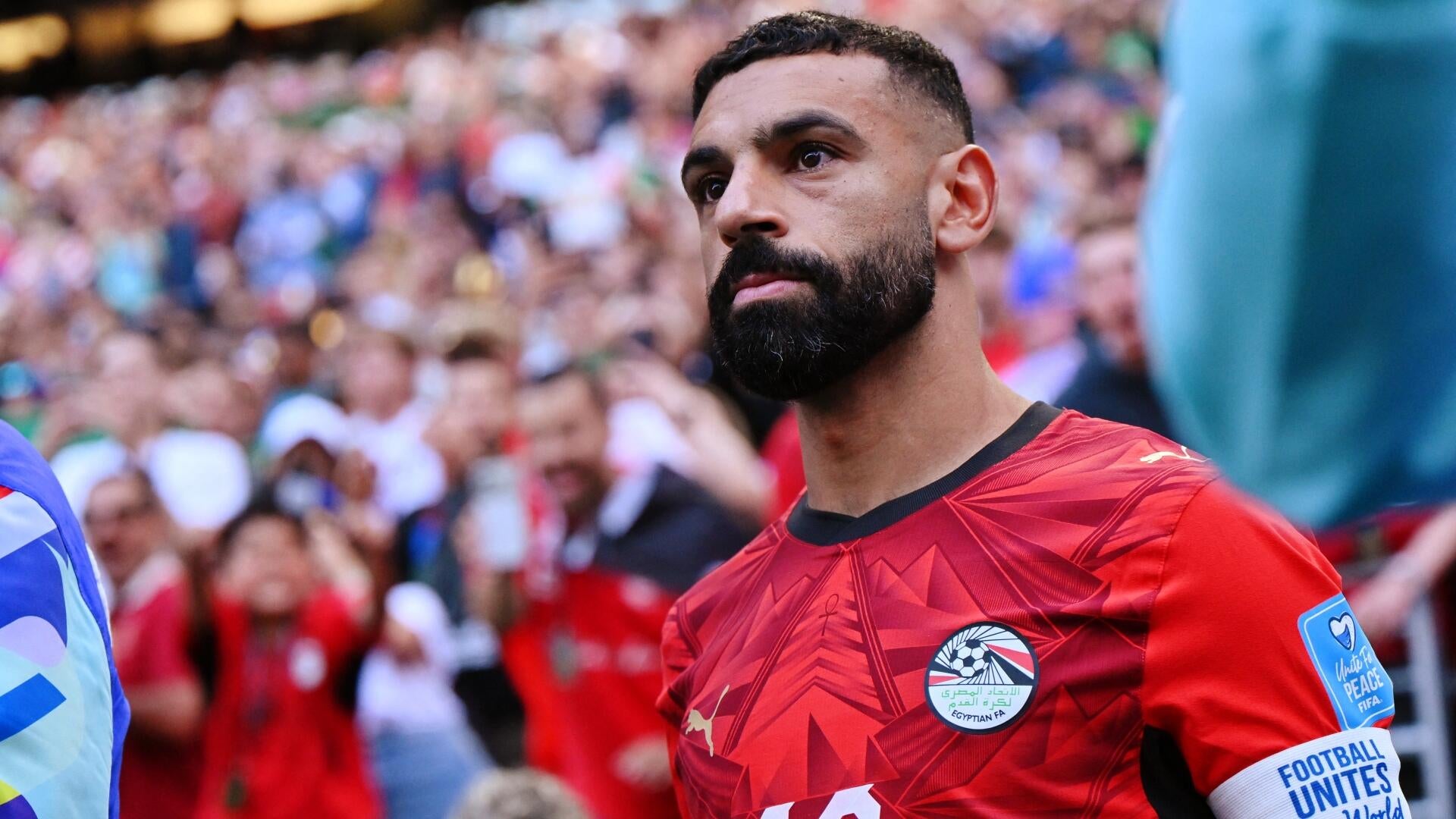
Hossam Abdelmaguid took the fifth penalty of the shootout, puffed out his cheeks, waited for Mat Ryan to commit, and slotted the ball the other way. He tore off his shirt and ran to the corner. The 2026 World Cup's last-16 lineup had a new entry, and it was Egypt's, secured 4-2 on penalties after 120 minutes ended 1-1 in front of a tournament-record Australian away crowd. Ryan, the 33-year-old veteran brought on specifically for the shootout in place of the starting goalkeeper, guessed the wrong way on the decisive kick and watched the Pharoahs advance.
The win is the headline. The framing is harder. Egypt's passage to the knockout rounds is a sporting achievement that has been entangled, almost from the moment qualification was confirmed, with the political persona of the man picking the team. Hossam Hassan — Egypt's manager, a former striker whose name is itself a unit of national football currency — has talked openly about President Abdel Fattah al-Sisi's role in making the run possible, and the team's performances have been read at home and abroad as a vehicle for a particular kind of state-facing patriotism. A 3-1 victory over New Zealand in the group stage was, in Hassan's telling, a presidential achievement as much as a coaching one.
A tactical gamble that almost worked
The decision to start the second-choice goalkeeper and introduce Ryan, Australia's most capped player, only for the shootout was, on its face, a rational bet. Penalty save percentages in international football hover around the high teens; replacing a fresher keeper with a specialist at the moment of the specialist's craft is a long-established play. It worked in the sense that Ryan made one save, parrying the second Egyptian attempt, and that Australia reached penalties at all. It did not work in the sense that the margins in a shootout are paper-thin, and Abdelmaguid's penalty — fifth in the sequence, with the score at 3-2 — was the kind of low, placed finish a goalkeeper who has guessed early is not recovering to.
For Ryan personally, the calculus is brutal. A 33-year-old brought on for one job, defined entirely by that job, judged by the direction he leaned. Australian manager Tony Popovic will be asked in the coming days whether the choice should fall on the incumbent, Joe Gauci, who played 120 minutes, or on the specialist, and the answer will tell us as much about the federation's tolerance for risk as about Ryan's reflexes.
The manager who won't stop talking about the president
Hassan has been Egypt's manager since 2024, and the pattern of his public comments around this tournament is the second story of the night. He has used pre-match and post-match media to highlight al-Sisi's personal investment in the team's preparation — training-camp access, security logistics, the routine symbolic uplift a presidential endorsement provides. In a country where the national team has long been treated as a soft-power asset, that is not unusual on its own. What has been unusual is the consistency and the explicit linkage, and the way it has shaped outside coverage of the team's results.
There is a defensible version of the story, and a sharper one. The defensible version: every World Cup cycle produces a manager who credits the head of state, and the United States' own political class has spent the last decade treating the men's and women's national teams as diplomatic instruments. The sharper version: Egypt's political settlement since 2013 has been marked by the near-total collapse of independent civil-society space, and the national team is one of the few remaining platforms that can command a mass audience without being editorially vetted. To say that a win belongs to the president is also to say which institution the team is, in some sense, representing.
What the result actually changes
For Egypt, the on-pitch consequences are real and quantifiable. The last 16 brings a fixture most neutral projections gave them a coin-flip's chance of reaching; the draw path to the quarter-finals now opens against the runner-up in a group containing one of the European or South American favourites. The squad is experienced — Mohamed Salah remains the team's gravitational centre, even on an evening when Abdelmaguid's name will lead the recaps — and the defence that conceded once in open play against Australia will, on this evidence, not be the reason they go home early.
For Australia, the loss is the end of a tournament that exceeded expectations in the group but stops short of where the 2022 squad reached. The shootout specialist gambit is now a case study that every federation will revisit; it is a reminder that the best-laid contingency plans reduce to a single instant and a single lean.
The structural frame
It is tempting to treat Hassan's comments and the team's on-pitch form as two unrelated stories sharing a news cycle. They are not. Across the Global South, the contemporary national football team is an unusually pure site of state–society negotiation: governments want the soft-power dividend, players want professional autonomy, and the manager sits in the middle. The pattern recurs in Saudi Arabia, in Qatar, in Algeria, and has begun to recur in the Gulf-financed leagues that now employ many of the same players. Egypt's particular version is shaped by a press environment in which the boundaries between sporting coverage and presidential coverage are unusually porous, and a manager who has chosen, with consistency, to walk through that boundary in his public remarks. The result on the pitch does not refute the framing; it amplifies it, because the team's success is now the state's success in a way the manager himself has insisted on.
Desk note: this piece leads with the sporting fact and treats Hassan's political positioning as the structural backdrop, not the headline, in line with Monexus's standing rule that the African desk reports African stories with the same framing weight Western wires would give their own national teams.