Foreign delegations stream into Tehran as Iran's political establishment performs public mourning
Parliament speakers from Egypt and Kyrgyzstan arrived at the farewell hall in Tehran on 3 July, joining a choreographed procession of dignitaries that doubles as a diplomatic signal about who still shows up for the Islamic Republic.
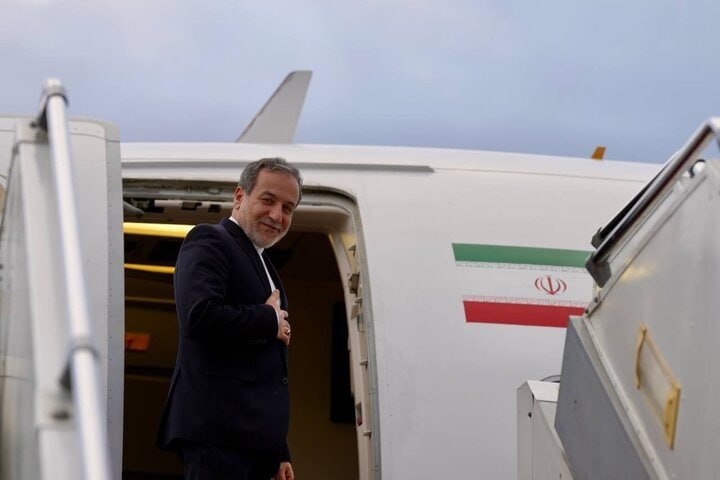
At 12:37 UTC on 3 July 2026, Marlyn Abdulkhmanovich Memtaliev — identified by Iran's official English-language outlet as Speaker of the Parliament of the Kyrgyz Republic — entered a farewell hall in Tehran to salute the body of Ayatollah Ali Khamenei. Twenty-three minutes later, an identical announcement posted in Arabic that the Speaker of Egypt's Senate, Essam El-Din Ahmed Mohamed Farid, had crossed the same threshold. By mid-afternoon, the two arrivals were being broadcast in lockstep on Iranian state channels that have, for the better part of a week, replaced daily governance coverage with ritual.
The choreography is the news. Foreign dignitaries do not travel to a capital in mourning unless the host wants the visit registered — and unless the visitor wants the registration on the record. The delegations from Bishkek and Cairo, sequenced an hour apart on 3 July, are entries in a ledger being compiled in real time on Iranian state media. The list is itself the message: here is who still shows up.
A procession staged for foreign cameras
Iran's two principal Telegram channels — @Khamenei_en and @Khamenei_arabi — have, since 1 July, functioned less as information feeds and more as a guest-book in motion. Posts on 3 July name Memtaliev as "Speaker of the Parliament of the Kyrgyz Republic" and Farid as "Speaker of the Senate of the Arab Republic of Egypt," each described as paying respects to "the lofty station of the Martyred Leader." The twin-channel duplication (English and Arabic versions of the same event within the same hour) is a standard tool of Iranian outreach: the Arabic text reaches Cairo and the wider Arab world; the English text reaches diplomats, journalists and analysts reading the room in Washington, Brussels and Beijing. The convention buys the regime two audiences for one arrival.
The Kyrgyz visit is the easier of the two to read. Bishkek keeps a regular bilateral channel with Tehran across trade, transport and uranium-related consultations, and parliamentary contacts are the routine tissue. The Egyptian arrival carries more weight. Cairo is a heavyweight Arab capital with a public posture that has, in recent years, calibrated its distance from Tehran with care — maintaining diplomatic relations, signing modest cooperation agreements, and declining the more ambitious security entanglements that Gulf states accuse Iran of seeking. A Senate Speaker is not the head of state, but the delegation travels with the implicit signal that the visit is sanctioned at the highest level of the Egyptian state.
What the Western wire is not yet saying
Mainstream Western outlets have published comparatively little on the precise texture of the foreign arrivals — Reuters, AP and the wires have focused on the succession question inside Iran rather than on the visitor protocols. That gap matters. The choreography of who walks through which door, in what order, and with what title is precisely the dataset that tells an attentive reader which governments are signalling continuity, which are hedging, and which have stayed home. The Iranian channels are publishing that dataset in granular detail; the wires are not.
Two readings of the silence are plausible. The first is that the high-volume Western desks are waiting for their own confirmed access to senior officials before reporting on a politically delicate question — who, in practice, still treats the Islamic Republic as a legitimate counterpart at the highest protocol levels. The second is that the visitor list, once fully assembled, will be read backwards into Western editorial judgments about Iran's diplomatic isolation, and outlets are reluctant to be out in front of that frame. Either way, the diligence is currently being done by the Iranian state itself — with all the selectivity that implies.
A political grammar, not a popularity poll
It is tempting to read each arrival as a vote of confidence in the Iranian system. That over-reads the data. Few of the governments sending delegations would describe themselves as endorsing Iranian governance. Most are managing two relationships at once: the relationship with Tehran, and the relationship with the powers who watch how they manage the relationship with Tehran. The visitor who turns up at the farewell hall is signalling competence — that the sender understands the protocol, picks up the phone, knows the rank ordering.
What that competence looks like in practice is a willingness to bear small reputational costs in exchange for the residual leverage that comes from being in the room. For smaller states with diversified portfolios — Kyrgyzstan, with its uranium and transit interests; Egypt, with its regional balancing — the calculus favours showing up. The dignitaries who do not appear in the same Telegram threads will be noted just as carefully.
What remains unsettled
The materials now in the public record establish that the Kyrgyz Speaker and the Egyptian Senate Speaker were physically present at the farewell hall in Tehran on 3 July 2026. They do not — the Iranian state channels being what they are — establish what either delegation said in private, what messages either carried from a head of state, or which counterparts the visitors met on the margins. The diplomatic substance, as so often in Iranian state reporting, is being withheld precisely so that the protocol can do the talking alone.
Readers watching the Telegram stream should also expect the visitor list to expand over the coming days. Each new post is a discrete piece of political theatre, and the theatre is the message.
— Monexus Staff Writer, reporting on the visitor protocols surrounding the farewell ceremonies in Tehran.
Wire provenance
This editorial synthesis draws on the following public wire/social posts:
- https://t.me/Khamenei_en
- https://t.me/Khamenei_arabi
- https://t.me/Khamenei_en
- https://t.me/Khamenei_arabi