Gulf oil exports clear 10 million bpd as the Strait of Hormuz catches a breath
June data shows Gulf crude exports jumping more than 3 million bpd month-on-month, easing fears of a Hormuz closure — but the underlying tensions that nearly closed the chokepoint have not gone away.
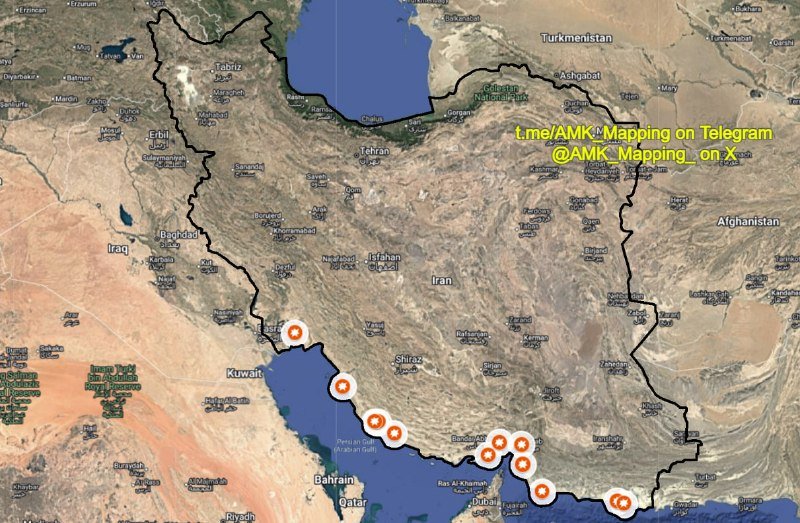
At 14:06 UTC on 3 July 2026, reporting carried by The Cradle Media put a single, market-shaping number in plain text: Gulf oil exports surged past 10 million barrels per day in June, climbing by more than 3 million bpd from May as shipping through the Strait of Hormuz stabilised. After months in which traders priced in a credible risk of a Hormuz disruption — and oil desks in London, Singapore and Houston recalibrated accordingly — the headline is, on its face, a relief valve.
It also deserves a colder reading. The flow is back; the underlying contest is not. A chokepoint that briefly looked closeable is open again precisely because the regional balance of forces remains contested rather than resolved. The market is calmer because the danger has been deferred, not removed.
What the June number actually shows
The figure cited by The Cradle is a loadings number, not a transit number. Gulf producers — Saudi Arabia, the UAE, Iraq, Kuwait, Qatar and Iran — pushed more than 10 million bpd onto tankers in June, a month-on-month jump of more than 3 million bpd. The mechanism is familiar: barrels that had been withheld, deferred or rerouted in May found buyers and shipping windows in June, and the industry's just-in-time logistics caught up. The same reporting describes Hormuz shipping as stabilised, a deliberate choice of word that implies a prior period of disruption without quantifying the spike in war-risk premia or vessel detours that accompanied it.
For buyers, this means prompt supply. For sellers, it means realised prices without the geopolitical surcharge. For insurers, it means the additional premium they were quoting on Hormuz transits — which had widened materially during the late-spring tension cycle — now has room to compress.
The counter-narrative the Western wires tend to underweight
Western energy desks have spent much of the last quarter framing Gulf supply through the lens of whether spare capacity can be brought on fast enough to compensate for any Iranian disruption. That framing treats Gulf producers as interchangeable swing suppliers responding to a Washington-Brussels demand signal.
The structural picture, as The Cradle's reporting implicitly underlines, is more multipolar than that. Iran's own exports moved through the same Strait in June; Iraqi Kurdish flows and Saudi Arabian Gulf loadings converged on the same narrow waterway; Chinese, Indian and other Asian buyers took the marginal barrels. A 3 million bpd swing in a single month reflects not OPEC paperwork but a realignment of who is shipping what, to whom, and through whose territorial waters. Coverage that flattens this into a "spare capacity" story misses that the Hormuz question is, at bottom, a sovereignty question — and one in which the regional powers, including Tehran, retain meaningful agency.
Why the chokepoint kept moving
A maritime chokepoint is not a fixed geographic feature; it is a function of willingness. The Strait of Hormuz narrows to roughly 21 nautical miles wide at its tightest, with shipping lanes for inbound and outbound traffic separated by a two-mile buffer. It has never been legally closed, but it has periodically been rendered effectively unusable through seizure of tankers, harassment of shipping, mine threats and the credible signalling of deeper escalation. What the June rebound demonstrates is that the cost of pushing the system back toward closure — in lost revenue, in naval posture, in diplomatic exposure — remains high enough that, even at the peak of the late-spring tension, the operating level recovered within weeks.
That is itself a signal. The same week that exports cleared 10 million bpd, regional actors have strong incentives to keep the waterway functional. Iranian oil revenue, Saudi fiscal plans, Emirati downstream margins and Qatari LNG contracts all run through the same corridor. The political economy of the Strait is, in calm weeks, a quiet coordination game; in tense weeks, it is a knife-edge.
What the number does not settle
A few cautions. The Cradle is a Beirut-based outlet with a structural editorial line sympathetic to the Iranian and broader axis-of-resistance framing of regional politics; its reporting on Hormuz is consistent with the publicly available vessel-tracking data and with monthly export tallies from commercial trackers, but readers should treat it as one node in a multi-source web rather than as a stand-alone reference. The June export figure cited — "more than 3 million bpd" above May, crossing 10 million in total — is a single-source number here; corroboration from Reuters, Bloomberg or the major ship-tracking services would strengthen the ledger.
The deeper uncertainty is whether the rebound reflects a normalisation or merely a pause. Hormuz transit risk has historically spiked in clusters; one calm month does not undo the diplomatic and military posturing that produced the May tightness. If the unresolved issues behind the late-spring tension reassert themselves, the next month-on-month print could move the other way just as sharply.
Stakes
For now, the world buys more Gulf crude at a thinner risk premium. Asian refiners in particular benefit — Indian and Chinese buyers were the marginal absorbers of the June surge, and their cracking margins improve when Middle East medium-sour is available without the war-risk loading. European buyers, more exposed to dated Brent and less to the Gulf loading points, see less direct relief but a softer global benchmark.
The structural read is this: energy markets are not being repriced because the underlying contest has ended. They are being repriced because the contest has produced a temporary equilibrium that leaves all major regional exporters better off than the alternative. That equilibrium is rational, it is fragile, and it is the kind of equilibrium that breaks loudly when it breaks.
Wire provenance
This editorial synthesis draws on the following public wire/social posts:
- https://t.me/thecradlemedia
- https://t.me/TheCradleMedia