Tehran's courting of Brazzaville and the D8 reads as the slow architecture of an alternative financial order
Three meetings on a single July evening in Tehran — Brazzaville's foreign minister, the D8 secretary general — sit inside a larger Iranian project to build the connective tissue of a non-dollar order.
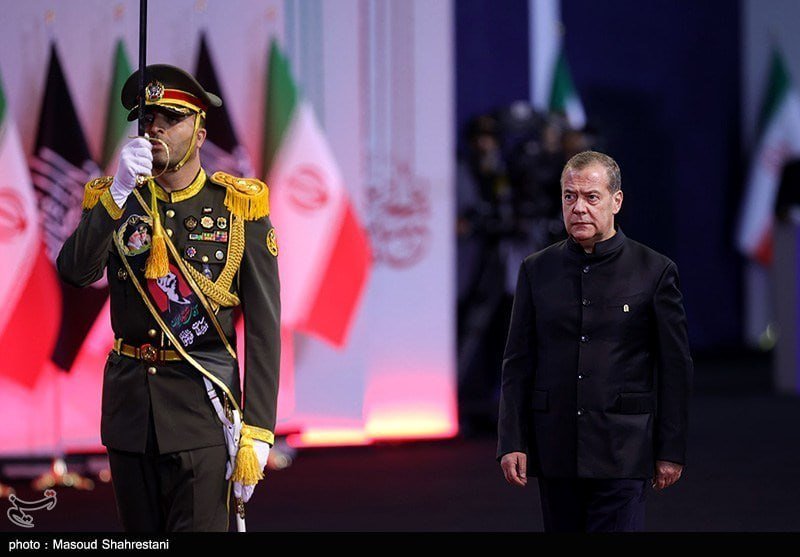
On the evening of 3 July 2026, Iran's foreign minister Abbas Araghchi held two consecutive meetings in Tehran whose sum is more revealing than either part. At 19:29 UTC, D8 Secretary General Sohail Mahmood sat down with Araghchi; six minutes later, Constant Serge Bunda, foreign minister of the Republic of the Congo (Brazzaville), was received in the same compound. The tempo is the point. None of these exchanges, on their own, would justify a wire. Together, they sketch the diplomatic geometry of an Iranian foreign policy that has stopped waiting for permission from the Western financial order and started building the connective tissue of an alternative one.
The interpretation is not that Tehran has discovered Africa or South-South cooperation; both have been on Iranian policy for two decades. The interpretation is that the marginal cost of these meetings has fallen sharply, while the marginal benefit — measured in payments-channel diversification, sanctions circumvention capacity, and political cover in international fora — has risen. Iran is doing what sanction-survivors do: stacking bilateral relationships into a network that, in aggregate, behaves like infrastructure.
The Brazzaville meeting
The Brazzaville visit is the more consequential of the two. The Republic of the Congo is a small, oil-dependent Central African state of roughly six million people, but it sits inside two architectures that Tehran needs: the Central African Economic and Monetary Community (CEMAC), whose common currency, the CFA franc, is pegged to the euro, and the African Continental Free Trade Area. More importantly, Brazzaville has been one of the more consistent francophone voices refusing to align with Western sanctions regimes on Iran. Its port at Pointe-Noire is a viable Atlantic trans-shipment node for goods that cannot move through the usual Dubai-Rotterdam-Tampa corridors without secondary-sanctions friction.
The official readouts, carried by Tasnim News and the English-language Tasnim feed, are predictably warm and substantively thin. No joint communique, no signed memorandum, no announced project. That is itself diagnostic. When Tehran wants to send a high-volume signal, it produces documents; when it is laying groundwork, it produces photographs. Three July photographs with Bunda are groundwork. They re-anchor a relationship, signal to Kinshasa and Luanda that Tehran is present in the Gulf of Guinea, and let Iranian state media circulate the imagery to domestic audiences as evidence that isolation is a Western wish rather than a fact.
The D8 meeting
The D8 Organisation for Economic Cooperation — the Developing-8, comprising Bangladesh, Egypt, Indonesia, Iran, Malaysia, Nigeria, Pakistan and Turkey — is, in honest accounting, a body of high communiques and modest trade flows. Its secretariat in Istanbul has produced more working groups than working trade. Yet the meeting at 19:29 UTC matters precisely because the institution is underused rather than irrelevant. Mahmood's tenure as secretary general has leaned toward quiet operationalisation: preferential tariff talks, a long-mooted D8 free trade agreement that keeps moving in centimetres, and bank-to-bank arrangements that would, if implemented, allow member-state central banks to clear transactions without routing through SWIFT or a US-clearing correspondent bank.
Tehran's interest in the D8 has sharpened since the reimposition of maximal-pressure sanctions. Iran has the largest economy in the group after Indonesia, Turkey, Egypt and Nigeria, and the strongest institutional motivation to convert the D8 from a talking shop into a clearing house. What Araghchi can plausibly ask Mahmood for is not headline-level politics but technical plumbing: exporter-importer matchmaking, joint chambers of commerce in non-aligned financial centres, shipping insurance arrangements underwritten by D8 export-credit agencies. None of this would move markets on its own. Stacked across a decade, it changes the cost of being sanctioned.
What the framing misses
Western wire coverage tends to treat Iranian outreach to Africa and to the D8 as a kind of civilisational hedging — Tehran buying friends with oil discounts and ceremony. There is some of that. There is also, routinely under-reported, an Iranian institutional capacity that is genuinely useful to partners: a domestic industrial base that can supply refinery equipment, cement plants, telecoms infrastructure, and pharmaceutical inputs at concessional terms and on long-tenor credit. Iranian engineering firms have rebuilt power networks in Syria, Iraq, and parts of sub-Saharan Africa at price points Western EPC contractors cannot approach. When a Central African oil state negotiates with Tehran, it is not only buying diplomatic cover; it is also shopping for infrastructure delivery at a budget its treasury can actually afford.
That structural reality — Western infrastructure delivery is slow, expensive, and politically conditioned; Chinese and Iranian delivery is faster, cheaper, and politically lighter — is the substrate under these meetings. None of which absolves Western concerns about dual-use technology, missile-proliferation finance, or Iranian Revolutionary Guard Corps front companies. Those concerns are real. The error is treating them as the whole picture rather than as one risk vector inside a broader, increasingly transactional relationship.
The stakes
If the trajectory of 3 July continues, the architecture on display is this: a lattice of bilateral Iranian partnerships with non-aligned middle powers (Brazzaville, Caracas, Damascus, Minsk) threaded through a multilateral vehicle (the D8) and a parallel Asian clearing conversation (the Chiang Mai Initiative, the Asian Infrastructure Investment Bank, the expansion of the BRICS New Development Bank) that collectively reduces the cost of operating outside the dollar system. None of this replaces the dollar. It does not need to. The threshold question for sanctions architects is not whether the dollar remains dominant — it plainly does — but whether the marginal state has a viable alternative for its marginal transactions. Each July meeting inches that threshold closer.
For African partners, the upside is more competitive bidding on infrastructure and a slightly more multipolar diplomatic space. The downside is reputational exposure to secondary sanctions, and the well-documented risk that opaque financial arrangements become corruption vectors rather than development corridors. The honest answer is that both are likely to be true simultaneously. Monexus finds that the framing worth resisting is the one in which these are ideological alliances. They are not. They are commercial relationships with geopolitical implications, and they will be judged, in time, by whether they deliver roads, refineries, and bank accounts — or only photographs.
This article was independently reported by Monexus using Iranian state-media coverage as primary source material and read against the institutional histories of the D8 and CEMAC.
Wire provenance
This editorial synthesis draws on the following public wire/social posts:
- https://t.me/tasnimnews_en
- https://t.me/JahanTasnim
- https://t.me/tasnimnews_en