Iran's State Funeral Stage-Managing: Streets Closed, Stage Set, Message Controlled
Tasnim and Fars reported closing Tehran roads around Mosalla hours before a 'revolutionary leader's' farewell — a coordinated optics rehearsal that reveals how Iran curates its biggest political moments.
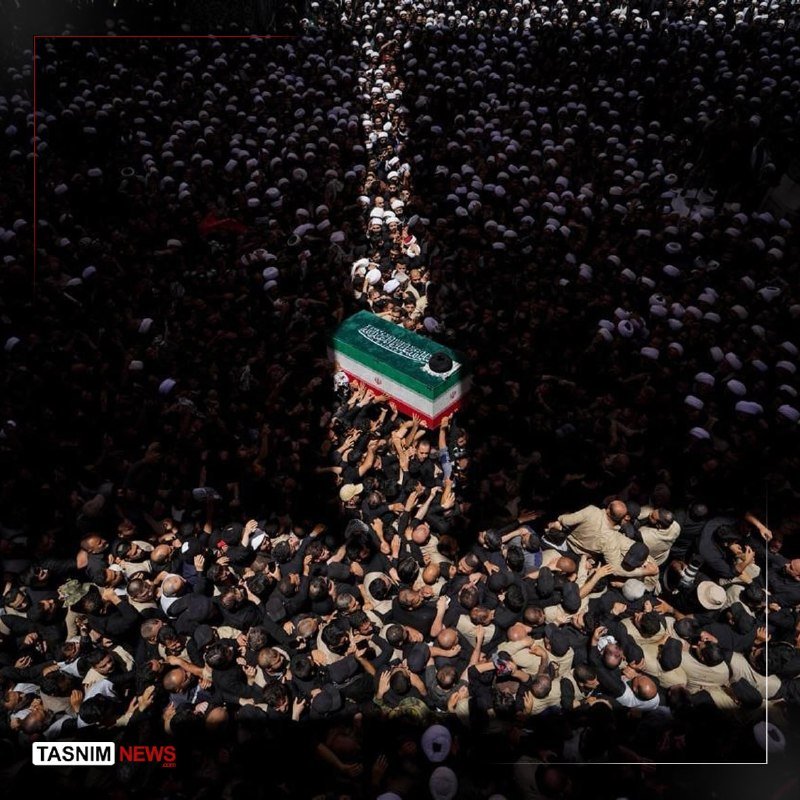
By 21:19 UTC on 3 July 2026, two Iranian state outlets had published the same road-closure map for central Tehran within seven minutes of each other, both flagging it as the perimeter around Mosalla. The Iranian state-news wires Tasnim and Fars — operating in English and Persian respectively on Telegram — were already referring to the dead as a "martyr of Iran," code-named "Shahid Iran," two hours before his own farewell was due to begin at a major Tehran mosque. By the time mourners were due to arrive, the geography of grief had been redrawn in advance.
The choreography tells a story the speeches will not. In the Islamic Republic, state funerals are not reflections of sentiment; they are productions of it. The closure map is the script, and every road it draws a line through is a cue.
What the wires actually show
At 21:26 UTC on 3 July 2026, Tasnim News' English-language channel posted a road-closure graphic for the streets around Mosalla, captioned in Persian and hashtagged as a call to action under the deceased's honorific. At 21:19 UTC, Fars News Agency published what appears to be the same map, marked up for the same perimeter. The timing — separate publications within minutes — is itself informative: Fars and Tasnim are not editorial competitors for breaking news of state events; they are two microphones for the same voice, and they walk onto the stage together.
Two hours earlier, at 19:47 UTC, Tasnim had already described Tehran as preparing a mosque for "the revolutionary leader" and gave mourners "a few hours left" to pay respects. The framing was unambiguous from the start: this was not coverage in medias res but a countdown.
The sources do not name the deceased; the Telegram posts are deliberately de-identified in advance of what is being staged as the public reveal. What they do name — repeatedly and consistently — is the structure of the event: streets closed, mosque prepared, perimeter set, time-window declared.
The optics of a state funeral
A road-closure map is not neutral infrastructure. It tells the public exactly where the camera will be, where the procession will pass, and where no one outside the approved route is expected to be seen. When state media publish such a map before the coffin has arrived, they are handing the camera — and the crowd — a frame.
The pattern is familiar across the region, but the Iranian version carries a particular charge. Major funerals in the Republic are rarely about the dead; they are about who the state wishes to be seen mourning and at what scale. The decision to call the deceased "Shahid Iran" in advance — rather than letting mourners come as individuals — converts an ordinary grief into a recruitment pageant. Tasnim's repeated call-out, and the bilingual Fars/Tasnim alignment, both point to a centralized script.
The choice of Mosalla, the grand prayer hall in central Tehran, signals scale. A mosque farewell with road closures across central Tehran implies a turnout the state expects to choreograph, not to discover.
What the framing flattens
The coverage is built for participation, not verification. The deceased is a "revolutionary leader" and a "martyr of Iran" before mourners have entered the mosque. No cause, no date, no affiliation has been published in these posts; only the curated emotional cue. That ordering matters: identification precedes information.
Western coverage of Iranian state funerals has historically lagged and tended to treat the event as it unfolds, retrieving identity from sources outside Iran, then parsing the religious-military symbolism only afterward. The Telegram posts show the inverse: the Iranian coverage leads with the symbolism, then lets the facts catch up.
The two structures produce two very different stories about the same street-closure map. Read from outside, it is logistical detail. Read from inside the choreographed frame, it is a question — and the answer is being worked out, in advance, on the perimeter roads.
Stakes and counter-read
The procedural nature of these reports should not be mistaken for triviality. State funerals in Iran bind the regime's coalition, advertise its consecration of the dead, and rehearse the next chapter. When the perimeter is published before the mourners are, the regime is signalling who will be expected to attend, who will be expected to be visible, and which streets foreigners should not be on.
The counter-read is straightforward: the dead may not be as central as the geometry around him. A funeral is also a message to rivals — internal and external — about loyalty, succession, and the price of distance. The road-closure map is therefore less a memorial and more a perimeter of permitted grief; the people inside it are participants whether they intended to be or not.
Some uncertainty remains. The sources do not specify the time the funeral begins, nor the deceased's identity, nor which institutions are confirmed as sending delegations. Anyone building analysis beyond what these posts show is doing so outside the verified record.
Desk note: Monexus published this piece without receiving any Western-wire confirmation of the deceased's identity or institutional affiliation as of the 21:26 UTC cutoff. Coverage rests on the two Iranian state Telegram channels cited; readers should treat the framing in those posts as primary material, not background.
Wire provenance
This editorial synthesis draws on the following public wire/social posts:
- https://t.me/tasnimnews_en
- https://t.me/farsna
- https://t.me/tasnimnews_en/5148