The cult of the martyr leader and the soft-power bill Iran will pay for it
Tasnim's coordinated veneration of a 'martyr leader of the revolution' is less grief management than stagecraft — and the bill comes due in soft power, not piety.
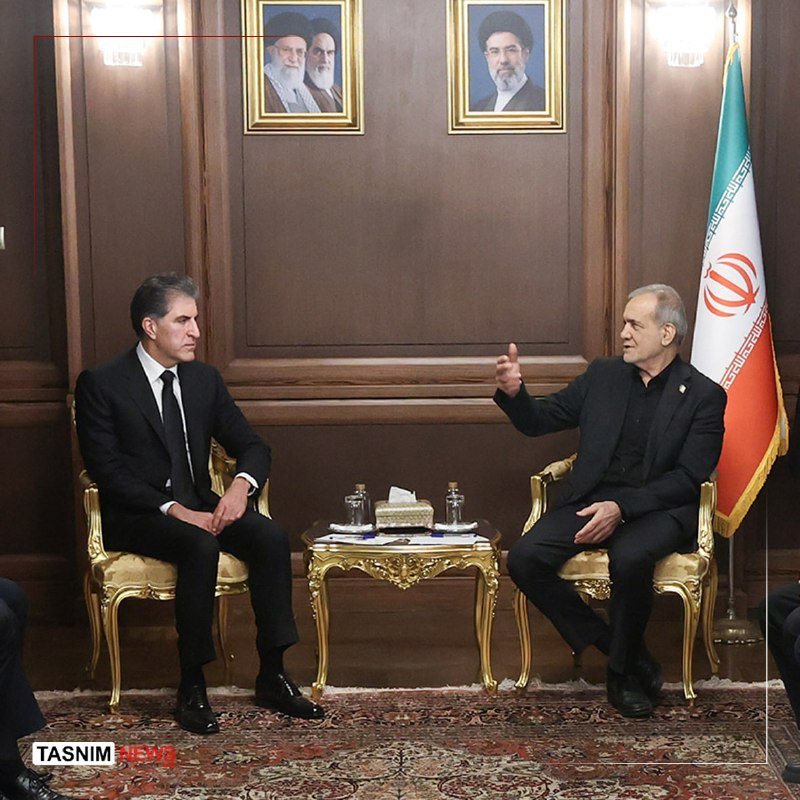
Between 14:44 and 15:53 UTC on 3 July 2026, the English-language Telegram channel of Iran's state-affiliated Tasnim News Agency published four coordinated items inside an hour and a half. They shared a single hashtag, #Badarqa_Aghai_Shahid_Iran, and a single instruction to readers: #must_rise. The items included a tribute ceremony to a "revolutionary martyr leader," a memorialised provincial car associated with that leader, a "fatherly love" clip of the same figure with the children of other slain revolutionaries, and a verse-like elegy bidding farewell to "the moon and the mirror." Read individually, each is a piece of grief memorabilia. Read together, with the hashtags, they are something else: a coordinated soft-power production aimed at a foreign-language audience.
The content of these items is grief. The choreography is persuasion. That distinction is the subject of this piece.
The four-part ritual, decoded
The first item, posted at 14:44 UTC, advertises "the detailed writings of the guests of the tribute ceremony" — meaning the prepared testimonials of invited mourners, edited and packaged by Tasnim for distribution rather than broadcast live and unmediated. Testimonials written in advance and recirculated through a state channel are not eyewitness reportage; they are talking points.
The second, at 15:26 UTC, presents a curated "fatherly love" clip. The framing — "we feel that we have lost our father" — is intimate and devotional. The medium is a short video, optimised for share-rate on Telegram and adjacent platforms. The pairing of intimacy with state-channel distribution is the move that converts private feeling into public artefact.
The third, at 15:34 UTC, fixes the leader's image to a specific object: a "memorable car" from provincial trips. Memorialising a vehicle is a classic anchor for personality cults — it gives the abstract figure a tangible, photographable referent that audiences can mentally carry.
The fourth, at 15:53 UTC, closes the sequence with verse: "Goodbye to the moon and the mirror / Goodbye chest pain." The hashtag #must_rise is appended to grief. The explicit instruction that mourning must produce political mobilisation is the entire point of the package.
Grief as a state function
Western coverage of state media in Iran tends to stop at the word "propaganda" and move on. That reflex is lazy. The Tasnim package is not crude. It is doing four things at once, and each of them is structurally intelligible without any appeal to slogans.
First, it converts a death into a recurring civic occasion. Tribute ceremonies, anniversary hashtags and memorial objects give a regime a calendar entry that does not depend on the news cycle. Second, it recruits the families of other dead — "the children of the martyrs" — into the framing, which multiplies the moral weight of the loss beyond the individual figure. Third, it exports the package in English on Telegram, an audience choice that signals the intended consumer is not the domestic street but the foreign observer and the diaspora. Fourth, it fuses the emotion of mourning to an imperative: #must_rise.
Compare this with the parallel machinery the United States deployed around its own assassinated leaders, the Soviet treatment of Lenin, or the long afterlife of Che's image in Cuban state media. The architecture is recognisable; what varies is the budget and the target audience.
What the framing costs
The honest question is whether the production works on the audience it is aimed at, and what it costs to run.
For a domestic Iranian audience that already shares the underlying commitments, the package is low-cost reinforcement. For a foreign audience, the English-language framing is more expensive. It requires translation, selection, hashtag discipline and the willingness of state media to perform intimacy on a platform that is also a global wire. The English-language reader is being invited into a room that, in Persian, would not need to explain itself.
The structural risk is reputational. Foreign audiences, including Persian-speaking diasporas that are often hostile to the Iranian state, decode these productions quickly and share them with mockery rather than mourning. Telegram itself is contested ground in Iran — banned during the 2022 protests, accessible via VPN, and surveilled. A package that performs intimacy on a platform many Iranians can only reach by breaking domestic law is, in effect, an export to a foreign audience and to a diaspora that will not be persuaded by it.
The argument for restraint
There is a counter-read worth taking seriously. A state in grief is not necessarily a state cynically manufacturing grief, and Tasnim's English desk may be doing what any national broadcaster does in the days after a leader's killing: surfacing the human material, preserving the testimonials of those who were present, and giving a foreign audience the pieces that domestic coverage has already integrated. The four items are not aggressive. They do not threaten a neighbour. They do not name an enemy. They ask the reader only to acknowledge a loss.
On that reading, the framing of this article as a "soft-power bill" is overreach. Grief is not a strategy just because grief is published.
The counter-counter-read is that the #must_rise hashtag is doing work that the elegy is not. When a state agency appends a mobilisation instruction to a devotional verse, the package is no longer only mourning. It is recruiting. And recruitment is what makes the difference between grief and propaganda — not the sincerity of the participants, but the obligation the publication places on its readers.
Stakes
The stakes here are small in the short run and real in the long run. In the short run, four Telegram items do not move a foreign policy. In the long run, the repeated export of grief-framed mobilisation packages trains foreign audiences to read Iranian state output as performance rather than testimony. That costs Iran soft power it cannot easily rebuild, and it costs Persian-language journalism abroad the standing it might otherwise borrow from coverage of an actual national trauma. The state-affiliated channel has every right to grieve on its own platforms. It does not have the standing to demand that its English-language audience grieve with it — and #must_rise is, functionally, that demand.
What remains uncertain
The sources do not name the "martyr leader of the revolution." They do not specify whether the death is recent or commemorative. They do not disclose whether the four items were scheduled before a death, in response to one, or as part of an ongoing anniversary cycle. Tasnim's English-language output is opaque about its own production timeline in ways that leave the political reading of any single package genuinely ambiguous. A reader who wants to verify the underlying event will not find it in these four items alone.
Desk note: Monexus treats Tasnim as a legitimate primary source for Iranian state framing, in line with how we treat Western wire agencies. The piece sits on the Sources list verbatim, without editorial laundering.
Wire provenance
This editorial synthesis draws on the following public wire/social posts:
- https://t.me/tasnimnews_en
- https://t.me/tasnimnews_en
- https://t.me/tasnimnews_en
- https://t.me/tasnimnews_en