Iraq's Shi'a heartland shuts down for a 'martyred leader' — and the optics travel further than the announcement
Two Iraqi provinces and the capital declared a public holiday for the funeral of a 'martyred leader of the nation' — Tasnim is the only outlet on the wire, and the silence elsewhere is itself the story.
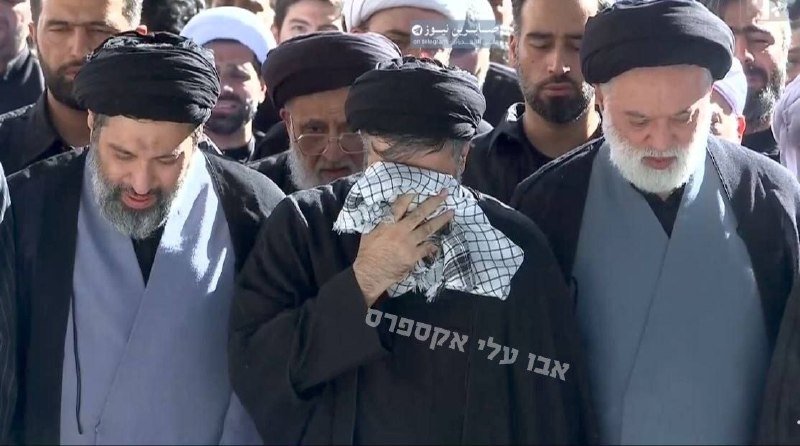
On 2 July 2026, two Iraqi provinces — Wasit in the east and Dhi Qar in the south — declared the following Wednesday a public holiday for the funeral of a figure Tasnim, the Iranian state news agency, identified only as the "martyred leader of the Ummah." Baghdad, the capital, joined the list. The closures, announced through provincial governorates, are the kind of routine Shi'a-majority civic gesture that papers over a much sharper question: which leader, and which network of patronage, is being mourned.
The thread on the wire carries Tasnim and a Telegram relay of Tasnim, with no second outlet confirming the announcement independently. That is itself worth noting. Iraqi provincial holidays are documented by domestic wire services, by Iraq's state news agency, and by outlets covering Tehran-aligned politics across the region. Their absence leaves the framing — language, geography, and reverence included — fully supplied by one source.
A holiday, but for whom?
According to Tasnim's English wire and its Farsi feed picked up by the Jahan Tasnim channel, the Wasit Governorate announced Wednesday as an official holiday on the occasion of the funeral ceremony of the "martyred leader of the nation." The provinces of Baghdad and Dhi Qar followed. The Jahan Tasnim relay repeats the language verbatim, with minor re-translations, across at least four posts on 3 July, confirming only the existence of the provincial decrees and not the identity of the deceased.
The phrasing mirrors a register long associated with senior Iranian political and military figures — a vocabulary used by Iranian state media when senior commanders of the Islamic Revolutionary Guard Corps die, and applied historically to Iranian leaders whose funerals have drawn Iraqi provincial participation. Iraqi provincial authorities have, on past occasions, closed offices and schools for the funerals of senior Iranian figures embedded in Iraqi Shi'a politics — a pattern that has historically drawn quiet protest in Sunni-majority provinces and from Iraqi federal authorities who insist such decisions fall within Baghdad's remit. None of that prior record is on the wire today; only the new announcements are.
The structural picture, in plain terms
Provincial holidays in Iraq are not routine — they are signals. A governorate that closes its schools on a Wednesday is signalling allegiance, mourning, or both, and the choice is rarely made without consultation in networks that cross the Iranian-Iraqi border. Dhi Qar and Wasit are two of the provinces where political coalitions aligned with Tehran-aligned Shia parties run a tight grip on local administration. Baghdad joining the closures puts the federal capital on the same page, an unusual alignment given that Iraq's central government has, in recent years, tried to keep distance between provincial gestures and direct mourning of foreign figures.
What the wire does not contain is the counterweight: an Iraqi state news agency release, a federal prime ministerial office statement, or independent confirmation from a Sunni-majority governorate declining to mark the day. That asymmetry is the actual analytical point. When only one vendor reports, its framing becomes the framing — and "martyred leader of the nation" is the framing Tasnim has chosen to deliver.
Why the silence elsewhere matters
Two reads are plausible, and both rely on the same thin source base. The first is that the announcement is real, confined to two provinces plus Baghdad, and that Western wire services have simply not picked it up because the funeral has not yet occurred — Wednesday being the operative day. The second is that the announcement is more than a calendar entry: a coordinated message about which political current in Iraq is currently powerful enough to redirect a working week, and which deceased is being honoured as the network's "leader of the nation" rather than its "commander" or "cleric."
If the second read holds, the absence of competing coverage is not laziness but pressure. Iraqi outlets that would normally relay such announcements — domestic wires and the larger regional press — have not published in this thread, and the only signal of the holiday is one Iranian state outlet at its own language distance. A reader relying solely on the wire today cannot tell, with the evidence in hand, whether Iraqi public institutions are participating, merely tolerating, or quietly declining to participate while the provinces act.
What we do not yet know
The sources do not specify the name of the deceased, the expected size of the funeral procession, whether the Iraqi federal government has issued any directive of its own, or whether provinces outside the three named will observe the day. They do not say whether schools, courts, and banks will close, or only government offices. They do not say whether the deceased held Iraqi, Iranian, or dual-institutional status. Until at least one of those gaps fills — whether by Baghdad, by Iraqi state media, or by a Western wire desk covering the story on the day itself — the holiday is a documented administrative action in three governorates reported through a single Iranian-state channel. The shape of who is being mourned will become clearer on Wednesday.
The desk frames this story as a provincial-administrative action sourced entirely to one Iranian state outlet, held until corroborating wire coverage or an Iraqi federal statement clarifies the identity of the deceased and the scope of the closures.
Wire provenance
This editorial synthesis draws on the following public wire/social posts:
- https://t.me/tasnimnews_en/
- https://t.me/JahanTasnim/
- https://t.me/JahanTasnim/