The Condolence Circuit: Reading Khamenei's Foreign VIPs
Five foreign ministers, parliamentary speakers and envoys paid respects in a single afternoon. The choreography tells a story the wire desks will not write.
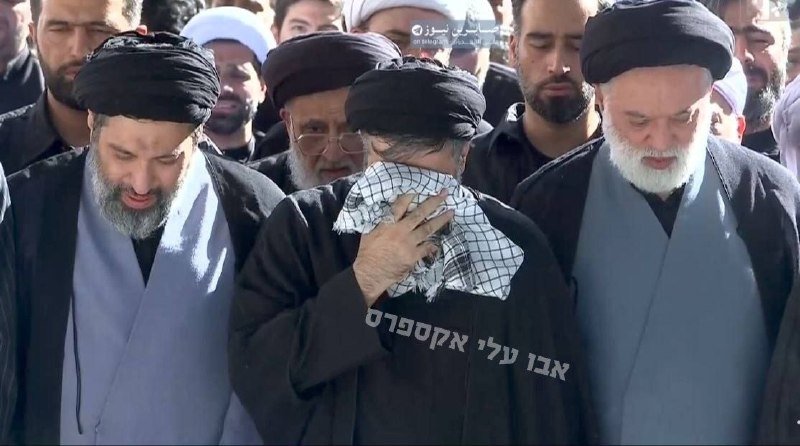
In an eighty-minute window on the afternoon of 3 July 2026 — between 15:03 and 15:11 UTC — the official English-language Telegram channel of the Iranian Supreme Leader's office posted five separate notices. Each announced that a serving foreign official had travelled to Tehran to pay respects on the death of Grand Ayatollah Ali Khamenei. The visitors, in order, were Yermek Kosherbayev, foreign minister of Kazakhstan and special representative of President Tokayev; Michel Menassa, minister of national defence of Lebanon; Ayaz Sadiq, speaker of Pakistan's National Assembly; Bakter García, minister of higher education and special envoy of the Cuban presidency; and Boris Bratina, Serbia's minister of information and telecommunications, likewise serving as his government's special representative.
None of these visits is unusual on its own. Foreign dignitaries routinely converge on a capital after the death of a head of state or a senior religious figure. What is unusual is the choreography, and what that choreography signals about the diplomatic gravity Tehran now commands in parts of the post-Soviet space, the Levant and the Caribbean.
The grammar of the notices
Read carefully, the five posts share an almost identical template. Each begins with the visiting official's title and institution, names their function as envoy where one applies, and then offers a single Arabic-inflected phrase of tribute — "the lofty station of the martyred Leader," "the pure body of the Martyred and Mujahid Leader of the Islamic Revolution" — applied to Khamenei. The channel does not editorialize. It does not quote the visitors. It registers them.
That restraint is itself a signal. The Iranian state media apparatus, when it wants to weaponise a foreign visitor, leans on long-form CGTN-style pieces, photo-ops and interview footage. The pure list — five dignitaries, four hours, one Telegram thread — is aimed at a different audience: ministries in Astana, Beirut, Islamabad, Havana and Belgrade that need to demonstrate to their domestic political bases that the relationship with Tehran is consequential. The English-language channel exists because the Iranians expect these posts to be read by foreign-policy desks, not just Iranian citizens.
Who came, and what it costs them
The five visitors fall into three rough groupings. The first is post-Soviet Central Asia: Kazakhstan's foreign minister as personal envoy of President Tokayev. The second is the Muslim-majority neighbourhood: Lebanon's defence minister and the speaker of Pakistan's National Assembly. The third is the explicitly non-Muslim Global South: Cuba and Serbia.
Each carries a distinct political cost. For Astana, the relationship with Tehran sits uneasily beside Kazakhstan's deepening security ties with Turkey and its careful balancing act between Moscow, Beijing and Washington. Sending the foreign minister personally — and naming him as the president's special representative — moves Kazakhstan visibly into Iran's camp at a sensitive moment. For Islamabad, Ayaz Sadiq's presence signals continuity with a long-standing Pakistan-Iran relationship that has survived Saudi pressure, Indian hostility and American sanctions; the National Assembly speaker is the second-highest constitutional office in Pakistan, after the president. For Lebanon, Michel Menassa's appearance reads against the grain of Beirut's recent drift back into the Western financial rescue orbit; his portfolio is defence, not foreign affairs, and his presence sends a separate message about Iran's continued gravitational pull inside the Lebanese state.
Cuba and Serbia are the structural surprises. Havana has been slowly re-engaging Washington over the past two years; sending a presidential envoy to mourn an Iranian supreme leader is a small, deliberate act of distance from that trajectory. Serbia, an EU candidate state, has spent years cultivating Brussels while buying Chinese drones and courting Gulf investment; a sitting minister's condolence call to Tehran is the kind of visit that ends up on a European Council desk note.
The frame the wire desks will not write
Western wire reporting on the visits, where it exists at all, will frame them as ritual — what diplomats do when senior leaders die. That framing is technically accurate and substantively misleading. The visits are not the news. The composition of the list is the news. A Channel-3 dispatch out of Belgrade, an Islamabad wire note, a Beirut defence-ministry line — these are the actual units of currency, and they all flowed into Tehran on the same afternoon.
The deeper structural fact is that the post-Cold-War assumption — that Western-aligned financial architecture and security guarantees would steadily compress the diplomatic space available to a sanctioned, theocratic state — has not held. Tehran has built, patiently and over decades, a parallel network of bilateral relationships with countries that sit outside the Atlantic security perimeter. On a day of mourning, that network delivers cabinet ministers in person. This is not a multipolarity speech at the UN General Assembly. It is what multipolarity actually looks like in operation: traffic.
What we cannot verify, and what we should watch
The Telegram notices describe the visits but do not disclose what was said in any of the meetings, whether any side delivered a written message beyond condolence, or whether any of the visiting officials carried offers of economic, security or political cooperation in the post-Khamenei succession environment. The source material does not specify the duration of any meeting, who on the Iranian side received each visitor, or whether any of the five carried private signals from heads of state.
What is worth watching, in the days ahead, is the second-order traffic. Serbian cabinet readouts will indicate whether Bratina carried anything besides condolence. Kazakhstan's MFA will clarify whether Kosherbayev's "special representative" status was symbolic or substantive. The Cuban foreign ministry will signal how Havana now plans to balance a visible Iran gesture against its ongoing normalisation track with Washington. The list of who did not come — and from whom Tehran therefore conspicuously received only a written message — will be at least as informative as the five names above.
For now, the English-language Telegram channel has done what it is designed to do. It has put a Kazakhstan foreign minister, a Lebanese defence minister, a Pakistani parliamentary speaker, a Cuban presidential envoy and a Serbian cabinet minister in a single scrollable thread, in one afternoon, under a single banner of grief. The composition of that list is a more honest map of the present diplomatic order than most white papers. The wire desks will call it protocol. It is more useful read as a positioning chart.
Desk note: Monexus has framed this as a reading of state-media choreography rather than as a piece on the substantive merits of any of the bilateral relationships listed. Western wire reporting on Iranian leadership transitions has historically under-weighted diplomatic traffic from the post-Soviet space and the Caribbean; the Telegram channel is itself a primary source for that traffic and is treated here as such.
Wire provenance
This editorial synthesis draws on the following public wire/social posts:
- https://t.me/Khamenei_en
- https://t.me/Khamenei_en/1
- https://t.me/Khamenei_en/2
- https://t.me/Khamenei_en/3
- https://t.me/Khamenei_en/4
- https://t.me/Khamenei_en/5