A line of foreign dignitaries, and what the ritual reveals
Envoys from Moscow and Beijing joined a queue of condolence-callers at Ayatollah Khamenei's memorial — a choreographed rite that tells less about grief than about which capitals are willing to be seen grieving.
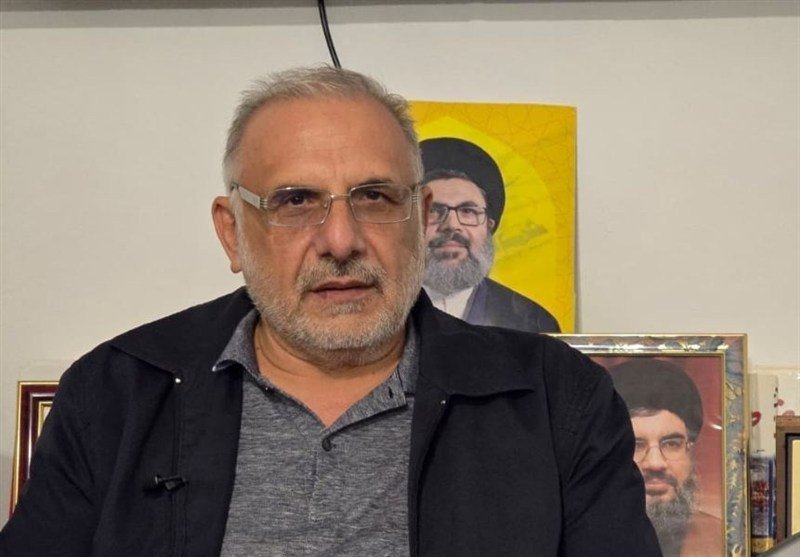
The visitors began arriving in a steady, ordered stream within hours of the announcement that Ayatollah Ali Khamenei, Iran's Supreme Leader since 1989, had been killed. By 15:25 UTC on 3 July 2026 the queue of foreign envoys paying respects in Tehran already included a senior Chinese legislator, the secretary-general of the D-8 grouping of Muslim-majority developing states, a Thai government representative, and Dmitry Medvedev, the former Russian president now serving as Deputy Chairman of Moscow's Security Council.
The choreography of these visits, broadcast at near-real-time cadence on official Telegram channels, is the news. Mourning rituals in Tehran have always doubled as a signalling channel — but the rank and pace of callers on the first day set the geopolitical temperature for whatever succession contest is now unfolding inside the Islamic Republic.
Who showed up, and what rank they sent
The most consequential caller, in protocol terms, was He Wei, Vice Chairman of the Standing Committee of the National People's Congress. Beijing did not send President Xi Jinping or Premier Li Qiang; it sent a senior parliamentary figure. That is the standard Chinese formula for a foreign head of state's death: high enough to register as a state-level condolence, low enough to avoid prejudging the succession. Medvedev's presence carries a different weight. As Deputy Chairman of Russia's Security Council and the Kremlin's self-described special envoy, he is a familiar face in Tehran and a personal emissary of Vladimir Putin. The Russian readout frames the visit as that of a special envoy of the president, not merely a parliamentary condolence-bearer.
Alongside these two heavyweight missions, the D-8's Sohail Mahmood filed past the body as head of a 10-member Muslim-majority developing-country bloc — Bangladesh, Egypt, Indonesia, Iran, Malaysia, Nigeria, Pakistan, Turkey — that has long been one of Tehran's preferred vehicles for south-south diplomacy. Thailand's representative, Phraen Pree Haruhai Nokara, registered a quieter Southeast Asian presence. Each visitor was named, each institution specified, each condolence timestamped to the minute on the official Iranian channel.
The read that says "bloc formation"
The most plausible read of the queue is that it was assembled quickly, and that the order reveals alignment. Russia and China, locked in their own standoff with the United States and its allies, were placed at the front of the diplomatic register on day one. The D-8 gave Tehran its multilateral cover; Thailand provided a softer South-East Asian note. No Western-aligned Gulf state, no European government, no North American representative appears in the day's published list.
This is not, by itself, evidence of a new anti-Western bloc. It is something narrower and more mundane: the rituals of state condolence have always tracked strategic posture, and capitals that already see Washington as their principal rival are unsurprising first-day callers when an Iranian leader dies.
What the absence of certain names signals
Equally telling is who has not been named. As of the 3 July 2026 dispatches on the official Iranian channel, no Saudi, Emirati, Egyptian, or Turkish head-of-state-level call appears. Those are the regional powers with the most to lose or gain from an Iranian succession — and their public silence is its own signal. Western coverage, when it arrives, will focus on the policy implications for sanctions, nuclear talks, and regional militias. But the choreography in Tehran is doing its own quieter work: it is publicly fixing, on the record, which capitals want to be seen standing with the Islamic Republic at the moment of maximum vulnerability.
Stakes, in plain terms
Khamenei's death closes a 37-year tenure. His successor will inherit a state that has spent four decades building a defensive network of partnerships — with Moscow on energy and arms, with Beijing on oil sales and infrastructure, with non-aligned Muslim-majority capitals on political cover. The first-day condolence register suggests that architecture is intact and that Tehran's partners are prepared to be visible in defending it. The harder question — how a new Supreme Leader balances that inheritance against pressure from a United States that has spent two administrations trying to renegotiate the regional order — will be answered in slower-moving rites over the coming weeks.
The reading here is deliberately narrow. Telegram dispatches from the Iranian state side are not neutral reporting, and the absence of Western or Gulf callers from this list may reflect nothing more than timing. What is corroborated, and what is not, will become clearer once wire services and independent regional outlets publish their own accountings of who called, who sent letters, and who stayed away.
Desk note: Monexus framed this piece around the visible choreography of condolence visits — the order of callers, the rank of envoys, the conspicuous absences — rather than around the contested internal politics of Iranian succession, which the available sources do not document. Wire coverage over the next 48 hours will test how stable that frame remains.
Wire provenance
This editorial synthesis draws on the following public wire/social posts:
- https://t.me/Khamenei_en/198
- https://t.me/Khamenei_en/197
- https://t.me/Khamenei_en/196
- https://t.me/Khamenei_en/195