What the lines at the Mosalla actually tell us
Envoys from India, Tunisia, Malaysia and Serbia filed past the body of Ayatollah Khamenei in Tehran. The roll call — not the ritual — is the real story.
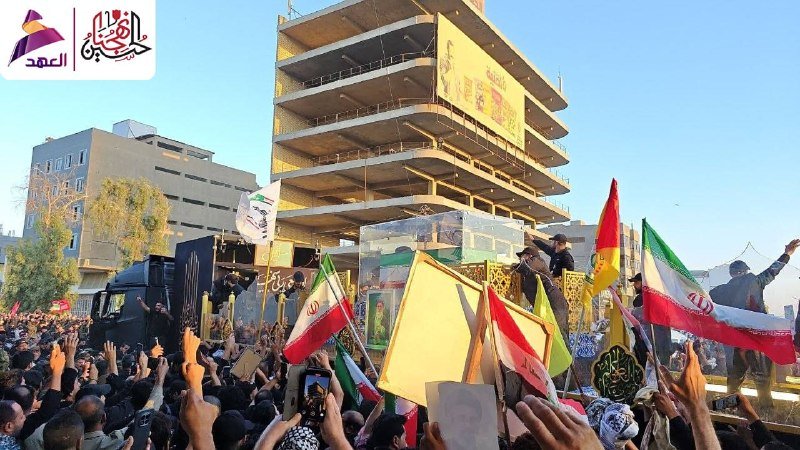
The lines outside Tehran's Imam Khomeini Mosalla on 3 July 2026 have become a familiar diplomatic shorthand: another funeral, another round of senior envoys paying respects. The temptation, especially in Western wire copy, is to skim past the protocol and look for the policy. That is the wrong move. The protocol is the policy.
Between roughly 15:00 and 16:00 UTC, the office of the Islamic Republic's late leader logged a sequence of formal visits that, taken together, sketch the contour of a post-American foreign policy in waiting. Syed Ata Hasnain arrived as Special Envoy of the Republic of India and Governor of Bihar. Sheikh Hichem Ben Mahmoud came as Grand Mufti and Special Representative of the Government of Tunisia. Mohamad Sabu travelled as Minister of Agriculture and Special Envoy of the Government of Malaysia. Boris Bratina, Serbia's Minister of Information and Telecommunications, represented Belgrade. Heads of government branches and senior officials of the Islamic Republic were already gathered inside. The procession at the Mosalla is, by design, a working contact list made flesh.
Read the guest book, not the ceremony
The optics of mourning in Tehran are unusually informative because the list of condolence calls is published, hour by hour, on the office's own channels. That record cuts against the lazy assumption that the Islamic Republic's diplomatic gravity has collapsed under sanctions pressure. India's governor-level presence is the most telling entry. New Delhi has spent two decades buying Iranian crude through workaround mechanisms, and Hasnain's role as a sitting state governor — not a religious figure or a cultural attaché — signals that the relationship has been quietly upgraded to a sub-cabinet operational tier. India's presence in this line is a vote against the maximalist interpretation of US secondary sanctions, whether or not Washington likes it.
Tunisia's Grand Mufti is a different kind of signal. North African religious-establishment representation at a senior Iranian cleric's farewell gestures toward the people-to-people architecture that the Islamic Republic has spent forty years building through seminaries, pilgrimages, and clerical exchanges. That architecture tends to outlast the bilateral mood swings of elected governments in Tunis. Malaysia — sending a sitting cabinet minister rather than a deputy — is doing the same calculation in Southeast Asia: maintain the relationship through sanctions weather, treat the Islamic Republic as a permanent feature of the diplomatic map rather than a tactical embarrassment.
The Serbia entry is the one to watch
The most analytically interesting line on the condolence list is Boris Bratina. Serbia is a declared EU candidate state, formally committed to the bloc's Common Foreign and Security Policy, and a country whose energy politics have repeatedly put it at odds with Brussels. Bratina's trip is a small data point with a large implication: even governments queuing for European accession calculate that visibility in Tehran carries a domestic cost worth paying. The European mainstream will not frame it that way. The framing will be protocol, courtesies extended to a long-serving head of state. Read carefully and it is something more pointed — a hedge.
Why the Western coverage will get this wrong
Western wire reporting on Iranian state funerals reliably falls into two modes. The first treats the condolence visits as a curiosity, a colour paragraph, a footnote about which Muslim-majority states maintain relations with Tehran. The second treats them as evidence of "rogue state" clustering, a gallery of regimes out of step with the liberal order. Both miss the structural point. What the condolence register captures is the patient, low-cost construction of a multipolar diplomatic infrastructure — one that does not require treaty ratification, does not need Western approval, and survives precisely because it operates below the threshold of front-page diplomacy. India, Tunisia, Malaysia, and a Balkan EU aspirant are not radical outliers. They are middle powers managing a hedging strategy under conditions of US-China friction, energy-market volatility, and a sanctions regime that has run out of marginal punishing power.
The stakes, plainly stated
For Washington, the Mosalla register is a quiet indicator that the secondary-sanctions regime on Iran has stopped widening the isolation it was designed to deepen. For Tehran, every condolence call is a small, durable asset — a personal connection between officials that survives electoral turnover, that lubricates future oil deals, drone-component negotiations, and security consultations. For middle powers like New Delhi and Kuala Lumpur, attendance is cheap insurance against a future in which the United States weaponises dollar clearing more aggressively, or in which a Gulf security crisis forces a binary choice between Washington and Beijing. The line moves slowly, and the cameras stay on the casket. But the diplomacy happening at the edges of the frame is the kind that, twenty years from now, will look like the moment the architecture quietly turned.
What remains genuinely uncertain is whether these relationships translate into operational substance during the succession period itself. A condolence call is not a contract. The next round of evidence to watch is whether the envoys who filed past the body on 3 July convert the gesture into concrete bilateral movement within ninety days — energy offtake, banking-channel workarounds, joint commissions. If they do, the Mosalla register will have been the warning shot. If they do not, this analysis ages badly, and the lines were, after all, just lines.
This publication read the visitor log the way other outlets read communiqués. The wire services will frame the funeral as a regional event; the diplomatic register tells a wider story about who is building hedges against the next sanctions cycle.
Wire provenance
This editorial synthesis draws on the following public wire/social posts:
- https://t.me/Khamenei_en
- https://t.me/Khamenei_arabi
- https://t.me/Khamenei_en
- https://t.me/Khamenei_en
- https://t.me/Khamenei_en
- https://t.me/Khamenei_arabi
- https://t.me/Khamenei_en