Khamenei laid in state in Tehran as regional leaders gather for week of funeral rites
Ayatollah Ali Khamenei's body lay in state in Tehran on Friday as a week of mass funeral events began, with Russia's Dmitry Medvedev among the foreign visitors paying respects at the coffin.
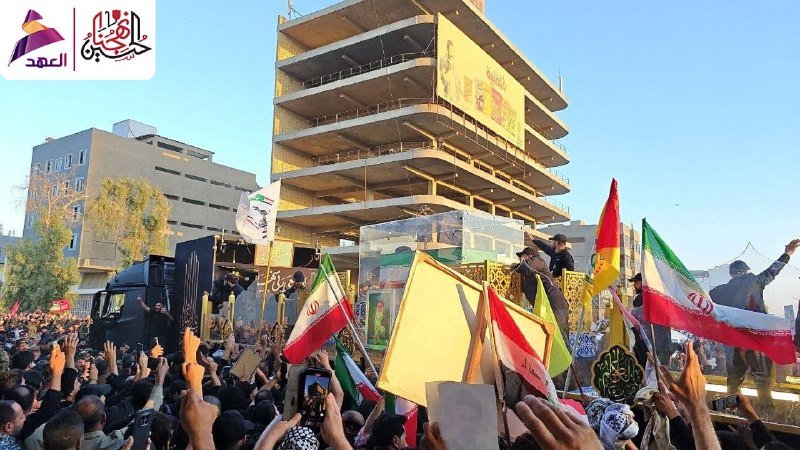
The body of Iran's slain Supreme Leader Ayatollah Ali Khamenei lay in state in a vast hall in Tehran on Friday, 3 July 2026, opening what Iranian authorities have said will be a week of mass funeral events. State-aligned channels reported delegations of officials from multiple countries arriving to pay respects, and CGTN footage showed figures from foreign governments filing past the coffin as part of the farewell ceremony for the man who led the Islamic Republic for more than three decades.
The choreography matters. A funeral of this scale is, in the Iranian system, simultaneously a farewell to a person and a stage-managed signal of who stands with the succession. Tehran is using the week of rites to perform continuity at a moment when the country's command structure faces the most serious internal test since the 1989 transition from Ayatollah Khomeini.
The visible guest list already carries weight. Russia's former president and current Security Council deputy chairman Dmitry Medvedev travelled to Tehran and appeared at the bier on 3 July, according to BRICS-affiliated channels that broadcast his arrival. The Russian presence underlines how closely Moscow and Tehran have aligned around shared hostility toward the Western sanctions architecture and the post-2014 security order in Europe, and it offers Tehran an external backer at exactly the moment its regional proxy network is under sustained Israeli and US pressure.
A farewell staged in the open
Iranian state television has framed the ceremonies as a national act of mourning rather than a political transition, but the staging — foreign dignitaries, military contingents, and senior clerical figures from across the Shia world — is consistent with how the republic has signalled every major transfer of authority since 1979. The mention of "different sections of people and officials of countries" at the farewell ceremony reflects a deliberate decision to broadcast the breadth of attendance, a reminder to domestic audiences that Khamenei's death has not isolated the country.
Two structural facts define the week ahead. First, the constitution as written provides for an interim leadership council drawn from senior clerics, jurists, and the head of the judiciary, with the Assembly of Experts tasked with selecting a permanent successor over a period that, in practice, can stretch from weeks into months. Second, the current security environment — Israeli strikes on Iran-aligned assets through 2024 and 2025, a US maximum-pressure sanctions regime, and an active Hezbollah front in the north that is no longer fully resupplied overland from Syria — narrows the political bandwidth of whoever emerges from the process.
The counter-narrative: regime messaging vs the regional reality
Western and Gulf-based outlets have read the funeral rites as the opening act of a contested succession rather than as a genuine mourning event. That framing rests on three observable pressures: the readiness of the Islamic Revolutionary Guard Corps to underwrite a successor, the willingness of the Assembly of Experts to ratify a candidate acceptable to both the establishment moderates and the harder-line clerical networks, and the question of how the new Supreme Leader positions Tehran's relationship with Moscow and Beijing at a time when both are pursuing pragmatic accommodations with Gulf states.
Iranian state-affiliated messaging pushes back along familiar lines: mourning rites proceed on schedule, foreign dignitaries are arriving without incident, and the system has institutional mechanisms for transition. The framing on state-aligned networks downplays any suggestion of contestation, emphasising instead continuity, institutional stability, and the breadth of the diplomatic guest list. The gap between those two readings is not narrowing — it is the story of the week.
What the guest list is signalling
The Medvedev trip is the most legible foreign signal of the funeral period so far. BRICS News coverage of his arrival at the coffin on 3 July places a senior Russian figure inside the ceremony before Western-aligned outlets have, in their initial reporting, confirmed comparable Western attendance. The symbolism is plain: for Moscow, Iran's leadership transition is a moment to consolidate a partnership that has expanded from drone co-production into joint sanctions-circumvention architecture and active coordination on the Ukraine file.
Beyond Russia, the broader list of foreign officials present — which the state-aligned channels have begun to enumerate through the day — will be the most concrete evidence available to outside observers about which governments consider the post-Khamenei order a stable partner and which are hedging. A succession of empty chairs from European foreign ministries, alongside fuller attendance from Beijing, Moscow, and parts of the Global South, would confirm what the structural alignment already suggests: that the Islamic Republic's diplomatic gravity is migrating eastward.
Stakes and the week ahead
The funeral week will likely settle three questions that have been open since the Supreme Leader's death was confirmed. First, whether the Assembly of Experts can produce a successor quickly enough to satisfy the IRGC's appetite for operational continuity or whether the interim council will set the tone for an extended stretch. Second, whether the diplomatic alignment visible in the guest list translates into concrete cooperation on missile and drone programmes, sanctions-circumvention corridors, and energy infrastructure that the regional order can read as a hardening of the Iran-Russia-China axis. Third, whether the public commemoration produces a unifying narrative inside the country or surfaces the factional fault lines that previous successions have papered over.
For the outside world, the concrete stakes are more immediate. A stable succession that preserves Iran's missile and proxy capabilities intact freezes the regional deterrence equation roughly where it stands — bad for Gulf security planning, useful for oil-market risk premium. A contested succession opens a wider window for Israeli and US action against nuclear and missile infrastructure, with the corresponding risk of escalation across Lebanon, Iraq and the Gulf. The week of public mourning is, in effect, the warning window before those answers harden into fact.
This publication will track the foreign delegations arriving through 4–10 July and the announcement of any interim leadership council composition as those details become available. Sources do not yet specify the schedule of subsequent funeral events or the date by which the Assembly of Experts is expected to convene.
Wire provenance
This editorial synthesis draws on the following public wire/social posts:
- https://t.me/s/JahanTasnim
- https://t.me/s/bricsnews
- https://t.me/s/ourwarstoday