Lithuania opens the nuclear question as Ukraine's long-range strikes rewrite Moscow's airpower calculus
Vilnius signals it will lift a constitutional bar on hosting nuclear weapons, while Kyiv claims it is punishing Russian airfields deep inside occupied territory. Together, the moves redraw the Baltic deterrence picture.
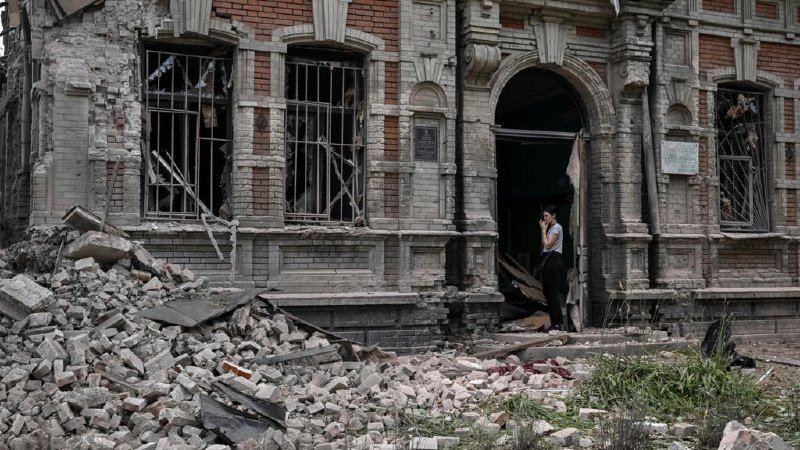
On 3 July 2026, two distinct signals travelled eastward from the Baltic and Black Sea theatres within minutes of each other. According to a Telegram post by the OSINTdefender channel timestamped 17:42 UTC, Ukraine has launched a fresh wave of drone attacks on Russian military airfields, including targets in occupied Crimea, framed by President Volodymyr Zelenskyy's office as part of a deliberate campaign to pressure Moscow into ending the war. Forty-three minutes later, at 17:43 UTC, the same channel reported that Lithuania is preparing to lift its constitutional ban on the deployment of nuclear weapons on its soil, citing the stated view of Vilnius's leadership that the present geopolitical environment requires the change for national security.
The two stories are not the same story. Read together, however, they sketch the contour of a Baltic–Black Sea deterrence problem the post-Cold War European order was never built to handle: a NATO frontline state publicly re-opening the nuclear hosting question while an invaded ally works, strike by strike, to degrade the airpower of the aggressor next door.
What Lithuania is actually proposing
The OSINTdefender report describes a constitutional amendment in Vilnius, not a basing decision. Lithuania's 1992 constitution contains explicit provisions limiting the transit and deployment of nuclear weapons on its territory, a constraint adopted in the immediate aftermath of Soviet withdrawal and codified as part of the country's non-proliferation identity. Lifting the ban would not, on its own, place warheads in the Baltics; it would remove a domestic legal obstacle to a future NATO nuclear-sharing arrangement of the kind that already operates in Belgium, Germany, Italy, the Netherlands and Türkiye.
The framing matters. Vilnius is not declaring intent to acquire; it is restoring optionality. That distinction is the difference between a provocation and a hedge — and is exactly the kind of move a small frontline state makes when it concludes that the existing umbrella no longer matches the threat picture.
What Ukraine is doing to Russian airpower
The Ukrainian drone campaign described in the same day's reports is operational, not constitutional. Zelenskyy's office has, according to the channel, framed the strikes on Russian military airfields — including sites in Crimea — as coercion: degrade the platforms Moscow uses to drop guided bombs on Ukrainian cities, and you change the cost calculus at the negotiating table. Long-range Ukrainian drone strikes inside Russian and Russian-occupied airspace have been a recurring feature of 2025–26 reporting from Ukrainian and Western outlets, with Kyiv presenting each successful penetration as both a military and a messaging event.
The strategic logic is straightforward. Russia's tactical-aviation advantage — the ability to launch glide-bomb sorties from airfields safely behind the front line — has been one of the defining features of the grinding attritional war. Anything that forces Moscow to either disperse its aircraft, harden its shelters, or fly shorter sorties shifts the arithmetic.
Reading the two moves together
A NATO member publicly re-opening the nuclear question and a non-NATO ally publicly rewriting the airpower balance inside the aggressor's territory are different instruments aimed at the same problem: deterrence has stopped feeling automatic.
For two decades, Baltic security rested on the assumption that NATO's nuclear umbrella and the alliance's Article 5 commitment were sufficient on their own. That assumption held when the threat was imagined, not when it was demonstrated. The Lithuanian signal — careful, constitutional, reversible — reads as the response of a government that has watched the demonstration up close and decided the language of deterrence needs to widen.
For Ukraine, the calculus is more brutal and more direct. Kyiv cannot trigger Article 5. Its lever is damage: damage to Russian aircraft, to Russian logistics, to Russian oil revenue, to the public case that the war is sustainable. Drone strikes on airfields in Crimea are part of that lever.
Stakes and what remains contested
The risks are legible. A Lithuanian constitutional move, however cautious, hands Moscow a propaganda line about NATO "encirclement" that the Kremlin has already been running for three years. A Ukrainian strike campaign that reaches deeper into Russian-controlled airspace raises the prospect of escalation that Western publics, war-weary or not, will notice.
The unknowns are equally legible. The OSINTdefender report on Lithuania does not specify which constitutional provision is being amended, what the parliamentary timetable looks like, or whether Vilnius has consulted its NATO partners before signalling publicly. The Ukrainian strike report does not name specific airfields, give a count of drones involved, or cite Russian acknowledgement of damage; independent confirmation from Ukrainian General Staff briefings, Western wire reporting, or imagery analysts would be needed before any specific claim of effect can be treated as established.
What is clear is that the Baltic and Black Sea theatres are no longer running on separate clocks. Vilnius is talking about hosting nuclear weapons; Kyiv is striking airfields in occupied Crimea. The post-1997 European settlement, which assumed Baltic non-nuclearisation and Black Sea de-escalation, is being renegotiated in real time — and the negotiations are not happening at a conference table.
This piece draws on Telegram-sourced field reports and is read alongside the open-source record rather than as a substitute for it. Where primary confirmation from Vilnius, Kyiv, or NATO headquarters is required, treat the channel reports as leads, not findings.
Wire provenance
This editorial synthesis draws on the following public wire/social posts:
- https://t.me/osintdefender
- https://t.me/osintdefender
- https://en.wikipedia.org/wiki/Constitution_of_Lithuania
- https://en.wikipedia.org/wiki/Nuclear_sharing