Mousavi resurfaces at Khamenei funeral: a quiet signal from the IRGC
The IRGC Aerospace Force commander’s first public appearance since the war is being read as a calibrated message to Tehran’s rivals — and to a leadership still deciding who runs what.
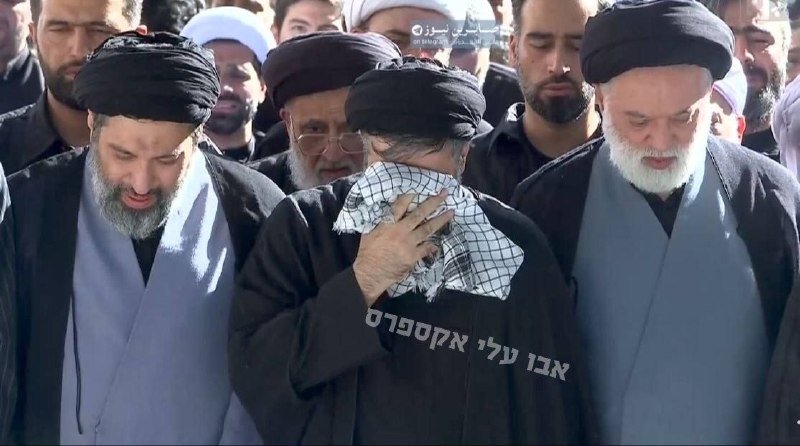
Brigadier General Seyyed Majid Mousavi, the commander of the Islamic Revolutionary Guard Corps Aerospace Force, appeared publicly for the first time since Iran’s recent war at a funeral procession in Tehran on 3 July 2026. State-linked outlets including Tasnim, Press TV, Fars and the Fotros Resistance channel carried the same image: Mousavi, in uniform, paying respects at the body of Ayatollah Seyyed Ali Khamenei, who is being described in Iranian state media as the "martyred Leader of the Islamic Revolution," at Tehran’s Mosalla mosque. The photography is deliberately public. So is the timing.
Mousavi’s reappearance is the first hard signal from one of Iran’s most consequential security commands since the fighting stopped, and it lands inside the most delicate political window the Islamic Republic has navigated in decades: the funeral of the man who set the country’s strategic direction for nearly four decades, and the opening moves of a contested succession.
The photograph, and what it carries
The image that circulated on 3 July 2026 is unremarkable on its face. Mousavi stands among senior officers at the Mosalla, where foreign dignitaries and religious figures gathered for the first day of funeral ceremonies for Khamenei, according to Press TV. The Iranian Army’s commander-in-chief, Major General Hatami, was present on the same platform and used the occasion to vow publicly that Iran would "avenge the blood of our martyred Leader and other martyrs."
What makes the photograph news is the absence that preceded it. The IRGC Aerospace Force is the branch that operates Iran’s strategic missile and, where they exist, air-launched assets. A commander of that organisation being unseen for the duration of a war is itself an operational statement; a commander being photographed at the most-watched ceremony of the year is the counter-statement. Iranian-aligned coverage from Fotros and Middle East Spectator framed the moment in identical language: Mousavi "was seen for the first time since the war." That phrasing is doing the work. It tells domestic audiences that the Aerospace Force is intact, led, and present at the centre of the new order. It tells external audiences — the foreign dignitaries physically walking past Mousavi at the Mosalla — that the man in uniform still answers for the country’s most sensitive military file.
The succession problem the funeral cannot hide
The ceremony is as much a stress test as a rite. Khamenei’s death, described by Iranian state outlets as martyrdom, has compressed a transition that might normally unfold over months into days. The presence of the Army commander-in-chief, the IRGC Aerospace Force commander, foreign delegations and clerical figures in one room turns a funeral into a public seating chart. Senior figures who attend are visibly inside the circle. Senior figures who do not attend — or whose absence is noted — are outside it.
Mousavi is a particular kind of asset in that seating chart. The Aerospace Force controls the assets that produced the most consequential moments of the war that just ended. Whoever leads it in the next administration will have an unusually large voice over Iran’s deterrent posture, missile diplomacy, and any future negotiation with Washington, Moscow or Beijing about what Tehran can and cannot put in the air. His public return, photographed and amplified through state media, is therefore a soft-power move by the security establishment: the Aerospace Force will not be a vacant chair at the table when the new leadership arranges itself.
The Hatami statement sits in the same register. By pledging vengeance for Khamenei’s death on the same day that Mousavi is shown standing at the Mosalla, the regular Army and the IRGC are publicly aligning on a single emotional line: grief is policy, and the policy is continuity.
The counter-narrative from outside the official frame
Iranian state media has an obvious interest in the photograph: it reassures the public, deters adversaries, and disciplines internal debate about who is in charge. The same image, viewed from Washington, Tel Aviv or the Gulf, reads differently. The visible reappearance of the man responsible for Iran’s missile and air-defence architecture is a reminder that the war that just ended was won tactically, at most, by the other side. The strategic instrument is not only intact, it has a recognisable face again.
Independent verification of Mousavi’s whereabouts during the war, the specific damage the Aerospace Force sustained, and the current state of Iran’s missile inventory is not in the public record available through the Telegram channels carrying the funeral imagery. That absence matters. The image proves attendance at a ceremony. It does not prove command continuity, force readiness, or unity with the regular Army. The sources carried by Iranian state-aligned outlets should be read as the framing the establishment wants the photograph to carry, not as an audit of the institution behind it.
Structural read: the funeral as a platform
In any system where leadership is opaque, ceremonial appearance is one of the few signals that travels. The Islamic Republic has used mourning rituals as a coordination device before — most notably the funeral of Qasem Soleimani in January 2020, when the public choreography of grief doubled as a public demonstration of force loyalty. The Mousavi image, paired with Hatami’s statement and the presence of foreign delegations, is functioning the same way. It tells the Iranian street that the security services are whole. It tells the clerical elite that the IRGC intends to remain a co-author of the next Supreme Leader’s strategic doctrine. And it tells external observers that the same people who ran the country’s hardest instruments through the last war will run them through whatever negotiation table follows.
The structural point is that Iran does not need to publish a defence white paper in a transition. It needs to publish a photograph. When the photograph lands across Tasnim, Press TV, Fars and the Fotros channel within minutes, the system is telling the viewer — both domestic and foreign — that the messaging infrastructure is intact, too.
What is not yet visible
Three things remain unclear, and the sources carried on 3 July 2026 do not resolve them. First, who attends the second and third days of the funeral, and who conspicuously does not. The Mosalla photograph is a snapshot; the rest of the procession will draw in clerical figures, political factions, and regional allies whose presence or absence will narrow the field of plausible successors. Second, whether the IRGC Aerospace Force will be re-tasked, re-leaded, or structurally reorganised as part of the succession. Third, whether foreign dignitaries present in Tehran will use the occasion to reopen back-channel communication, or to make a public statement about Iran’s regional posture. The first day of ceremony permits ambiguity. The days that follow will not.
For now, the photograph is the headline. A uniformed commander, standing at the centre of the most-watched room in the country, broadcast through the same messaging channels the establishment controls. The signal is plain, and it is the one Tehran’s adversaries have been waiting weeks to see: the man in charge of Iran’s strategic depth is on his feet, and he is visible.
Desk note: Monexus led on the institutional signalling embedded in the image, not on the funeral liturgy. The sources carried on the wire are exclusively Iranian state and state-aligned channels; the publication treats their framing as primary on the event itself, and flags it as a frame in the structural read.
Wire provenance
This editorial synthesis draws on the following public wire/social posts:
- https://t.me/presstv/187
- https://t.me/presstv/188
- https://t.me/presstv/189
- https://t.me/tasnimnews_en/1
- https://t.me/farsna/1
- https://t.me/Middle_East_Spectator/1
- https://t.me/FotrosResistancee/1