Pakistan's army chief courts Tehran in public reset, exposing the limits of Western alignment
Field Marshal Asim Munir met Iran's foreign minister in Tehran on 3 July 2026 and praised the late Ayatollah Khomeini as the architect of Iranian independence. The optics expose how far Rawalpindi is willing to go to court a regional counterweight.
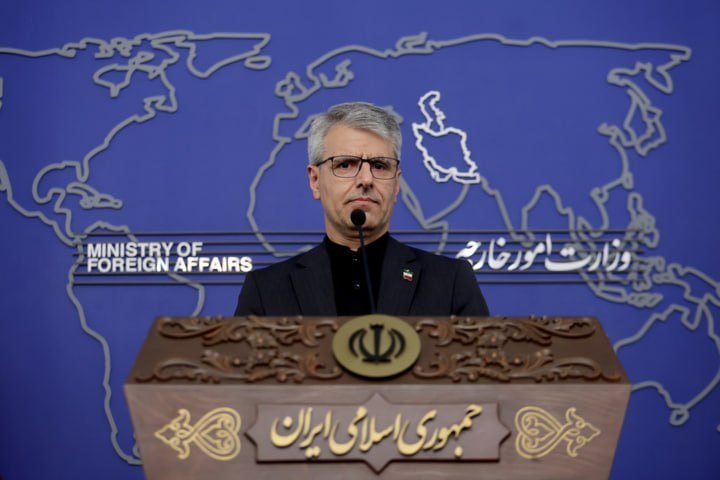
Field Marshal Asim Munir, Pakistan's army chief and the country's most consequential power broker, sat down with Iran's foreign minister, Abbas Araghchi, in Tehran on the afternoon of 3 July 2026. Within hours, both governments had put cameras and quotebooks on the meeting. The framing left little to the imagination: Munir, citing the "deep thought and insight of the nation's martyred leader," credited Ayatollah Khomeini with turning Iran "from a dependent state into an independent" one. Al-Alam Arabic, the Iranian state broadcaster's English-facing channel, carried the line as the lead. Tasnim, the clerical establishment's news agency, paired it with photographs of the two men at a polished table.
The visit lands at an awkward moment for Pakistan's Western partners. Rawalpindi has spent two years positioning itself as a logistics hub and diplomatic bridge between the Gulf and the wider Muslim world, often in close coordination with Washington and the Gulf monarchies. A Pakistani army chief praising Khomeini in Tehran — in terms that mirror the Iranian state's own narrative of post-1979 sovereignty — sits awkwardly with that posture. It also sits awkwardly with a region where Iran's regional posture, from its support for armed allies in Lebanon, Iraq, Syria and Yemen to its standoff with Israel and the United States, has been treated by Western capitals as the principal security problem to be contained rather than the kind of transformation worth publicly saluting.
What was actually said, and where
The headline quote — Munir crediting Khomeini with Iran's independence — circulated first through Al-Alam Arabic at 17:10 UTC on 3 July 2026, with the channel explicitly branding it "Urgent." Tasnim's English wire carried parallel coverage of the meeting itself roughly an hour earlier, at 16:57 UTC, framing it as a working session between two officials whose portfolios now regularly intersect: border management, energy, the long-running question of how to handle Afghan refugees, and the choreography of sectarian diplomacy that follows any spike in Gulf tension.
Iran's foreign ministry's choice of partner for the day was telling. Araghchi met Munir, and, separately on the same afternoon, Kazakhstan's foreign minister Yermek Kosherbayev, who had flown into Tehran. That second meeting — Tasnim's English feed published the readout at 16:14 UTC — is a reminder that Tehran is running a busy diplomatic docket: Central Asian neighbours, the Pakistani army chief, and a steady stream of non-Western envoys whose governments all have an interest in not letting the Iran file belong only to Washington and Brussels. The pattern is not novel, but the tempo is. Iran has been receiving foreign visitors at a pace that Western coverage has so far underweighted, reflecting how a sanctioned state can still hold currency if it sits at the right crossroads.
What the framing is doing
The Khomeini tribute is not, on the evidence, an improvised remark. It tracks almost word-for-word the Iranian state's standard formulation of its own history: a country that, in this telling, was a client of Western powers under the shah and recovered sovereign agency after 1979. Pakistan's army chief adopting that formulation in public is a deliberate gesture, not a slip. It signals that Rawalpindi is willing to validate Tehran's foundational narrative — and, by extension, its post-1979 regional posture — at a moment when most Western-aligned capitals would rather keep that narrative at arm's length.
The Western wire line on Munir has emphasised his role as a back-channel intermediary between Saudi Arabia and Iran, and between Iran and the wider Sunni-majority neighbourhood. That work has been real, and it is part of why Munir is now the most travelled general in the region. But it is a different thing to validate Iran's founding ideology on Iranian state television. The visit suggests Rawalpindi has concluded that it can carry both assignments simultaneously — the Western-facing logistical-broker role and a candid bilateral with Tehran — and that the latter no longer needs to be quiet.
Where the limits are
The counter-narrative is straightforward: this is posture, not pivot. Pakistan's economic gravity still runs through the Gulf and the China-Pakistan Economic Corridor. Its security alignment remains tilted, if quietly, toward Gulf monarchies and Western partners. Munir's Khomeini tribute can be read as transactional — a gesture to keep channels open at a moment when Tehran feels cornered — rather than as evidence of a deeper ideological turn. Even Iran's English-language state coverage of the meeting is diplomatic in tone, not triumphalist. There is no Iranian announcement of a new strategic partnership, no arms deal, no joint communiqué, and no claim from Tehran of a Pakistani alignment shift.
That restraint cuts both ways. Iran has been pushing for months, through visits like Kosherbayev's and now Munir's, to build a "look, we are not isolated" dossier. The list of arriving foreign ministers is the point of the exercise. Whether that produces anything durable — sanctions relief, de-escalation, a Gulf security settlement — is a separate question, and one the available reporting does not answer.
Stakes
The most concrete near-term stakes sit in three places. First, on the Pakistan-Iran border, where Tehran and Rawalpindi have historically sparred over militant activity and where quiet cooperation has ebbed and flowed; a warmer public posture could ease coordination on cross-border militancy, or it could harden the sectarian framing that has periodically set the two security establishments at odds. Second, in the Gulf, where Munir's role as a bridge has been tolerated in part because both Riyadh and Tehran have accepted him as a usable intermediary; explicit Iranian-state validation of the Pakistani army chief complicates that balancing act. Third, in the Western file on Iran, where capitals that have spent two decades building sanctions architecture and isolation have to adjust to a region that is, at the level of routine diplomatic traffic, simply not isolating Tehran the way the framework intended.
The unresolved question is the one neither side put on the table: whether the warmer rhetoric produces concrete deliverables, or whether 3 July 2026 will be filed, in a year's time, as another gesture cycle in a relationship that has generated many. The sources available to this publication do not specify any new agreement emerging from the session. What they do specify, in plain and repeated terms, is that both governments wanted the visit seen, and on the terms they jointly chose.
Monexus is publishing this in real time as a desk piece. The wire framing of Munir's regional role has tended to centre his Gulf-broker function; the Tehran visit is a useful corrective, putting on the record the scope of his recent itinerary and the language he is willing to use about Iran's founding narrative.
Wire provenance
This editorial synthesis draws on the following public wire/social posts:
- https://t.me/alalamarabic
- https://t.me/JahanTasnim
- https://t.me/tasnimnews_en