Pakistan walks the Tehran aisle: Sharif and Munir at Khamenei's funeral signal a realignment the West can't ignore
At the funeral of Ayatollah Khamenei in Tehran, Pakistan's prime minister and army chief stood in the front row — a choreography that says more about the region's future than any joint communiqué.
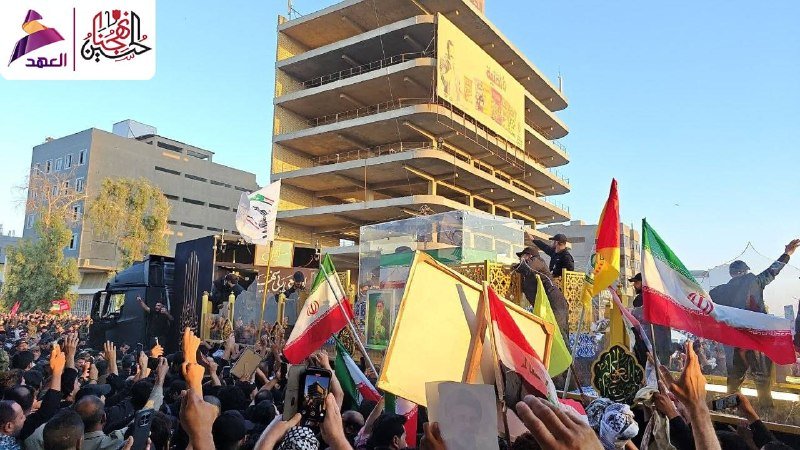
The image is worth more than any communiqué. On 3 July 2026, in central Tehran, Pakistan's Prime Minister Shehbaz Sharif and Army Chief Field Marshal Asim Munir — the country's de facto strategic authority — filed past the coffin of Ayatollah Ali Khamenei alongside the families of Hassan Nasrallah and Imad Mughniyeh, the assassinated Hezbollah chiefs. Press TV and Tasnim, both Iranian state outlets, published the photographs in near-real time. The presence of two senior Pakistani envoys at a funeral is normally a non-event. This one was not.
The point of the choreography is the company Sharif and Munir kept. Nasrallah and Mughniyeh are figures that Western governments do not mourn. By placing Islamabad's civilian and military leadership in the same frame, Tehran made a deliberate public statement about who counts as a friend in South Asia — and by extension, who does not.
Reading the front row
Funeral diplomacy is the oldest signalling game in the statecraft manual. Who shows up, who sends a junior minister, who sends nothing — every absence is a sentence. Sharif's presence commits Pakistan's elected government to public grief for the Iranian Supreme Leader. Munir's presence commits the Pakistan Army, the institution that actually runs the country's security and nuclear posture. The two together commit the state.
That matters because Pakistan is a nuclear-armed state of more than 240 million people, sitting on Iran's eastern flank, sharing a long and porous border, and locked into an enduring rivalry with India. It is also a country where Western governments have spent decades courting the civilian side while quietly accepting that the army side sets the floor on strategic questions. Watching both men bow their heads in unison, beside the families of two men Western capitals regard as terrorists, tells you where the floor has moved.
The counter-read, and why it doesn't quite land
The Western analytical reflex is to discount this kind of image as theatre — autocrats performing for one another while real business continues quietly in Washington, Riyadh and Abu Dhabi. There is something to that. Pakistan still takes IMF money. Its central bank still wires transactions through New York. Its diaspora still sends home the remittances that keep the current account from collapsing.
But that reflex mistakes the texture of the moment. A prime minister and an army chief do not fly to Tehran together for a funeral as a box-ticking courtesy. The fuel bill alone, the security logistics, the diplomatic clearance with a regime that has just lost its paramount leader — these are decisions that cost political capital. Someone in Islamabad calculated that the upside of being seen at Khamenei's coffin outweighed the cost of being photographed next to the Nasrallah family. That calculation is itself the story.
What larger pattern this sits inside
This is the part that gets under-reported in Western wires, which tend to treat Pakistan through the lens of terror-finance watchlists, Afghan border flare-ups and IMF programmes. None of that goes away. But the underlying map is being redrawn. A multipolar order is not built by treaty; it is built by which leaders stand together at which coffins, and which leaders conspicuously do not. Tehran is now a stop on a South Asian security itinerary it was not on a decade ago. That is structural, not seasonal.
The piece of the picture Western readers most often miss is the Saudi-Iranian rapprochement that Beijing brokered in March 2023 and that has held, more or less, since. Once Riyadh and Tehran were no longer on the brink, the cost for a Sunni-majority nuclear power to be visibly close to the Islamic Republic dropped sharply. Pakistan is acting inside a region that has already moved on from the cold-war Sunni-Shia fault line. The funeral is the visible tip of a quieter reorientation underneath.
Stakes, and what remains uncertain
If the trajectory continues, the obvious winners are Tehran — which gains a visible South Asian partner at exactly the moment its supreme leadership is in transition — and the Pakistani military, which collects diplomatic leverage at low cost. The obvious losers are the Western capitals that have spent twenty years trying to keep Pakistan inside an Indo-centric security architecture. India, watching its rival being photographed with the families of anti-Israeli militant leaders, will draw its own conclusions; expect quieter, sharper moves in New Delhi in response.
What the available reporting does not tell us is what was said in the rooms the cameras did not enter. Whether any operational understanding on border security, on energy corridor routing, or on the long-running question of how Pakistan and Iran respectively manage their restive Baloch populations came out of these encounters is not in the public record. Iranian state media will tell you the visit was a triumph. Western analysts will tell you it was symbolic. Both are partly right, and the test of which read is closer will come in the months that follow — in the joint exercises that do or do not happen, in the bilateral trade figures, in the visa stamps at Taftan.
Until then, the photograph is the document. Sharif and Munir did not have to be there. They were.
The Monexus desk framed this around the choreography of state grief rather than the personalities involved; the wires focused on the same images but framed them as ceremonial, missing the structural signal that an Islamabad–Tehran alignment is now public.
Wire provenance
This editorial synthesis draws on the following public wire/social posts:
- https://t.me/presstv
- https://t.me/s/wfwitness
- https://t.me/s/wfwitness