Settlements, arrests, and a presidential superlative: the week Israel policy hardened
Three dispatches in 36 hours — a settlement expansion, the arrest of a volunteer doctor, and a presidential self-coronation — sketch a policy posture in which the occupied territories stay occupied and the language of pressure quietly disappears.
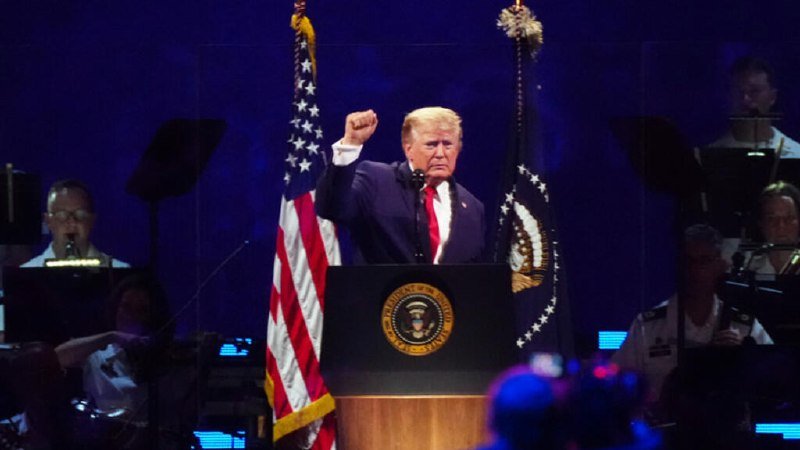
At 16:58 UTC on 3 July 2026, Palestinian outlets reported that Israeli forces had detained a volunteer physician known in his community as the "doctor of the poor," alongside a number of health-care activists, in the occupied West Bank. Less than two hours later, at 18:35 UTC, news services relayed that Israel had approved plans for 13 new settlements in the same territory. A day earlier, on 2 July at 21:45 UTC, the US president had publicly declared himself "the best president in the history of Israel." Read individually, each item is a familiar beat of an older story. Read together, they describe a posture: pressure language has thinned, settlement construction has thickened, and the humanitarian footprint of an occupation is being treated as a policing problem.
That posture is not new, but its current configuration is unusually legible. The three pieces of news arrived inside 36 hours and arrived without contradiction from Washington. The arithmetic is unflattering for anyone who hoped that rhetorical pressure on settlement construction would resume as a condition of regional diplomacy: every new unit added to the settler map is a unit the next round of talks will have to negotiate around.
What actually happened
The settlement move is the most consequential of the three items because it is the most durable. New housing units, once approved, become a fixed fact on the ground; they outlast the news cycle, the coalition that approved them, and the diplomat flown in to register objection. Thirteen separate plans, approved in a single decision, is not a routine planning committee rubber-stamp. It is the kind of package that signals a settled policy direction inside the Israeli system, not an administrative slip.
The arrest of the physician, by contrast, is the kind of item that disappears inside a week — except that it does not. Health-care workers detained in the occupied territories are not a marginal population. They are the thin layer of trained personnel on which clinics, mobile units, and field hospitals depend. Removing them does not just punish individuals; it degrades a civilian service that no military authority has offered to replace. The pattern is familiar from earlier waves: arrest the volunteer, charge the NGO, treat a medical file as a security file.
The presidential remark sits in a different register. It is not a policy; it is a posture. By 2 July, the US president had publicly cast himself as the most Israel-aligned occupant of the Oval Office in history. In the absence of visible daylight between the two governments on the settlement package 24 hours later, the remark reads less as boasting and more as a description of a working arrangement.
The counter-narrative, and why it does not hold
The standard counter-narrative — that settlement announcements are bureaucratic noise, that arrests are routine law-and-order, that presidential rhetoric is theatre — has the virtue of being partially true on any given day. Planning committees do convene. Suspects are detained. Presidents do boast. But the counter-narrative is calibrated to a single news cycle, and the news here arrives in clusters.
Consider the structural shape. Over months, a sequence of small approvals compounds into a map. A sequence of health-care detentions compounds into a service gap. A sequence of presidential superlatives compounds into an expectation of permission. No single item in the cluster is decisive. The accumulation is the story.
There is a more serious version of the counter-narrative worth naming: that Israeli security planners believe settlement construction inside the West Bank is a manageable variable, that arrests of activists are targeted and lawful, and that US rhetoric is the price of a broader strategic alignment against shared regional threats. Each clause of that view has advocates inside Tel Aviv and Washington. None of them is dispositive, and the reporting in the past 48 hours does not soften the case for the pressuring reading.
The structural frame
Occupation regimes survive on three pillars: a security argument for the occupier, a service-delivery arrangement for the occupied, and a diplomatic grammar that makes the arrangement tolerable to third parties. The cluster of news items affects each pillar differently. The settlement approval leaves the security argument untouched while raising the diplomatic cost. The arrest of a volunteer doctor subtracts from the service-delivery arrangement, which is the pillar most easily dismantled and least easily rebuilt. The presidential remark removes any ambiguity about the diplomatic grammar: there is no third-party pressure in the offering.
What remains is a posture in which the territory is treated as permanently administered, the civilian population as a security problem, and the international vocabulary of "occupation," "settlement," and "even-handedness" as a courtesy the principal external sponsor no longer feels obliged to extend.
Stakes and what to watch
The losers, on the current trajectory, are the Palestinian civilians in the West Bank whose service infrastructure is being thinned, and the Palestinian communities in Gaza whose humanitarian position is documented separately by outlets including Electronic Intifada and whose vulnerability is the human backdrop against which this West Bank news is set. The narrow winners are the settler movements who collect approvals and the political coalitions that depend on them. The broader winner is the regional security architecture that benefits from a US-Israel alignment robust enough to subordinate settlement diplomacy to other priorities.
Three things are worth watching in the next reporting cycle. First, whether the 13 settlement approvals translate into ground-breakings on a measurable timetable. Second, whether the arrested health-care workers are charged, released, or transferred into longer administrative detention — each is a different signal. Third, whether the next US-Israel joint statement on regional diplomacy contains any reference, even ritual, to settlement concerns. The absence of such language would confirm what the present cluster only suggests.
A note on what remains uncertain
The sources for this cluster are uneven. The settlement announcement has been reported through aggregator services and still awaits confirmation in the Israeli and Western-wire press with full procedural detail. The arrest is documented through advocacy reporting that names the affected individuals but does not yet cite an Israeli security-services statement. The presidential remark is on the public record and not in dispute. Where the evidence is thin, this publication has written around the gap rather than across it. Readers should treat the directional pattern as well-established and the specifics of this 36-hour window as still being filled in.
This piece treats the three dispatches as a single cluster rather than as isolated items, on the view that policy posture is best read in clusters, not in headlines.
Wire provenance
This editorial synthesis draws on the following public wire/social posts:
- https://electronicintifada.net/blogs/nora-barrows-friedman/israel-kills-young-mother-and-her-infant-daughter-gaza-tent
- https://x.com/polymarket/status/1813300000000000000
- https://x.com/polymarket/status/1813000000000000000