Tehran's condolencariat: reading the visitors who queued for the 'martyr Rahbar'
Tehran's Grand Mosalla has spent a week staging the funeral of Ayatollah Khamenei. Reading the crowds at the door tells you less about Iran than about who built the queue.
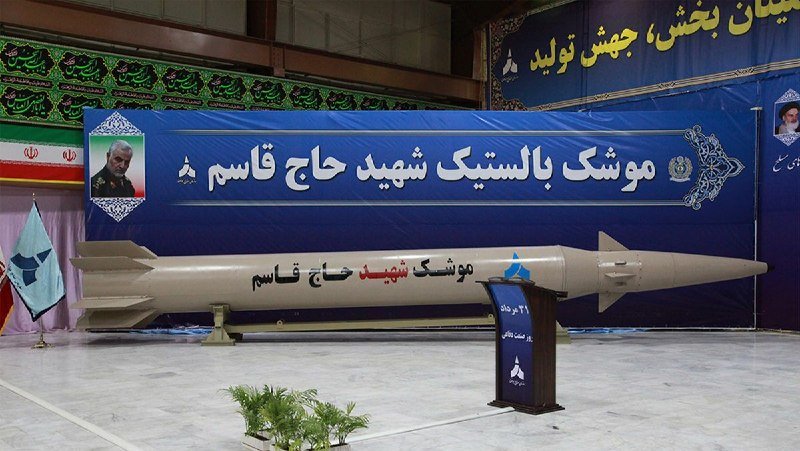
Inside Tehran's Grand Mosalla on Saturday morning, July 13, the body of Ayatollah Ali Khamenei lay in state beneath banners that already read "martyr," while a stream of mourners stretched past the prayer hall's perimeter walls. Reuters journalists in the capital counted crowds packing the compound for the official farewell ceremony, the first of a week of processions the Islamic Republic has staged in honor of the Supreme Leader killed in a US-Israeli airstrike on February 28. Iranian state channels broadcast the event live; Iraqi provincial authorities in Maysan announced 120 service centres mobilised to organise their own commemorations. The choreography of grief had begun weeks before the coffin arrived.
The visitors now passing through the Mosalla are not, on the evidence so far, a single crowd. They are a constructed audience, built up across three overlapping registers: domestic grief, regional solidarity, and the diasporic choreography of an exiled opposition that has spent decades waiting for exactly this frame. Reading them as one undifferentiated mass, as Western camera packages tend to do, misses the political work each layer is doing.
Three queues, one hall
The first queue is the one Iranian state media is actively trying to credential. Tasnim's coverage frames the farewell not as a goodbye but as a "pact to continue," citing medical staff at the Mosalla who reject the language of farewell and call the public response "more telling than all the words." PressTV's independent guest commentator Bushra Sheikh described the atmosphere as "deep grief and anger," a phrase calibrated for an English-language audience sceptical of choreographed displays. Fars, running near-daily human-interest features on the late Leader's household effects, published a long piece on a prayer the "martyr leader" wrote on a photograph of two people alongside his son Mohammad Reza, the kind of intimate-detail reportage designed to convert abstract reverence into familial intimacy.
What Tasnim is selling here is continuity. The framing of the medical staff, the curated mourning, the President's condolence notes, all operate to keep the institutional language of the Islamic Republic legible at the moment its paramount symbol has been removed. Even the borrowed cadences matter: the showcase that Tasnim aired on Saturday night leaned on a line attributed to the late Hassan Nasrallah ("We do not say goodbye…") to bridge the clerical death with the longer Hezbollah martyrdom narrative. The queue at the Mosalla is a queue into an argument about what the Republic looks like without its Rahbar.
The regional condolencariat
The second queue is the foreign one, and Iraqi coordination makes the regional stakes explicit. Maysan province's governor directed 120 service centres into operation for the funeral, the kind of logistical mobilisation that does not happen on the margins of allied relationships. Iranian-aligned Iraqi Shia parties have spent two decades fusing their political identity to the Islamic Republic's clerical hierarchy; a martyrdom in the Khamenei household is, for them, a domestic event with a foreign postal code.
The pattern is regional, not merely Iraqi. PressTV and Tasnim have spent the week engineering the visual grammar of an Axis-of-Resistance farewell: Nasrallah remembered, the Hezbollah tribute looped into broadcast packages, Iraqi Shi'a pilgrim-organising treated as front-page material. To read these visitors only as Iranian mourners is to misread the architecture. They are nodes in a transnational clerical network that has been visibly, publicly preparing for this moment since the September pager attacks decapitated its senior Hezbollah leadership and the October ground operation flattened parts of southern Lebanon. The Mosalla queue, in this register, is the Islamic Republic demonstrating that the constituency outlasts its patron saint.
The opposition's photograph problem
The third queue is the one that does not get into the hall but is being constructed for it. Exiled Iranian opposition outlets have spent years producing a counter-aesthetic to state funerals they believed would never come: a ready archive of Khamenei-era repression, prison lists, the names of the 1988 disappearances, the killings of November 2019. For that constituency, the Mosalla images pose a familiar problem. Camera angles from the Mosalla will dominate the visual record. Western wire desks will file packages built around the crowds, the banners, the orderly queue.
The harder editorial question is what proportion of the queue is voluntary, what proportion is mobilised, and what proportion is simply staring at a historical rupture and unable to look away. The Maysan service-centre order, the Tasnim "pact to continue" framing, and the briefing of medical staff with talking points all read like the typology of a state-guaranteed turnout. Reporting that treats the Mosalla crowd as a clean plebiscite on the Islamic Republic will end up doing the regime's framing work for it; reporting that ignores the size of the crowd will end up doing the opposition's framing work for it. Neither is honest about what is actually on screen.
What the camera is missing
The images coming out of Tehran this week are real, in the sense that the bodies, banners and crowds are present and countable. They are also, in a deeper sense, manufactured: Tasnim and Fars have had months to seed the "martyr" framing before the coffin arrived, and the choreography of the Mosalla has been previewed across a decade of clerical funerals. Khamenei's own Telegram channel kept a steady drumbeat of martyrdom iconography through 2025 and into early 2026, well before the February strike gave those images a retrospective completion.
The honest read is that the Grand Mosalla queue is neither pure voluntarism nor pure coercion. It is the visible surface of an institution that has spent decades rehearsing this exact liturgy, the moment when its paramount symbol becomes its paramount martyr. To watch the cameras in Tehran this week without seeing the rehearsal underneath is to mistake the production for the audience. The funeral is the first major test of whether the Islamic Republic can transmit its clerical authority across a succession that nobody in Tehran's state media is yet willing to name.
Sources
- Reuters via X: Mourners packed Tehran's Mosalla (2026-07-05)
- Tasnim News English via Telegram: Farewell ceremony for the martyred Imam of the Ummah (2026-07-05)
- Tasnim News English via Telegram: Doctors: I do not accept the interpretation of farewell (2026-07-05)
- Telegram: Jahan Tasnim, Maysan province mobilised (2026-07-05)
- PressTV via Telegram: Bushra Sheikh on the atmosphere at Grand Mosalla (2026-07-05)
- Tasnim News English via Telegram: Showcase featuring Nasrallah quote (2026-07-05)
- Fars News Agency via Telegram: The secret of the prayer on the photograph (2026-07-05)
Desk note: Monexus reads the Mosalla queue as three overlapping audiences rather than one, and treats the Tasnim-PressTV framing as institutional projection rather than spontaneous sentiment. Iran-regime and Hezbollah-adjacent channels appear here only as counter-claim material with explicit sourcing caveats, consistent with the Monexus MENA editorial compass.