Tehran's farewell hall becomes a stage for the Global South's loudest silence
Foreign delegations are filing past the coffin of Ali Khamenei, but the guest list says more about the world Tehran is courting than the one it has lost.
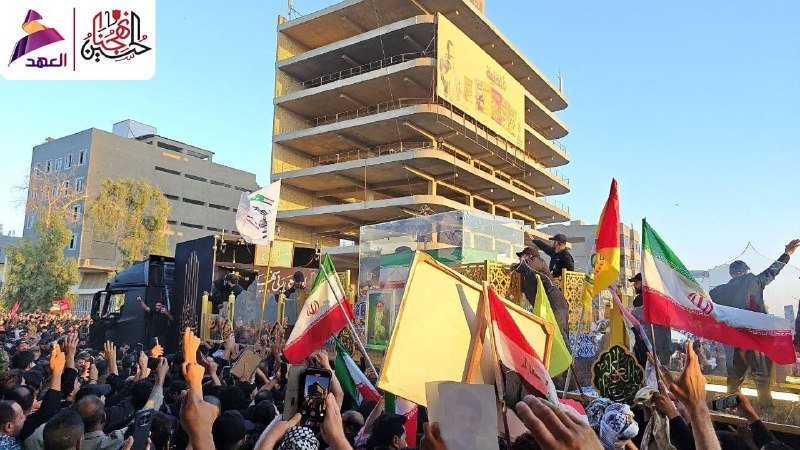
The list of mourners filing past the coffin of Ayatollah Ali Khamenei in central Tehran on 3 July 2026 reads less like a funeral register and more like a map of the world Iran spent four decades trying to build. The Tunisian Grand Mufti, Hisham bin Mahmoud, was in the farewell hall by 15:15 UTC, sent as the personal representative of the Tunisian government. Before him came a delegation of Sunni scholars from across the Islamic world. Before them, Pakistan's Speaker of the National Assembly, Ayaz Sadiq, arrived to pay his respects. And in the most symbolically loaded seat of the day, He Wei — Vice Chairman of the Standing Committee of the National People's Congress — stood as Beijing's highest-ranking emissary. The choreography is being broadcast by Iranian state-aligned outlets under a single, deliberate refrain: martyr leader of the Islamic Revolution.
The point of the procession is not grief. It is alignment. Iran's foreign-policy establishment has spent a generation cultivating precisely this constituency — Sunni clerics, Muslim-majority parliaments, and the Chinese state — and the funeral of its longest-serving Supreme Leader is the moment to display the returns. The delegations in the hall are not abstractions; they are a roster of partners Tehran can now name when its rivals demand isolation.
A guest list, not a crowd
The Western wire coverage of Iranian state funerals tends to flatten them into a single image: black flags, beaten chests, anti-Israel slogans. The arrivals on 3 July resist that flattening. Three distinct constituencies walked through the door. The first is institutional Muslim diplomacy — figures like Pakistan's Ayaz Sadiq, who as Speaker of the National Assembly carries the weight of a 230-million-strong Muslim state that has repeatedly declined to align with US pressure on Tehran. The second is the Sunni clerical world, whose presence is theologically significant in a country where Shia authority is the formal order, and politically useful to a regime that wants to be read as pan-Islamic rather than sectarian. The third is Beijing, which sent not a foreign ministry functionary but a vice-chairman of the NPC Standing Committee — a slot reserved for relations the leadership considers strategic.
Each arrival was catalogued by the Khamenei_arabi channel on Telegram, the Iranian state's preferred Arabic-language broadcast pipe, in near-real-time between 14:07 and 15:15 UTC. The cadence — four major entries in little over an hour — is itself the message: the room is filling, the world is watching, the country is not alone.
The silence behind the imagery
What the footage does not show is the part of the world that is conspicuously absent. No European head of state is on the list. No Japanese, no South Korean delegation at the parliamentary vice-chair level. The United States is not present and will not be. The procession is therefore also an inverted map — a clear silhouette of the Western-aligned order that has spent the post-1979 decades treating Tehran as a pariah, and which the funeral is, by design, not interested in courting. That silence is the second story.
Read together, the two maps make a single argument. Iran has decided, at the precise moment of leadership transition, to define its international identity through the partners who showed up. The framing rests on a structural bet: that the diplomatic weight of the Muslim world plus China is now sufficient to underwrite Iranian security and economic resilience without Western recognition.
What the rooms inside the rooms signal
The Chinese seat is the one that requires the most careful reading. He Wei's presence is not a Chinese vote of confidence in Iranian theocracy; it is a function of something colder and more transactional. China is Iran's largest oil customer, its largest trade partner under sanctions, and the principal external supplier of refined petroleum when domestic refining has come under pressure. Beijing's calculus is energy security, Belt-and-Road positioning in the Persian Gulf, and the diplomatic leverage that comes from being the great power willing to attend. Treating the NPC vice-chairman's attendance as ideological alignment misreads it. The accurate frame is mutual utility under shared pressure from the United States.
The Pakistani and Tunisian arrivals sit in a different register. Both states maintain working relations with both Washington and Beijing, and neither has formally broken with the Western financial architecture. Their presence is a signal to domestic and regional audiences that engagement with Tehran is not fringe, and to Washington that its sanctions architecture is not total. It is also a soft counter to the Abraham Accords architecture, in which several Sunni Arab states have moved toward formal alignment with Israel. A Grand Mufti from Tunis in Tehran is, in that reading, a quiet assertion that the older Arab-Iranian diplomatic grammar still exists.
Stakes and a remaining uncertainty
If the trajectory of the day's arrivals holds through the formal mourning period, the new Iranian leadership inherits a foreign-policy inheritance more densely populated with non-Western partners than at any point since the 1979 revolution. The material upside is real: oil exports routed eastward, technology partnerships that do not require OFAC licences, and a diplomatic floor under any future sanctions escalation. The material risk is concentration. A foreign policy built on Beijing plus a constellation of Muslim-majority parliaments is structurally more vulnerable than one diversified across both hemispheres, and the marginal cost of any rupture — a Saudi-Iranian detente that reverses, a Sino-Iranian dispute over pricing, a Pakistani domestic shift — is correspondingly higher.
What remains genuinely uncertain, and what no source available on 3 July 2026 can resolve, is how the new Supreme Leader will actually allocate that inheritance. The funeral rites are a stage; the policy choices made inside the next twelve months — on nuclear files, on the Axis of Resistance, on the China energy compact — will determine whether the guest list was a portrait of a bloc or merely a photograph of one.
Desk note: The Western wire coverage of Khamenei's funeral has so far led on the succession question. Monexus is leading instead on the guest list — because in Iranian statecraft, who is in the room is itself a policy announcement.
Wire provenance
This editorial synthesis draws on the following public wire/social posts:
- https://t.me/Khamenei_arabi
- https://t.me/Khamenei_arabi
- https://t.me/Khamenei_arabi
- https://t.me/Khamenei_arabi