What the Tehran Farewell Reveals About Iran's Managed Public Square
Hours before mourners filled central Tehran, state-aligned channels orchestrated a choreographed optics operation — a reminder that grief, in Iran, is also governance.
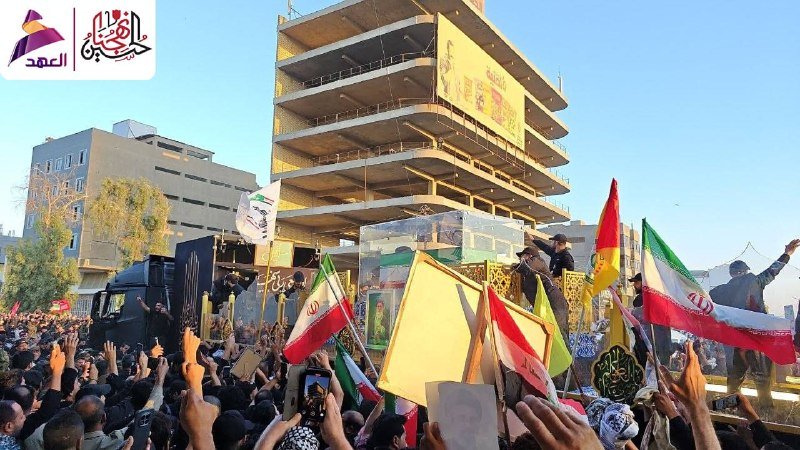
On the evening of 3 July 2026, the western flank of Tehran's central mosque filled with families, clergy and security details in advance of a farewell ceremony for the country's "martyred leader of the revolution," according to a series of dispatches filed by the state-aligned outlet Tasnim between 21:28 and 22:04 UTC. The phrasing — "less than five hours from the start of the ceremony," "the people of Tehran did not leave the 'street' on the eve of the funeral" — was identical across post after post, riding the same hashtags, the same messenger handle. Even the geography of the coverage was choreographed: a reporter's narration from "hours before the arrival of people," then a wide shot of the mosque's western side, then crowds, then framing of the day as a national rupture.
The point of these coordinated posts is not simply to report. It is to pre-load the visual and emotional register before the ceremony begins, so that every later image is read inside a frame the state has already set. In a country where mourning is an instrument of power, that choreography matters more than the ceremony itself.
How the optics were assembled
The Tasnim thread — five items, three minutes apart at peak, all on the same beat — reads less like breaking news than like a produced run-up to a televised moment. The 21:56 UTC post is the most revealing: it describes residents of Tabriz receiving an "envelope" inviting them to an "international event," framing the invitation as a "bitter and disbelieving" summons to a farewell ceremony. Whether the framing is editorial or user-submitted, Tasnim platformed it. The outlet is also distributing its own footage on the ground through the same channel, hashtagging everything under a single banner.
This is what saturation looks like before the cameras officially roll. The Western wire genre that might call it "reporting from the ground" — AP stringers, BBC correspondents, AFP coverage — has no parallel access inside Tehran for this ceremony. That asymmetry is itself the story.
What Tasnim does, and who reads it
Tasnim News Agency is the public-facing arm of the Islamic Revolutionary Guard Corps' intelligence apparatus, a point that has been documented across mainstream coverage since at least 2018. Its English-language feed is not designed as primary news for foreign audiences; it is designed to project a curated Tehran read to Telegram, X and aggregators at the precise moment attention peaks. The same is true of PressTV, IRNA and Mehr — each operates as a different camera on the same set.
A fair read of this is not that the crowds are staged, but that the evidentiary record of the crowds is staged. Western wire copy on Iran routinely begins with "according to Iranian state media"; that phrasing is the floor, not the ceiling, of how rigorously the inputs are labelled. Most readers see the photograph, not the caveat.
The Tabriz detail
The Tabriz envelope story deserves a paragraph of its own. Invitations sent directly to households, for an event the recipients describe as a shock — that is a mobilisation tactic, not a public commemoration. It tells you the state of the public mood well enough that the regime prefers to script attendance rather than rely on spontaneous turnout. Treat it as a data point: when a regime turns to paper invitations for what it presents as a spontaneous outpouring, the gap between the claim and the method is doing work.
Counterpoint: grief is real, even under choreography
The cynical read is not the whole read. Families and communities do grieve the dead in Iranian cities and provincial towns; the ceremony in Tehran follows years of documented violence on and around the country, and the grief within those enclosures is real. The argument here is not with the mourners. It is with the production apparatus that decides which frames exit Iran and which do not. Watching a Tasnim montage of crowds is not the same as independent reporting on whether the streets are full, only that the official cameras were there.
Stakes and what to watch next
What to watch over the next 24-72 hours: the official turnout estimate, the foreign delegations named on stage, the fate of any independent coverage that surfaces, and the messaging pattern that follows. Saturation coverage that begins five hours before the ceremony is built to flood the frame so that the post-event narrative has only one visible source. Read the optics for what they say about the succession period itself — a managed public square is a managed succession.
Desk note: Monexus labels every claim drawn from Iranian state media with the source outlet's name. Where independent corroboration is absent — as it is here — this publication notes the gap rather than papering over it.
Wire provenance
This editorial synthesis draws on the following public wire/social posts:
- https://t.me/s/tasnimnews_en
- https://t.me/tasnimnews_en/221756
- https://t.me/tasnimnews_en/221739