The farewell line in Tehran and the choreography of a region's alliances
Foreign dignitaries filed through a Tehran farewell hall on 3 July 2026 for the late Ayatollah Khamenei. The visitor list is the news — and it maps the alliances the next supreme leader will inherit.
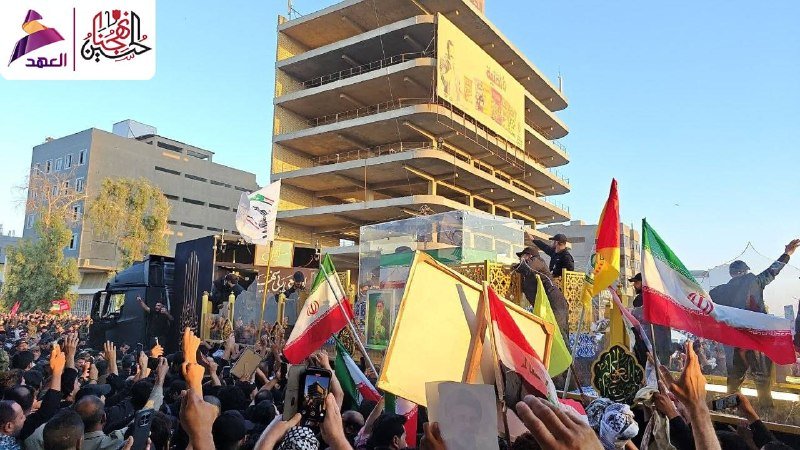
The visitor book at Tehran's farewell hall on 3 July 2026 read less like a condolence register than a foreign-policy map. Between the early afternoon and mid-afternoon, three officials from three different theatres of Iranian statecraft filed past the coffin of Ayatollah Ali Khamenei: Malaysia's agriculture minister and special envoy Muhammad Sabu; Lebanon's defence minister Michel Manasseh; and the speaker of Qatar's Shura Council, Hassan bin Abdullah Al-Ghanim. The arrival order is itself a piece of choreography — Kuala Lumpur first, then Beirut, then Doha — and the choreography tells you who Tehran considers worth signalling to in the hours after a supreme leader's death.
This piece is not an obituary. The late Ayatollah's successor is already being formed inside the institutions he built; what is interesting is which foreign guests the Islamic Republic chose to be visible with, in which order, and what that order reveals about the regional order the next supreme leader will inherit.
The Malaysian handshake
Muhammad Sabu's presence matters less for his portfolio — agriculture — than for what the title of "special envoy of the government of Malaysia" actually denotes. A prime ministerial envoy carries the personal weight of the sending head of government. Anwar Ibrahim's choice to dispatch a cabinet minister bearing that title, rather than a lower-ranking diplomat, is a calibrated gesture to a state that has, for two decades, positioned itself as a bridge between the Sunni-majority Muslim world and Shia Iran. Malaysia does not share a border with any Iranian client; its motive is normative and commercial, not strategic. The signal to read is that Kuala Lumpur wants the post-Khamenei relationship to look like the pre-Khamenei one — continuous, ritualised, and useful at the OIC table.
The Lebanese portfolio
Michel Manasseh's arrival, by contrast, is a Hezbollah-Iran moment wearing a Lebanese-state costume. Beirut's defence ministry has spent the better part of two years as the institutional vehicle through which a post-ceasefire Lebanese government has managed the relationship with an Iranian-backed arsenal inside its own territory. The defence minister is the official the Islamic Republic most needs onside if it wants the disarmed-but-not-disarmed equilibrium along the Litani to hold. That Manasseh showed up personally rather than sending a representative is the news. It says the Lebanese state — or at least its security branch — wants to be photographed next to the Iranian state at exactly this moment.
The Qatari shuttle
Hassan bin Abdullah Al-Ghanim's presence completes a triangle. Doha has spent the last decade running what amounts to a parallel diplomatic channel to Tehran — hosting negotiations, mediating releases, keeping the airspace open, and bankrolling, when necessary, the difference between an Iranian budget that functions and one that does not. A Shura Council speaker is not a head of state, but Al-Ghanim is the closest thing Qatar has sent to Tehran in the current period that is not the emir himself. The reading here is structural: Doha wants continuity of the back-channel, and is using the funeral as cover to renew it in public view.
What the order says
Read together, the three arrivals sketch a regional architecture. Malaysia represents the Sunni-majority normative constituency Tehran has spent decades cultivating through summitry and pilgrimages. Lebanon represents the armed Shia crescent — the part of the alliance that bleeds when Israel and Iran exchange blows. Qatar represents the financial and diplomatic intermediary class — the Gulf states that are not Saudi Arabia and not the UAE, that maintain working relations with Tehran precisely because they cannot afford not to. The Islamic Republic's choice to display all three within the same afternoon is a deliberate refusal to look isolated. It is also, quietly, a message to the Gulf's larger monarchies: we still have a queue.
The alternative reading
There is a more sceptical take, and it should be aired. Funerals produce queues everywhere; the presence of a dignitary at a farewell hall is, in itself, cheap signalling — a low-cost gesture of respect that commits the sender to very little. A Malaysian envoy can fly home the same evening and the bilateral relationship is unchanged. A Qatari speaker can take photographs and Doha's red lines on Iranian conduct in the Gulf remain intact. The Lebanese defence minister can salute the coffin and the disarmament question in the south stays unresolved. In this reading, the visitor book tells us about ritual diplomacy, not about policy.
The counter to that reading is that, in the specific Iranian case, ritual and policy have always been unusually close. The Republic's foreign policy is conducted through the symbolism of attendance, pilgrimage and condolence in a way that Western chancelleries find quaint and Middle Eastern chancelleries find essential. If the visitors were not important, they would not have come in person, and at this rank.
Stakes
The succession is the story. The next supreme leader inherits a state that, on the evidence of the farewell register, still commands a queue: a Southeast Asian Muslim-majority power willing to send a special envoy, a Lebanese state willing to send its security chief, a Gulf petro-state willing to send its parliamentary speaker. He also inherits a state whose queue does not include, on this evidence, any senior European figure or any senior American envoy — and whose regional posture under sanctions has narrowed, not widened, the menu of who is willing to be photographed next to whom.
What we do not know
The sources do not specify whether the visitors met one another, whether any of them carried a private message from a head of state to Iran's Assembly of Experts, or whether the order of arrival was negotiated or spontaneous. The reporting here is built from three arrivals posted to a single Telegram channel affiliated with the late leader's office; the channel describes the arrivals and the salutes, not the back-corridor conversations. A fuller picture will require readouts from Kuala Lumpur, Beirut and Doha in the days that follow. Until then, the queue is the data.
Desk note: Wire services have largely treated the Khamenei funeral as a procession story. Monexus has framed it instead as a foreign-policy snapshot — reading the order of arrivals as the documentary record of who Tehran wants the next supreme leader to be seen alongside. The wire will catch up in 48 hours; the queue is already there.
Wire provenance
This editorial synthesis draws on the following public wire/social posts:
- https://t.me/Khamenei_arabi
- https://t.me/Khamenei_arabi
- https://t.me/Khamenei_arabi