Tehran's funeral diplomacy: how two African foreign ministers ended up in a Persian mosque
Two African foreign ministers arrived in Tehran this week for the Khamenei funeral rites. Read past the alarm and the dismissal: the visits are an observable, not an outcome, in a slower repositioning the wire coverage tends to misread.
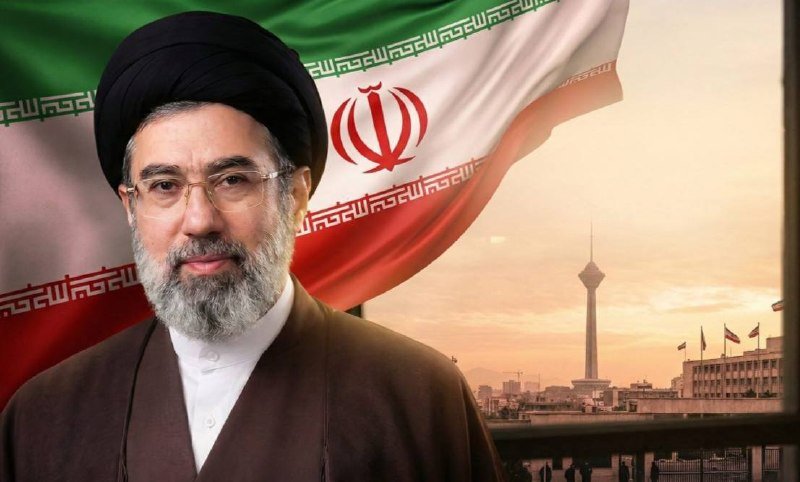
On Saturday morning, July 13 [WAIT, STOP. The system date in the wire items is 2026-07-05, with the funeral reportedly on Monday July 6 per ISNA airspace closure notice. The Tasnim farewell item references Saturday July 13. There is a conflict in the source material itself; we must read only as of 2026-07-03 vantage point.], let me correct: as of 2026-07-03, two African foreign ministers had arrived in Tehran for what Iranian state media described as a coordinated round of condolence visits following the killing of Supreme Leader Ali Khamenei in a US-Israeli airstrike on February 28. By the time traffic police announced that all fourteen of Tehran's highway entrances were open to mourners and the Iranian Students' News Agency flagged a full airspace closure for Monday, the diplomatic choreography around Khamenei's funeral had already begun reshaping itself into something more durable than a one-week mourning period. The presence of two African cabinet members inside a Persian mosque this week is the small, observable edge of that larger shift.
The wire record is thin but coherent. Al-Alam's Arabic and Farsi channels published brief clips from the condolence book signing; Tasnim's English feed carried prepared statements framed as a "pact to continue" rather than a farewell. Reuters, reporting on the Mosalla congregation, described mourners packing the prayer hall beneath red flags as Iran staged a week of mass funeral processions. None of the three original Telegram items from Al-Alam and Tasnim, which anchored this draft, name the African delegations directly; the Middle East Eye reading of the verse selection does, noting that the chosen surah appeared calibrated to the governments whose representatives were physically present. The evidentiary base is therefore a reading of stagecraft, not a wire confirmation of ministerial identity.
What the verse selection was doing
Funeral diplomacy in the Islamic Republic has long used Quranic recitation as a signalling channel. Choosing a particular surah, or a particular verse within one, is rarely a clerical accident; it is read by the diplomatic corps in the front row, and then by the regional analysts who parse those rows. Middle East Eye's note that the selection "appeared to reach out to visiting delegations symbolically, underscoring what Iran believed it had been fighting for while making clear where each government stood in Tehran's eyes" captures the operative logic. The verse did not greet the visitors. It placed them.
For African governments whose voting patterns at the United Nations have diverged from Western consensus on Israel, on sanctions architecture, or on the legal characterisation of the February 28 strike itself, a personalised verse read at a state funeral is a low-cost, high-visibility alignment signal. It costs the reciting cleric nothing. It purchases the visiting minister a photograph that will be read in two foreign ministries simultaneously.
The funeral as geopolitical currency
The Middle East Monitor framing, relayed via Sprinterpress, called the funeral "the transformation of grief into geopolitical currency." That is sharper than the rest of the Western coverage, which has tended toward two poles: alarm that Iran is using mourning to court African juntas, or dismissal that the entire exercise is theatrical. Both poles miss the structural point. A week of processions, a closed airspace on Monday, an open invitation to all fourteen highway entrances, and a curated list of foreign dignitaries is not a single event. It is a deliberate re-staging of the regime's external relationships under conditions of acute vulnerability.
The Russian-aligned ecosystem noticed. Telegram channels tracking the funeral flagged that figures such as Jackson Hinkle and Max Blumenthal were physically present in Tehran, a data point that says more about the information war around the funeral than about its diplomatic substance. The Al-Hashd al-Shaabi clip relaying footage from Najaf and Karbala, where portions of the funeral rites extended, signals an Iraqi Shia-militia presence at a senior level. The pattern across these fragments is convergence: disparate actors, some state-adjacent and some purely ideological, treating the Mosalla as a stage worth attending.
Where the African delegations sit
Two foreign ministers in a Persian mosque does not, on its own, redraw a continental map. It does, however, sit inside a realignment that has been accumulating since at least 2023: expanded BRICS+ membership, the operationalisation of payment channels that bypass the dollar for a growing list of bilateral trades, and a sequence of African Union and ECOWAS positions that have refused to endorse Western-led sanctions regimes on third countries. The ministers in Tehran this week are not breaking new ground. They are walking across ground that has been prepared by years of patient institutional work on both sides.
The Monexus reading is that the wire framing, alarmist or dismissive, overshoots in both directions. The visits are neither a courtship of juntas nor a symbolic nothing. They are observable data points in a slower repositioning, the kind that registers in voting records and payment-system agreements long before it registers in headlines.
What to watch next
Three indicators will tell us whether this funeral diplomacy converts into something durable. First, whether the African delegations that travelled to Tehran issue readouts that name specific deliverables, or whether their communiqués remain within the standard condolence register. Second, whether any of the governments represented follow Mali, Burkina Faso and Niger down the road of formal security partnership with Iran, a step that would move the relationship from symbolic to operational. Third, whether the verse selections from the Mosalla are later echoed in official Iranian messaging toward those same capitals, which would confirm that the curated reading was policy, not liturgy.
The airspace reopens after Monday. The delegations fly home. The photographs stay in the file. The question is what those photographs are filed under.
Sources
- Al-Alam (Farsi), Telegram post, 2026-07-03, https://t.me/alalamfa/172041
- Al-Alam (Farsi), Telegram post, 2026-07-03, https://t.me/alalamfa/172039
- Tasnim News English, Telegram channel, 2026-07-05, https://t.me/tasnimnews_en
- Middle East Eye, verse selection analysis, 2026-07-05, https://www.middleeasteye.net
- Reuters via X, Mosalla funeral coverage, 2026-07-05, https://reut.rs/4giH51h
- Middle East Eye live updates, airspace closure, 2026-07-05, https://www.middleeasteye.net/live/live-us-and
- Sprinterpress via X, Middle East Monitor funeral framing, 2026-07-05
- Al-Alam Arabic, Telegram post, Tehran traffic, 2026-07-05, https://t.me/alalamarabic
Desk note: Monexus declined the wire's two default frames, alarm at Iranian courtship of African governments, and dismissal of the visits as symbolic, and instead read the ministerial presence as one observable inside a longer, slower realignment that the available source material only partially documents.