The funeral no one outside Tehran is supposed to be watching
Two vice-presidents flew into Tehran on the same July afternoon to honour a dead supreme leader. The optics tell a story the wires have decided not to.
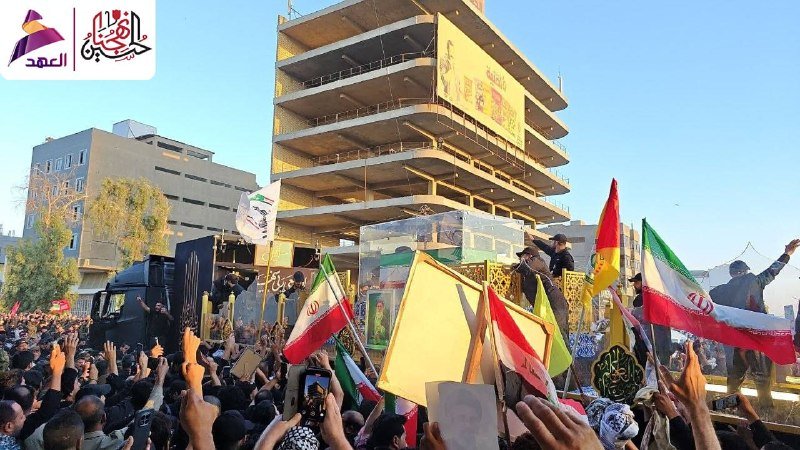
A choreography of grief played out across central Tehran on the afternoon of 3 July 2026, and the international press largely looked away. According to Mehr News, the Vice President of the Republic of Yemen arrived in the Iranian capital at 14:07 UTC to pay tribute to the "martyred leader of the Islamic Revolution." Roughly half an hour earlier, at 13:30 UTC, the same wire reported that Cevdet Yılmaz, the Vice President of Türkiye, had entered a Tehran mosque with a delegation to participate in the tribute ceremony. Fars News carried matching footage on its channel at 13:42 UTC for the Yemeni visit and at 13:07 UTC for the Turkish one. Two second-rank heads of state from a NATO member and from a state locked in a grinding Saudi-led war, inside one of the most surveilled mosques in the Middle East, on the same afternoon, performing reverence for a dead Iranian leader — and almost no Western wire has assigned a correspondent to file on it.
This is the pattern worth naming. When senior officials from adversarial or sanctions-bound capitals travel to honour a fallen Iranian supreme leader, the visit is treated as theatre, as costume, as the usual "Axis of Resistance" pageant — and filed, if at all, in the colour slot. The substance underneath — what the trip signals about Ankara's regional posture, what it tells us about the post-Khamenei succession contest already underway in every foreign ministry from Riyadh to Doha — goes unwritten.
The empty chairs in the press pool
The trip itself is small news. A vice-presidential condolence visit is not a treaty. It does not move a single sanctions line, unlock a frozen account, or redirect a missile. It is, in the formal sense, symbolic. But the symbolism of a NATO member-state's second-in-command crossing into Iran during a period of acute tension between Tehran and Washington is the kind of detail that, if Ankara were visiting Brussels, would earn a Reuters alert within twenty minutes and a Foreign Ministry read-out within the hour. Instead the wires pooled their copy off Iranian state outlets — Mehr and Fars — and stopped there. The two Iranian sources describe the same event from two angles: Mehr frames the language in ideological register ("martyred leader of the Islamic Revolution"), Fars in more neutral ritual register ("martyred leader of the revolution"). Both are primary sources for what physically occurred. Neither is a neutral observer of why it occurred.
That the trip happened at all is the news. Türkiye is not Syria, not Iraq, not Lebanon. It is a G20 economy, a NATO ally of the United States since 1952, and the country that hosts Incirlik. Its vice-president does not end up in a Tehran mosque by accident.
Why the visit, why now
Two plausible readings are on the table, and both should be aired before settling on one.
The first is the cold-instrumental one. The Iranian leadership is in a defined interregnum — the supreme leader has died and the republic is performing the formal apparatus of succession, including the funeral procession that draws in the maximum number of foreign delegations. Ankara wants a seat at the table where the post-Khamenei order will be negotiated. Showing up costs almost nothing; staying home forfeits influence. Under this reading, the mosque visit is realpolitik with a prayer rug.
The second is the ideological one. The Iranian framing — "martyred leader," "leader of the revolution" — is not window-dressing. It is how Iranian state media describes the dead supreme leader to a domestic audience that will be watching the funeral rites for cues about who is in the new elite and who is out. A Turkish vice-president standing respectfully inside the frame tells Tehran's clerical establishment that its neighbourhood still recognises the legitimacy of the rite. A Yemeni vice-president — flying in from Sanaa under Saudi bombardment — tells it the same thing louder. Under this reading, the cameras are not for export. They are for the Iranian street.
The honest answer is that both are true simultaneously, and the Western wire's failure to file either version is the editorial story.
What the framing protects
There is a long-standing reflex in the Anglophone press to treat visits to Tehran by officials from Ankara, Sanaa, Moscow, or Caracas as a kind of freaky-cabinet pageant: colourful, risible, beneath sustained analysis. The reflex is convenient. It allows editors to keep these trips in the photo-reel rather than the analytic column, which in turn keeps a clean line drawn between "the rules-based order" and its adversaries. The line is not wrong in substance — there are real differences between a NATO capital and the Islamic Republic — but it is lazy in execution. Ankara is not an adversary. Sanaa is a war zone in which Iran is one of several principals. Reducing these visits to atmosphere protects a worldview that cannot afford to notice when its supposed adversaries are conducting business with its supposed allies.
It also obscures the succession. The Iranian system is currently performing the most consequential transition in its forty-seven-year history, and the foreign delegations in the mosques this week are in part voting on its outcome with their feet. Every Western wire that doesn't send a correspondent to file on that voting is, in effect, voting themselves.
What we don't know — and what the sources can't tell us
The thread inputs are limited to the two Iranian state outlets, and to video frames. They do not specify who the "Vice President of the Republic of Yemen" is by name; Sanaa has multiple claimants to that title across the Houthi-aligned government and other formations, and the wire copy treats the identity as legible to the audience without further specification. They do not record whether the Turkish and Yemeni delegations met one another, or whether either sat down with Iran's acting or incoming leadership beyond the public rite. They do not record the contents of any private conversation. They do not tell us whether Cevdet Yılmaz brought a written message from President Erdoğan, or what the Saudis think about the Sanaa delegation crossing into Iranian airspace.
Those questions are answerable. Someone will answer them in the next 48 hours — in Turkish press, in Saudi leaks, in Israeli intelligence assessment, in think-tank memos that nobody outside the field will read. The question for this publication is whether the news cycle will catch up to the ceremony before the cameras move on.
The desk noted, before filing, that the only sources available to verify the underlying trip are the two Iranian state outlets named above. The substance of any political read-out will need confirmation from Turkish, Yemeni, or independent wire reporting before this publication treats its inferences as established fact.
Wire provenance
This editorial synthesis draws on the following public wire/social posts:
- https://t.me/farsna
- https://t.me/farsna