The Queue Outside Tehran Tells a Story the Briefings Won't
A rolling roster of foreign dignitaries is filing past the body of Ayatollah Khamenei. The list — and who is conspicuously absent from it — says more about the new Middle East than any communiqué.
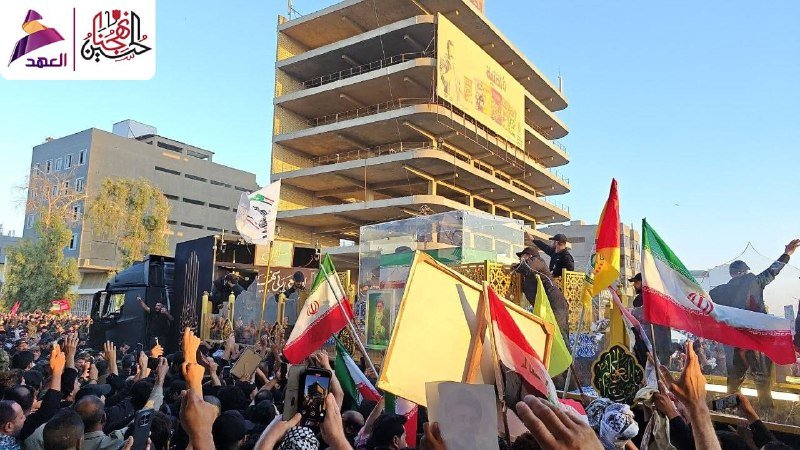
Few ceremonies read as plainly as the line of foreign mourners filing past the body of a Supreme Leader. On 3 July 2026, between roughly 12:18 UTC and 13:07 UTC, the channels operated in the name of Ayatollah Ali Khamenei published, in near real time, the identities of officials paying their last respects: Pakistan's Prime Minister Shehbaz Sharif, the President of Iraq's Kurdistan Region Nechirvan Barzani, Afghanistan's Deputy Prime Minister for Economic Affairs Abdul Ghani Baradar, and Nicaragua's Foreign Minister Valdrack Jaentschke — alongside Iran's heads of the three branches of government, a vice-president, General Mohsen Rezaei, and assorted state authorities. The procession is itself the story.
The condolence book is the most candid diplomatic document of any revolution, and it is written by who shows up, who sends a wire, and who stays home. Sharif, Barzani, Baradar, and Jaentschke are not a random sample. They are the political geography of a sanctions-burdened, ideologically assertive, regionally embedded state: a nuclear-armed neighbour with a hostile frontier, a semi-autonomous Kurdish region bound by trade and family ties to eastern Iran, a Taliban-led administration that the United States does not recognise but which Iran has spent two years courting, and a Sandinista foreign minister from a small Central American state that has spent three decades supplying Tehran with the one thing no autarkic power can produce for itself — votes at the United Nations.
The list is the message
Pakistan's prime minister is the most consequential of the four. Sharif's presence in Tehran — or at minimum the diplomatic weight Iran has chosen to give his condolence by foregrounding it on the official English-language channel within minutes of the news breaking — elevates the moment to a bilateral event. The Pakistan-Iran frontier has been the site of cross-border militancy, sectarian tension, and the long uneasy management of Balochistan on both sides of the line. A prime ministerial condolence is not a courtesy call. It is a signal that the working relationship between Islamabad and Tehran is being recalibrated at a moment when Pakistan, like much of the Muslim-majority world, is hedging against a United States it no longer trusts to underwrite its energy security.
Nechirvan Barzani's appearance carries its own freight. Erbil's relationship with Tehran has survived the Kurdish referendum crisis, the war on the Islamic State, and a string of disputes over the Iraqi federal budget; Barzani's presence, recorded by the official channel just ahead of Sharif's, signals that the Kurdistan Region intends to remain on speaking terms with Iran's successor leadership whatever form it takes.
Baradar — described in the official channels as the Taliban's Deputy Prime Minister for Economic Affairs — is the entry that will draw the most scrutiny in Western chancelleries. The Islamic Emirate remains an internationally unrecognised government for most of the world. Tehran's choice to feature Baradar among the mourners, and at a senior rank, is a quiet rebuke to that diplomatic quarantine. Afghanistan's economic manager — the man most directly responsible for the Kabul administration's relationship with Chinese mines, Russian fuel, and Iranian trade routes — is being treated as a head-of-government-level interlocutor.
Jaentschke's appearance is the smallest politically but the longest historically. Nicaragua's Daniel Ortega has kept up the Sandinista-era courtship of Tehran through decades when almost every other Latin American government moved the other way. Managua still votes with Iran at the UN General Assembly, still takes Iranian technical missions, still hosts an embassy the United States would prefer closed. The condolence visit is one more line item on that ledger.
What is not on the list
A condolence book is read by absence as much as presence. The brief public roster published by 13:07 UTC is heavy on Pakistan, the Kurdish region of Iraq, the Taliban's economic ministry, and one Sandinista foreign minister. It is conspicuously thin on the Arab monarchies of the Gulf. Saudi Arabia, the United Arab Emirates, and Qatar, which have spent the better part of two years negotiating a de-escalation with Tehran through Chinese and Iraqi mediation, are not on the morning's list. Nor is Egypt, which restored ties with Iran in 2023 and whose foreign minister has been a regular visitor to Tehran since.
It is possible — likely, even — that Gulf and Egyptian condolences arrive later and at higher protocol levels. Funeral diplomacy is staged. But the morning's order of business speaks to a power balance inside the Islamic Republic's mourning that is harder to manage than the order of business at a state opening. Iran's official channels have chosen to publish Pakistan and the Taliban's economic minister first. That is a choice.
The structural read
The pattern fits a broader realignment that has been underway for at least three years. The currencies, the banks, and the energy corridors that used to route through the Gulf and the dollar system are being steadily supplemented — and in some segments replaced — by arrangements routed through Chinese state banks, Russian rail, and Iranian overland trade. A condolence book that foregrounds Pakistan, the Taliban's economic team, and Managua is a condolence book written for a multipolar audience. It is harder to read as an exercise in clerical legitimacy, easier to read as a flex of the diplomatic floor that Tehran has built under sanctions.
There is also a quieter message in the omissions. The Gulf states' absence from the morning's list does not mean rupture. It means the centre of gravity of Iran's crisis diplomacy is moving east and south, into the Muslim-majority belt that does not depend on Western capital markets, and away from the Atlantic-facing Arab monarchies whose banks are still wired into the dollar system.
Who wins, who loses, what is uncertain
A leadership transition in Iran — whatever its final shape — will be settled by institutions that have already shown they can choreograph a mourning. The diplomatic choreography so far suggests a successor order that will preserve, not dilute, the eastward and southward orientation of Iranian foreign policy. Pakistan gains a clearer channel to Tehran on energy and border security; the Taliban's Kabul regains a senior interlocutor; Managua collects another line of legitimacy. The Gulf states, having bet on a managed détente, retain leverage but cede the headline.
What remains uncertain is the substance behind the protocol. The morning list confirms who showed up; it does not confirm who is being consulted on the succession itself, nor who has been promised what in the post-Khamenei landscape. Monexus will be watching for the next batch of visitors — particularly the Gulf foreign ministers, a Chinese or Russian senior envoy, and any senior figure from the Iraqi federal government in Baghdad — as the more revealing document.
This piece foregrounded the diplomatic geography of the condolence queue, drawing on official Iranian channels reporting in English, Arabic, Italian, and Persian — a vantage point the Western wire services will catch up to several hours later.
Wire provenance
This editorial synthesis draws on the following public wire/social posts:
- https://t.me/Khamenei_en/
- https://t.me/Khamenei_en/
- https://t.me/Khamenei_arabi/
- https://t.me/Khamenei_en/
- https://t.me/Khamenei_it/