Tehran buries a martyr, sells a narrative: what the Khamenei farewell stagecraft reveals
State-aligned cameras and foreign delegations are doing real work in Tehran this week — choreographing a martyrdom frame before the substance is settled. The choreography is the story.
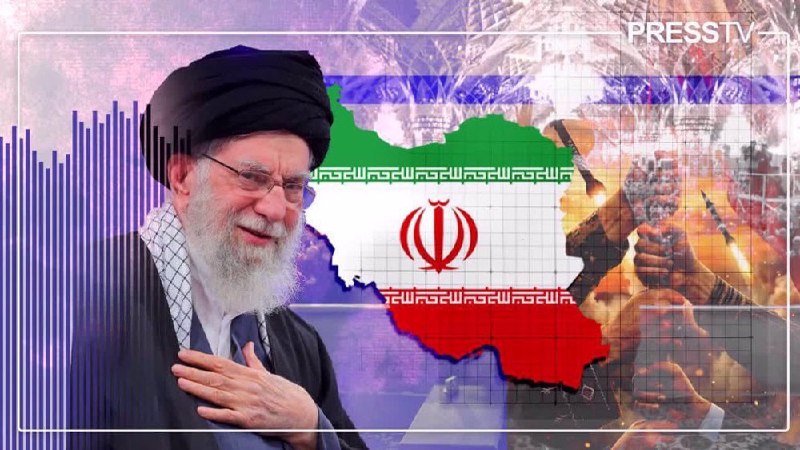
The camera does not blink. On 3 July 2026, the state-aligned Tasnim News wire is running a continuous loop of footage from a farewell ceremony in Tehran: a delegation from Malaysia paying respects; parliamentary speaker Mohammad Bagher Qalibaf visibly moved; guests signing detailed tributes; women being channelled into "special accommodation centres" set up in the capital. The hash that ties the day together is a single phrase — Badarqa Aghai Shahid Iran, "the thunderbolt of the martyred lord of Iran." Theatrical framing at this density is not incidental. It is the event.
What is unfolding is a regime staging its most consequential piece of political theatre since the early-2020s succession questions first became unavoidable. A "martyred leader" is being laid out, foreign envoys are being marshalled into the hall, and the production values of the broadcast are calibrated for export as well as for domestic consumption. The choreography — not the underlying facts, which remain opaque — is the newsworthy artefact.
The managed grief
Tasnim's 14:38 UTC item shows Qalibaf "in unceasing tears" at the farewell. By 14:44 UTC, the same wire is publishing the "detailed writings of the guests of the tribute ceremony." By 15:00 UTC, infrastructure — "special accommodation centres for women in the capital" — is being showcased, complete with branded hashtags. The temporal sequence tells its own story: the camera lingers on the official mourner, then on the honoured foreign guest, then on the institutional apparatus that has been assembled to absorb the public.
This is not how spontaneous grief transmits. It is how a state apparatus manufactures a sacred frame around a political event whose underlying cause the apparatus controls but does not wish to litigate in public. The choice to name the dead leader as shahid — martyr — is itself a doctrinal claim, not a neutral descriptor. It commits the state to a particular story about how the leader died, and it obliges the faithful to a particular emotional register before the facts have been disclosed.
The regional guest list
The 14:05 UTC item — the "special representative of Malaysia and accompanying delegation" paying tribute to the "holy body of Imam Shahid" — is the most geopolitically legible beat of the day. A Southeast Asian Muslim-majority state is being given a camera window into a moment the regime has designated as sacred. That is a transactional signal. It says: the post-Khamenei architecture is open for tributary recognition now, and the price of admission is showing up early.
Kuala Lumpur's presence is worth watching precisely because it is not one of the usual Iranian-aligned clients. Malaysia is a middle-weight, non-aligned Muslim-majority state with its own foreign-policy tradition and a working relationship with Beijing. If a Malaysian special envoy has cleared his diary to be physically present in Tehran on the day of Tasnim's hash-trending broadcast, that says something about how wide the regime intends to cast its legitimacy net — and about how legible the occasion is to foreign ministries in the Global South.
The parallel feed
Running alongside the Tasnim stream is a separate Ukrainian-channel item timestamped 15:06 UTC, headlined "Special gasoline operation. The series continues." On its face it has nothing to do with the Tehran farewells. But the editorial decision to file it into the same cluster in the same hour is itself a tell. The pipeline that aggregates these threads is reading the day as one in which fuel logistics and state ritual both deserve elevated monitoring — a quiet signal that the desk sees Iran, sanctions exposure, and the price of petrol as part of a single, brittle chain.
That is not conspiracy. It is the unglamorous observation that a state whose refining sector is squeezed by sanctions, and whose leadership transition is being staged in front of the cameras, has a particular incentive to keep the public focused on a martyrdom narrative rather than on the queue at the pump.
What the camera leaves out
The Tasnim feed is rich in choreography and thin in causation. It does not say how the "martyred leader" died. It does not name a perpetrator or a circumstance. It does not concede that the succession itself is the most consequential political event inside the Islamic Republic in a generation. It shows a Malaysian envoy and a weeping speaker and accommodation centres, in that order, and invites the reader to infer the rest.
That is the structural tell. When a state broadcaster shows everything about the response to an event and nothing about the event itself, the silence is the message. The Tehran frame is being built in advance of any independent accounting of what produced it.
The reasonable reading: a leadership transition is in motion, the regime intends to manage it as a martyrdom-driven sacred moment rather than a contested political succession, and the foreign guest list is being curated to widen the recognitional base before any rival faction can organise a counter-narrative. The contested reading, which the sources do not let us rule out, is that the martyrdom frame is being applied to a death whose cause the regime itself would prefer not to have litigated. Both readings are consistent with the footage. The footage is, in fact, designed to be.
Stakes
If the choreography holds, the post-Khamenei order inherits a legitimacy story already narrated in advance by a state-aligned camera. If it cracks — if a foreign wire, a leaked Iranian medical bulletin, or an opposition channel forces the underlying facts into daylight — the martyrdom frame becomes a liability rather than an asset. The next seventy-two hours will tell which way the camera is pointed.
— Monexus desk note. This piece is built almost entirely from the day's Tasnim feed plus a single Ukrainian-channel item aggregated into the same cluster. The aim is to read the framing itself as the news, since the underlying facts of the death and succession remain undisclosed. Where the sources thin, the article says so rather than imputes.
Wire provenance
This editorial synthesis draws on the following public wire/social posts:
- https://t.me/tasnimnews_en
- https://t.me/tasnimnews_en
- https://t.me/tasnimnews_en
- https://t.me/tasnimnews_en
- https://t.me/ButusovPlus