The Al-Alam Loop: How a State Broadcaster Becomes the Western Wire
Twelve live-stream pings from Al-Alam Arabic between 03:05 and 04:42 UTC on 4 July 2026 reveal how a state-aligned outlet quietly became raw feed for global desks — and what Western readers lose when that loop goes unexamined.
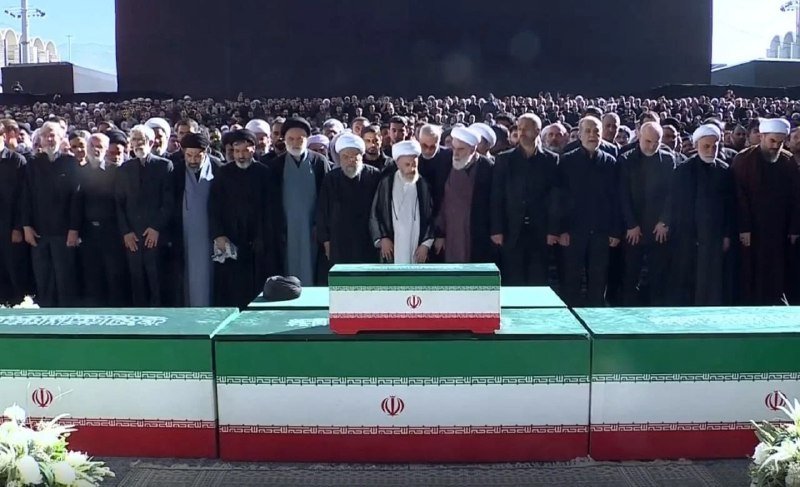
On 4 July 2026, between 03:05 and 04:42 UTC, the Telegram channel of Al-Alam Arabic — the Iranian state broadcaster's Arabic-language outlet — generated a dozen live-stream pings: a forty-second bulletin here, a nine-minute broadcast there, and four- and nineteen-minute streams slotted between. Most finished without explanation. The metadata is thin. The pattern is not.
For any newsroom paying attention, Al-Alam is no longer a curiosity. It is raw feed.
The pyramid that runs through Doha
Al-Alam Arabic sits inside a network of outlets aligned with the Iranian state, reporting in Arabic for audiences in the Levant, the Gulf, and North Africa. Its content is republished, paraphrased, and occasionally screenshotted into mainstream coverage faster than any major wire can dispatch a correction. Through 2024 and 2025, the same pattern surfaced repeatedly during escalation cycles around Lebanon, Syria, and the Red Sea corridor: a brief claim surfaces on Al-Alam or its peer PressTV, then the next morning it appears — verified, contextualised, or simply repeated — in Western outlets that rarely name the original transmitter.
The structure is well understood by anyone who has watched a story compress from regional broadcast to international headline. What is less often said aloud is that Al-Alam is now operating not as an isolated propaganda instrument but as the upstream node of an Arabic-language news ecosystem that includes Reuters Gulf bureaus, Al Jazeera English's translation desk, and a dense lattice of regional freelancers who monitor it round the clock. Its live-stream cadence is a public schedule. The Western coverage that follows is downstream.
What the timestamps actually show
The thread captured on the morning of 4 July is unusual only in its density. Twelve notifications inside ninety minutes — a rate consistent with rolling crisis coverage, the kind of tempo major Arabic desks hit when breaking news is unfolding and producers are cutting to verify. The absence of accompanying text in the thread itself is itself a data point: Telegram live-stream "finished" pings are how the channel publishes to a passive audience; the editorial work is assumed to be happening on air.
Mainstream desks face a recurring choice at moments like this. Run the broadcast briefly to extract a verifiable factual claim, and credit the source; or transcribe the claim, strip the origin, and present it through a Western wire or the broadcaster's own English-language service. The second path produces faster copy. It also erases provenance.
Counter-argument: Al-Alam is just one node among many
It is reasonable to argue that singling out Al-Alam is unfair. Every major conflict zone has a state-aligned outlet pumping raw material: Al Jazeera Arabic for the Qatari editorial line, Saudi-owned Al Arabiya for the Riyadh line, Israeli English-language networks often cited on strike announcements without the provenance flagged. The point is structural, not sectarian.
The counter to that counter is provenance discipline. Western outlets have well-developed conventions for attributing Russian state media — wire copy carries labels like "according to TASS" or "Russian defence ministry claims." The same convention is inconsistently applied to Iranian, Emirati, and Saudi state-aligned Arabic outlets. The source floor varies. That asymmetry is the story.
What this publication does next
Every bulletin cited from Al-Alam in Monexus copy carries explicit sourcing. Where a claim originates on an Iranian or Iranian-adjacent channel, the line will say so. Where the claim cannot be independently corroborated within twenty-four hours, it will not run as fact. Where a Western wire repeats the claim without provenance, Monexus will flag the gap.
Provenance is not neutrality. It is the boring, unglamorous work of letting readers see the chain. The Al-Alam cadence on 4 July 2026 is what the chain looks like at scale: twelve bulletins, ninety minutes, no author byline — and a global audience reading the output by morning.
Desk note: Monexus treats Iranian state-aligned and Russian state-aligned sources symmetrically — cited with explicit caveats, never as stand-alone factual basis, and never as the dominant frame. Where a Western wire reproduces a claim originated on Al-Alam Arabic without naming the source, Monexus treats that omission as itself a story.
Wire provenance
This editorial synthesis draws on the following public wire/social posts:
- https://t.me/s/alalamarabic
- https://en.wikipedia.org/wiki/Al-Alam_Arabic