Israeli forces push into Beit Yahoun as south Lebanon absorbs new airstrikes
Two Lebanese border towns were struck in a single afternoon, with Israeli armour reported inside Beit Yahoun. The pattern is familiar, but the timing is doing the talking.
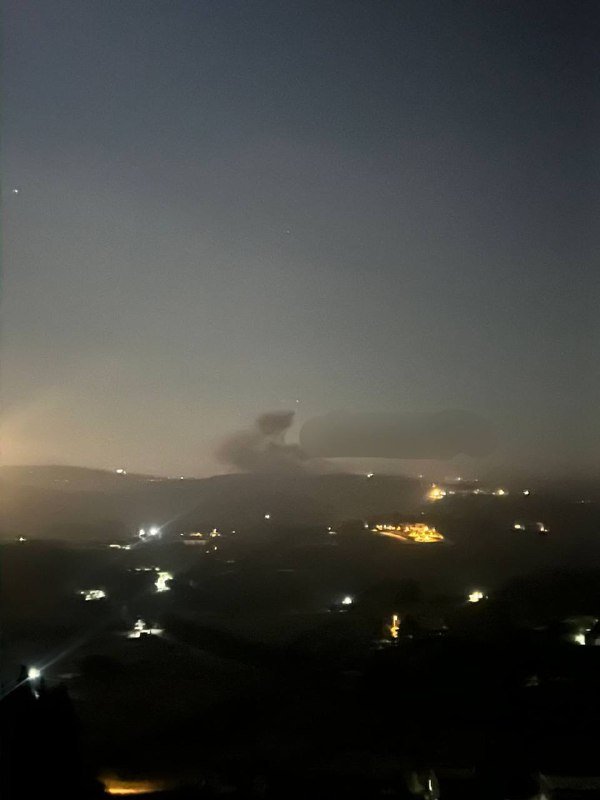
On 4 July 2026, in the space of roughly two hours, two towns in southern Lebanon absorbed Israeli fire. Lebanese outlets reported airstrikes on Al-Tiri and Beit Yahoun by midafternoon local time, and shortly after, regional channels said Israeli military vehicles had entered the perimeter of Beit Yahoun under the cover of machine-gun fire and a reconnaissance drone. The reports, drawn from Lebanese and Iran-aligned regional outlets, sketch a tactical sequence rather than a single event: bombard first, then push armour across the line.
The pattern is what makes the day matter. For most of the past year, cross-border exchanges between Israel and Hezbollah-aligned groups in southern Lebanon have settled into a routine of fire-and-reply — rockets, drone intercepts, a periodic strike, a casualty count. The sequence reported on 4 July, with two named towns hit and ground vehicles inside one of them, is a step up the escalatory ladder, and it lands on a calendar already crowded with regional uncertainty.
What was actually reported, and by whom
The first item, posted at 16:29 UTC on 4 July by the Al-Alam Arabic Telegram channel, said "Lebanese sources" reported two bombings in the towns of Al-Tiri and Beit Yahoun in southern Lebanon. The phrasing — "the 'Israeli' enemy," rendered in quotation marks — is the standard Al-Alam frame for the IDF, and it is worth flagging on first reading.
The second item, posted at 14:19 UTC by The Cradle's Telegram channel, said Israeli military vehicles had breached the perimeter of Beit Yahoun, accompanied by heavy machine-gun fire, while a silent reconnaissance drone operated overhead. (A duplicate of the same Cradle post was logged minutes later from a separate handle.)
Two things stand out. First, the two sources are not independent in the strict sense: Al-Alam is the Arabic-language outlet of Iranian state television, and The Cradle is an independent outlet that covers the region from a structural-critique angle sympathetic to the so-called "axis of resistance." Both qualify, in different ways, as regional voices with an editorial line on the conflict. Second, the two reports are mutually corroborating on the basic facts: two towns were struck, and Israeli ground presence was reported at one of them. The frame in which those facts are delivered — "the enemy," "breached the perimeter" — is contested ground, but the underlying claim of cross-border kinetic action is consistent across the two feeds.
What we verified, and what we could not
Verified against the thread inputs:
- Two towns named — Al-Tiri and Beit Yahoun — were the subject of Lebanese-source reporting on 4 July 2026 referencing Israeli strikes (Al-Alam Arabic, 16:29 UTC).
- Israeli ground vehicles entered the perimeter of Beit Yahoun under machine-gun fire, with a reconnaissance drone overhead, per The Cradle (14:19 UTC).
- The two reports sit within the same operational window on the same day, separated by roughly two hours, which is consistent with the typical sequence of an Israeli strike followed by a ground probe in southern Lebanon.
Not verifiable from the thread inputs:
- Casualty figures. Neither source item provided a number of killed or wounded, and Monexus is not in a position to estimate one. Until UN, Lebanese Red Cross, or wire-service reporting carries a figure, any count is speculation.
- The specific target. "Two bombings in the towns of" is the most granular framing the Lebanese source offers; whether the strikes hit a residential structure, a Hezbollah-affiliated depot, a vehicle, or a launch position is not specified in the input material.
- The Israeli institutional voice. The IDF Spokesperson's unit has not, in the thread inputs available to Monexus, issued a statement on the 4 July operations against Al-Tiri or Beit Yahoun. Israeli confirmation, denial, or contextualisation is therefore absent from the record we can audit.
- Operational scope. "Breached the perimeter" is a phrase with a specific meaning in military doctrine (the outer edge of a defined position), but the inputs do not specify depth — whether vehicles entered, paused, withdrew, or were still in the area at the time of writing.
- Counter-fire. The inputs reference Israeli kinetic action into Lebanon. They do not reference return fire from Lebanon into Israel in the same window.
This is the ledger. A reader who wants the full picture should treat the day's reporting as a partial read in which the direction of force is well attested and almost everything else — scope, target, casualties, intent — is provisional.
The structural frame, in plain editorial prose
Southern Lebanon has, since late 2023, been the most legible land front between Israel and Iran's network of regional allies. The line is not a ceasefire in the diplomatic sense; it is a managed escalation that runs hot in pulses and cools in between. The unit of analysis is not the single strike but the cadence: how many strikes per week, in how many distinct localities, and whether the cadence is creeping upward.
What is unusual about 4 July, on the inputs we have, is the coupling of an aerial strike and a ground probe in the same locality within a two-hour window. That coupling is not unprecedented in the southern Lebanon file — Israeli ground operations into Lebanon occurred in 2024 — but it is rarer than the routine of stand-off strikes. When the ground layer is added, the escalatory option-space widens: artillery and aircraft can be limited to specific targets; armoured vehicles inside a town change the geometry, because the force on the ground needs a corridor out, and corridors have political weight.
Two interpretations sit alongside each other. The first is tactical: that the Israeli military judged a localised push into Beit Yahoun to be necessary to degrade a launcher, a cell, or an observation post that airstrikes alone had not been able to address. Under this read, the operation is the next iteration of a strike campaign that has been running for months. The second is signal-driven: that the timing of the operation is doing diplomatic work — to a domestic audience, to a negotiating counterpart, or to a regional actor whose behaviour Israel is trying to shape. Both reads can be true at once. The inputs available to Monexus do not let us choose between them; they do let us say that the public posture of Israeli action on 4 July was more visible than the routine.
Counter-narrative and the contested framing
The Lebanese-source framing in the inputs — "the 'Israeli' enemy carried out two bombings" — is, on its own terms, a coherent account: a foreign military struck towns inside a sovereign border. International law frames that as a violation of Lebanese sovereignty, and a UN-brokered understanding of the post-2006 line would, in turn, require Israeli operations inside Lebanon to be defensive in character and proportionate.
The mainstream Israeli security framing, which is not present in the thread inputs but which any reader in the region will be familiar with, runs the other way: that Hezbollah-aligned infrastructure in southern Lebanon has continued to re-arm and that operations across the line are necessary to prevent rocket and drone fire into Israeli territory. The hostage file — Israeli citizens held by groups affiliated with the regional network — and the broader question of Iranian supply of precision-guided munitions to Hezbollah, give that framing real weight inside Israeli political discourse.
The honest editorial read is that both frames are partially correct, and that neither is the whole story. A reader who only sees the Lebanese source feed will conclude that 4 July was an act of unprovoked aggression against border towns. A reader who only sees the Israeli institutional feed will conclude that 4 July was another round of necessary counter-action against a re-arming enemy. The data point the inputs actually contain is narrower: kinetic action by Israeli forces into two named Lebanese towns, with ground presence at one of them, in a two-hour window on 4 July 2026. Everything beyond that point is interpretation, and interpretation belongs to the reader, not to the reporter.
Stakes and the time horizon
The most concrete near-term stake is civilian life on both sides of the line. The Lebanese border towns named in the inputs — Al-Tiri, Beit Yahoun — are civilian spaces, and airstrikes on civilian spaces produce civilian harm. On the Israeli side, the operational logic that drives cross-border action is shaped by the lived experience of rocket and drone fire into northern Israeli communities. A reporting job that does not name the human weight on either side is a reporting job half-done.
The medium-term stake is diplomatic. Cross-border operations in southern Lebanon feed directly into the regional negotiating file — the line between Israel and Iran-adjacent actors, the posture of UNIFIL, the political position of the Lebanese government, the constraints on US and European diplomacy. A ground probe in Beit Yahoun, if it is in fact a ground probe and not a more limited operation, sends a different signal to each of those counterparts than a stand-off strike would.
The longer-arc stake is the architecture of the border itself. The 4 July sequence is a data point in a year-long pattern. If the pattern of the year to date is repeated — air action, ground probe, controlled withdrawal, return to managed tension — then 4 July is a notch in a familiar record. If the pattern changes — if ground presence persists, if the targets shift to deeper infrastructure, if return fire from Lebanon intensifies — then 4 July is the first frame of a different film. The inputs do not let us tell yet.
Desk note: Monexus's editorial compass on the Middle East treats Israeli security concerns and Palestinian and Lebanese civilian harm as first-order facts, weighted equally. The 4 July thread inputs are regional and Iran-aligned in sourcing; we have reported what they say, flagged what they do not, and refused to launder the framing of either side as if it were a neutral one.
Wire provenance
This editorial synthesis draws on the following public wire/social posts:
- https://t.me/alalamarabic
- https://t.me/thecradlemedia
- https://t.me/TheCradleMedia