Iran's farewell to its 'martyred leader': the framing the world will see — and the one it won't
Tasnim and Mehr broadcast vast crowds at the Tehran mosque where the body of Iran's supreme leader lies in state. The spectacle is real; the editorial lens around it is not — and that gap will shape what the world concludes about who he was.
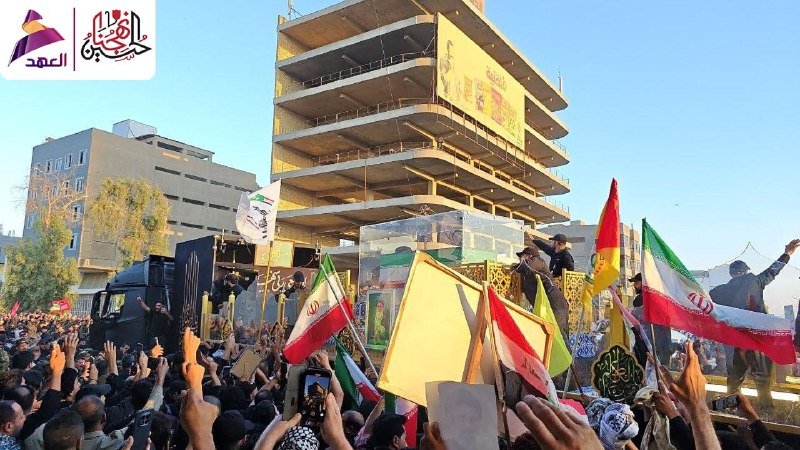
Before dawn on Friday 4 July 2026, hundreds of thousands of Iranians began pouring into the courtyard of Mosala, the great mosque complex in central Tehran, for the opening of a multi-day farewell to the country's supreme leader, who was killed in the Israeli strike that triggered the June war. By 03:26 UTC, state outlets Mehr News and Tasnim were already broadcasting aerial and rooftop footage of packed precincts, and describing the scene in language that left no ambiguity: a nation in mourning, led by its clerical establishment, rallying in person.
That spectacle is real. What is not real, or at least not neutral, is the editorial lens through which most of the world will receive it. The same footage that Iranian state media calls "the farewell of the martyred leader of the revolution" will arrive at Western breakfast tables stripped of that language — translated as a state-organised rally, photographed from the periphery, captioned with reference to the man whose death set the region on its current trajectory. The gap between the two framings is where the politics of the next week will actually be fought.
What the cameras actually show
Mehr News dispatched rolling video from the first hour of the ceremony, showing dense crowds filling the mosque's inner courtyards in the pre-dawn dark; Tasnim posted aerial frames of the bier itself, draped and lit, with pilgrims still streaming in. Both outlets used the honorific "Shahid" — martyr — in their captions, a designation reserved in Iranian political vocabulary for those killed in service to the Islamic Republic. By 00:40 UTC, Tasnim was already framing the gathering as a historical moment, the kind of turnout that will be cited for years.
None of this is unusual for Iranian state coverage of a senior figure's funeral. The choreography — pre-dawn arrival, morning prayer, gradual swelling of the crowd, carefully framed aerial shots — is the standard visual grammar of the Republic's mourning ritual. Treat the broadcast as a document of the regime's intent, not a poll.
What the world will be told it saw
Western wire services will report the same scene but in a different register. The Mosala crowds will be described as "tens of thousands" or "hundreds of thousands," depending on the outlet's appetite for round numbers; the framing will lean on the wartime context — the Israeli strike, the regional escalation, the sanctions environment — that Iranian state media scrupulously avoids. The honorific will not survive the translation. "Shahid" will become a "senior figure" or a "leader," and the question of whether the mourners came voluntarily or were bussed in will be treated as live and unresolved, which it is.
That asymmetry is the story. Iranian outlets are selling one reading of the scene: a leader martyred, a people in genuine grief, a revolutionary project renewed. Western outlets, often justifiably sceptical, will sell another: a managed spectacle, an authoritarian farewell, an opportunity for the Islamic Republic to display control at a moment when its control has been visibly damaged. Both readings carry evidence. Neither is complete.
The structural pattern — a contested image, a contested succession
The funeral is also the first real test of the post-strike political order inside Iran. Power has not yet formally transferred to a new supreme leader, and the choreography of this farewell — who is visible on the podium, which clerics are named in the captions, whose prayers are broadcast — is doing the quiet constitutional work of signalling continuity at a moment when the system's enemies, and some of its friends, are watching for fractures. Mehr and Tasnim's choice to flood the zone with images of mass attendance is part of that signalling: it tells domestic audiences that the Republic endures, and it tells external ones that the cost of expecting collapse will be high.
The Western framing, in turn, will read those same images for exactly the opposite signal — as evidence of mobilisation rather than belief, as the regime's last instrument rather than its first. Both interpretations are doing political work. The honest reader holds them at the same time.
Stakes — and what we cannot yet know
Three things are genuinely unresolved in the materials available on 4 July. First, the actual turnout, beyond the editorial choices of state broadcasters: independent verification of crowd size from satellite imagery or non-state press is not yet in the public record. Second, the identity of the senior clerics who will be elevated during the ceremony — the visual answer to the question of succession that the farewell will, in effect, deliver. Third, the regional reaction beyond Iran, from the Iraqi and Lebanese Shia constituencies that have historically mobilised around Iranian leadership transitions, which the available reporting does not address.
What is clear is that this week produces two parallel truths and forces the world's press to choose between them. Monexus's read is that the more useful journalism will refuse the choice: it will report the crowds in the courtyard, report the language Tasnim and Mehr are using to describe them, report the Israeli strike and the sanctions regime that preceded the funeral, and let the reader weigh what a farewell like this means when a republic's enemies are still airborne.
This publication framed the funeral as a contest of images rather than a verdict on the regime: Iranian state outlets are the only on-the-ground primary source available in the first hours, and Western wire reporting on the same scenes had not yet been published at the time of writing.
Wire provenance
This editorial synthesis draws on the following public wire/social posts:
- https://t.me/tasnimplus
- https://t.me/mehrnews