A Farewell in Tehran, and the Words That Aren't Being Said
State-aligned outlets broadcast mourning for Ali Khamenei. The Western silence around how that moment is being framed is itself the story.
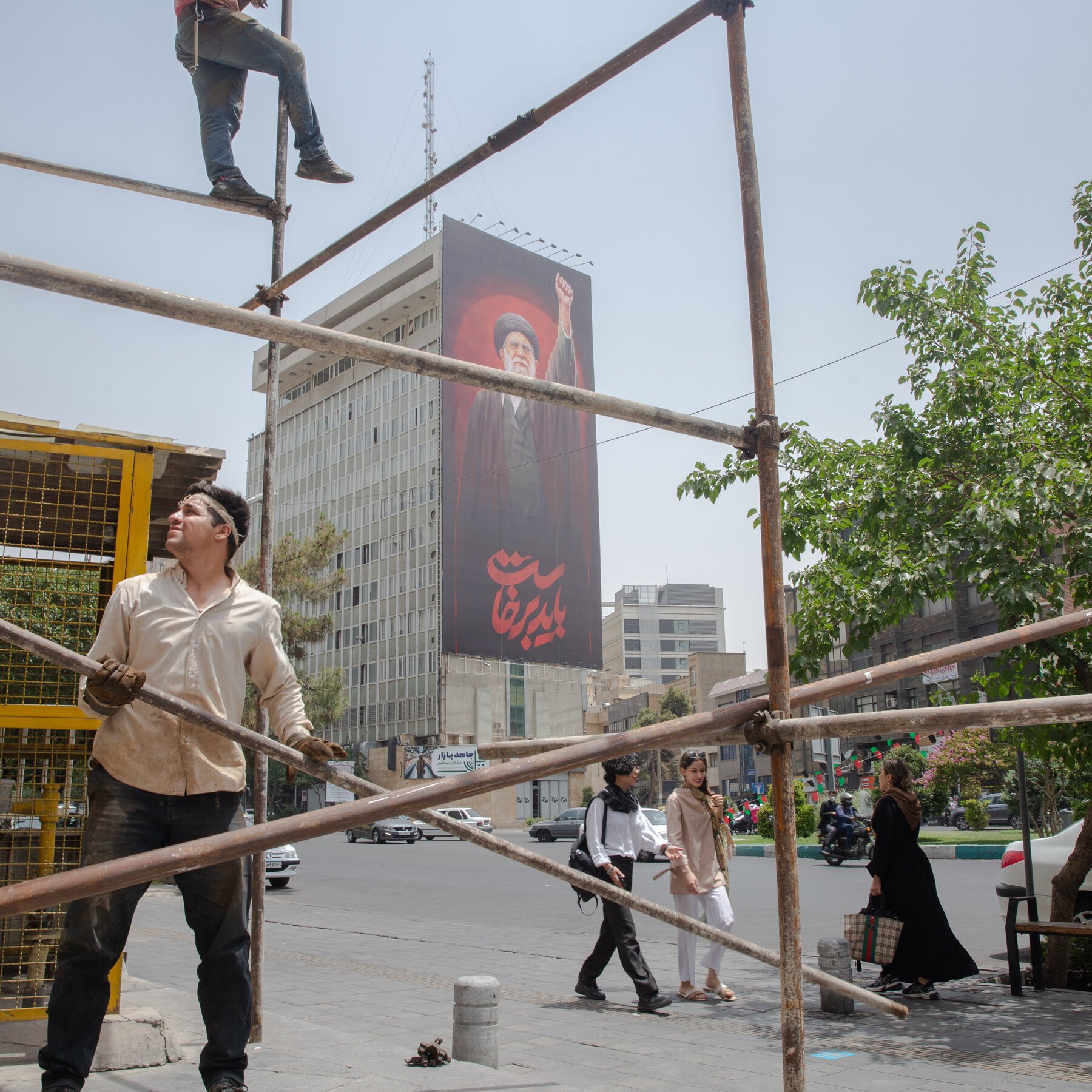
Crowds began filing toward Mosalla in Tehran in the pre-dawn hours of 4 July 2026, according to footage circulated by Tasnim News and Al-Alam Arabic. The framing across both channels is the same: a people spontaneously moved to tears, parting with a martyred leadership in scenes managed at overwhelming scale. Whether one accepts that framing or not, the volume and choreography of the broadcast deserves to be read on its own terms — as the public-facing image a state wants the world to hold of itself in a moment of acute transition.
The story this publication keeps returning to is the gap between those images and the silence that surrounds them in Western wires. Major outlets have, in the days since this succession opened, treated Iranian state media largely as a one-way transmission: useful for what an adversary says, suspect as a source for what the society thinks. That distinction is fair in the abstract. It is less fair when applied asymmetrically — when a Reuters correspondent's read on a Tehran crowd carries more weight than the same correspondent's embedded footage of it — and that asymmetry, repeated across enough cycles, becomes the framing.
What the state camera is showing
The visual record from Tasnim and Al-Alam, taken on its own terms, is consistent and deliberate. Streets are full. Foreign delegations have paid tribute at the coffins. Theatrical vocabulary — martyr leader, last farewell, lovers of the martyred leader — is applied uniformly across both Arabic and English feeds. The productions do not claim to be journalism. They claim to be witness, and they want the witness accepted.
What we are not seeing
Western wire treatment of the same hours has been thin in a way that editorial gatekeepers rarely acknowledge about themselves. The faces of mourners appear, when they appear, as colour. The choreography — who organised the buses, which clerical offices issued the attendance call, how the foreign delegations were chosen and credentialed — does not. The structural point is not that the footage is faked; the structural point is that rigorous reporting on a tightly-scripted state event requires asking the script-writer questions, and those questions have been quiet.
Why the asymmetry matters
When Western outlets treat Iranian state media as a translation problem rather than a political actor, they obscure its actual function: a regulator of what the regime's own base believes it has just witnessed. A leadership succession in a state of this size does not run on paperwork alone. It runs on the account. The account is being written, deliberately, in two languages, by outlets whose standards of evidence no serious editor would accept — but whose narrative reach matters nonetheless.
The stakes going forward
If the read-from-above pattern holds, Western readers will continue to receive the Tehran transition as something happening to a country they cannot see, rather than as a managed event in which the management is itself the news. That is a poor basis for any subsequent judgement about sanctions posture, nuclear diplomacy, regional posture, or succession politics. Better to name the bias and read against it: the Iranian state is performing grief at industrial scale, and the world should treat the performance as evidence of intent.
What remains genuinely contested is the size and the voluntariness of the crowds. The sources do not specify turnout figures beyond "large presence" and do not permit independent verification of how attendees arrived. Both figures will move sharply in coming days, and early numbers should be read as theatre rather than demographics.
— Monexus frames Iranian state-aligned channels as primary sources for what the regime says it is doing, and as suspect as stand-alone evidence for what Iranian society thinks. That posture is the same one this publication applies to official spokespeople everywhere.
Wire provenance
This editorial synthesis draws on the following public wire/social posts:
- https://t.me/tasnimnews_en/
- https://t.me/tasnimnews_en/
- https://t.me/tasnimnews_en/
- https://t.me/alalamarabic/