Lebanon's health ministry puts four-month toll at 4,303 as ceasefire framework stalls
Beirut's health ministry says 4,303 people have been killed and 12,202 injured since 2 March, as the framework for a halt to hostilities remains unresolved.
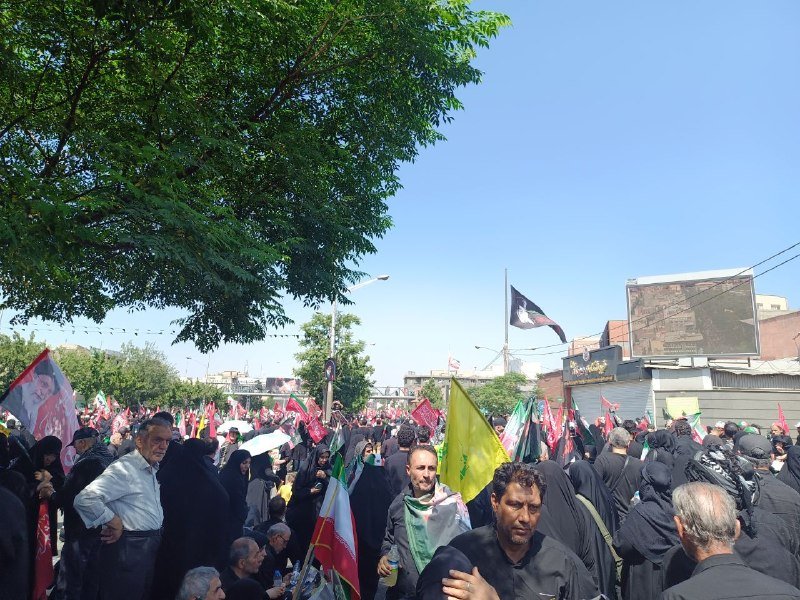
Lebanon's Ministry of Health put the cumulative civilian toll of Israeli strikes since 2 March at 4,303 killed and 12,202 injured, according to figures reported on 4 July 2026 by regional outlets including The Cradle and Iran's Tasnim news agency. The number, announced by the ministry on Saturday, marks the latest update in a four-month campaign that has reshaped southern Lebanon, deepened displacement in the Bekaa and the southern suburbs of Beirut, and put renewed pressure on a diplomatic track that, on the evidence available, has produced no operative ceasefire.
The pattern is familiar from earlier rounds of fighting between Israel and Hezbollah: an escalation calibrated to specific triggers, an attrition phase that grinds through neighbourhoods and civilian infrastructure, and a political process that lags the kinetic one by weeks. What is unusual this time is the duration. Four months in, the casualty ledger is being updated by the day, while the framework being negotiated through intermediaries has yet to translate into a halt in bombardments. The two clocks are no longer in sync.
What the Lebanese ministry is reporting
The 4,303 figure released on Saturday is cumulative from 2 March, the date that marks the effective resumption of large-scale Israeli operations against Hezbollah infrastructure in southern Lebanon and parts of the Bekaa valley. Tasnim, the Iranian state-affiliated news agency, carried the Lebanese ministry's announcement in the same framing it has used for previous updates, identifying the dead as martyrs of "Zionist aggression." The Cradle, a Beirut-based outlet that has covered the campaign from a regional perspective sympathetic to the resistance axis, ran the same numbers in its 4 July wire.
Neither outlet is a neutral arbiter. Both are useful as transmission belts for the Lebanese ministry's data, and both are transparent about the framing they apply. The underlying methodology — facility-based tallies from hospitals and field responders, plus morgue counts from the affected governorates — is consistent with how Lebanese authorities have published casualty figures in previous conflicts, including 2006 and the 2023-24 phase of cross-border fire. Independent verification of the precise figure is hard to obtain in real time; the Lebanese ministry's tally has historically tracked closely with later retrospective counts from UN agencies and the International Committee of the Red Cross, though early reporting tends to over-count in the immediate aftermath of high-casualty incidents and under-count in areas where rescue teams cannot reach.
The 12,202 injured figure should be read in the same light: a working number, useful as a measure of pressure on Lebanon's hospital system, less reliable as a precise final count.
The diplomatic track, and why it has not produced a halt
The Israeli-Lebanese track is being mediated principally through US envoy Amos Hochstein and a parallel channel involving French and Saudi interlocutors, neither of which has, as of 4 July, produced a public agreement that would translate into a cessation of strikes. The Israeli government's stated position, carried in Hebrew-language press and amplified by English-language Israeli outlets, has been that operations will continue until Hezbollah's military infrastructure north of the Litani River is dismantled and until a credible enforcement mechanism is in place to prevent reconstitution. Lebanese government officials have publicly demanded a halt to strikes as a precondition to discussions on the disarmament question, a sequencing dispute that has hardened over the past six weeks.
Hezbollah's political leadership, in statements relayed through Al-Manar and quoted in regional press, has said the group will not discuss its weapons under bombardment. That posture is consistent with the group's negotiating stance in 2024, when a ceasefire was eventually reached under US and French pressure after roughly thirteen months of cross-border fire.
The structural obstacle is not new. Lebanon and Israel do not have diplomatic relations. The ceasefire architecture of November 2024 was built on UN Security Council resolution 1701, with implementation monitored by UNIFIL and a US-led monitoring mechanism. That architecture frayed over the course of 2025 as Hezbollah rebuilt units in the south and as Israeli strikes continued at a lower tempo. By March 2026 the lower-tempo equilibrium had broken, and the present campaign began.
What the numbers actually describe
Casualty figures from a campaign of this kind tend to compress several distinct phenomena into a single tally. The 4,303 figure includes civilians killed in their homes, in vehicles, and in the open; medical personnel killed in the course of duty; people killed in shelter collapses; and, according to both Lebanese and Israeli reporting, Hezbollah operatives killed in strikes on military positions, the latter sometimes carried in the same ministry release without disaggregation. Israeli military briefings, where they have addressed specific incidents, have asserted that strikes targeted embedded command nodes, weapons depots, or rocket-launch sites; those assertions cannot be independently verified strike by strike, and they do not alter the human-scale reading of a number that has climbed by roughly 1,000 a month since March.
Displacement, the harder-to-quantify companion to the casualty toll, has affected an estimated quarter of Lebanon's population by the Lebanese government's own mid-year assessment, with the heaviest concentrations in the southern suburbs of Beirut, the Bekaa, and the coastal cities south of Sidon. Hospitals in the affected zones have operated at surge capacity; several have been struck, with damage and casualties reported in those incidents as well.
What remains uncertain
The diplomatic track is the variable most likely to change the trajectory in the near term, and it is the one about which the available sources are thinnest. Hochstein's movements are reported through leaks rather than briefings. The French channel is even less transparent. The Saudi dimension has been reported in Lebanese and Gulf press but not in detail. The honest read of 4 July is that the framework exists in outline but not in signed text, that the Lebanese ministry's toll is being updated daily, and that the gap between the two is the space in which more people will die.
What can be said with the evidence in hand: the campaign has now run for 122 days; the cumulative toll reported by Lebanese authorities is 4,303 killed and 12,202 injured; the diplomatic process intended to halt it has not yet produced a halt; and the structural disagreement over sequencing — strikes first or disarmament talks first — remains unresolved.
Monexus framed this story around the Lebanese ministry's running tally rather than around any single day's incident, because the diplomatic story on 4 July is a story about the absence of a halt rather than about a specific event. Where the available reporting drew on regional outlets with explicit alignments, that alignment is named in the prose rather than smoothed over.
Wire provenance
This editorial synthesis draws on the following public wire/social posts:
- https://t.me/TheCradleMedia
- https://t.me/thecradlemedia
- https://t.me/JahanTasnim