Netanyahu seeks White House meeting as Trump opens new channel on Iran
A White House sit-down with the Israeli prime minister is being framed inside the Trump administration as the opening move in a renewed pressure track on Tehran. The signals point both ways.
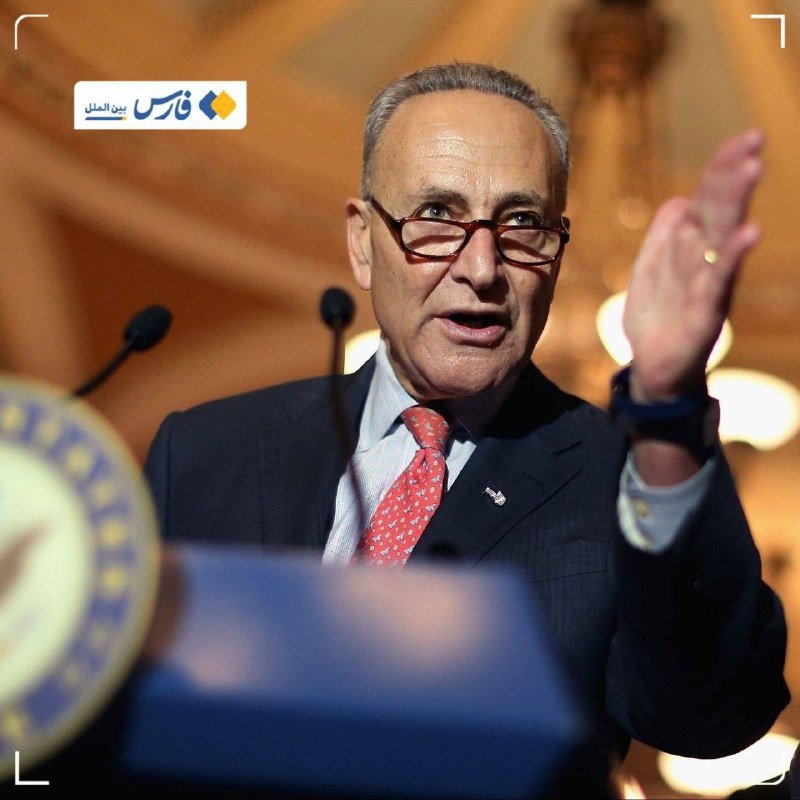
President Donald Trump confirmed on 4 July 2026 that Israeli Prime Minister Benjamin Netanyahu had requested a meeting at the White House, and said the sit-down could come as soon as the following week. The remarks, delivered to Axios, were relayed by Telegram channels including Open Source Intel, Tasnim News, Fars News International and Clash Report within minutes of one another, suggesting a coordinated push by Iranian state media to translate, frame and re-broadcast the interview to domestic and regional audiences. The same channels carried a separate Trump comment in which he described being "surprised" to see Iranians weeping at the funeral of former Supreme Leader Ali Khamenei, suggesting the displays of grief might not be genuine — a remark that is itself a piece of negotiating theatre, not a policy document.
The two-pronged messaging is the story. A bilateral meeting between Washington and Jerusalem is being publicly staged inside an explicit Iran frame, even though neither leader has yet named Tehran as the topic. That is the opening of a familiar diplomatic pattern: the Americans and Israelis signal to Tehran that the military and diplomatic tracks are being aligned, then test whether a deal is still possible at the negotiating table.
A request, not a summit
Trump's language to Axios was characteristically personal. "Netanyahu knows who is the boss," he said of the relationship, adding that "we get along very good," according to translations circulated by Tasnim News and Fars News International. The phrasing matters less for its substance than for its audience. Netanyahu's office has spent the better part of two years trying to lock in a face-to-face with the American president in circumstances that allow both men to claim ownership of an outcome; Trump's casual confirmation gives the Israeli leader that stage without committing either side to an agenda.
What is missing from the readouts is just as telling as what is in them. No date is set, no agenda item has been confirmed, no joint statement is being drafted. The Israeli prime minister's coalition is fractured over judicial reform and the budgetary fight in the Knesset, and his standing in domestic polling has tracked the security file for years; a Washington photo opportunity costs him almost nothing at home and purchases the option of asking for tangible commitments later.
The Iran backdrop the White House is not yet naming
Trump's second remark — on the funeral of Ali Khamenei, who died on 4 June 2026 after decades at the head of the Islamic Republic — is the more revealing of the two. Trump said he was "surprised" to see Iranians crying at the funeral and suggested the displays might not be genuine. Iranian state media reacted with the predictable indignation, but the more useful reading is what the comment presumes: that the United States is reading the post-Khamenei succession as a moment of internal vulnerability, and is calibrating pressure accordingly.
Tehran is in the middle of a managed transition. The Assembly of Experts has been working through a succession process that the regime has kept deliberately opaque, and the IRGC's institutional weight inside that process is heavier than it was under Khamenei. Against that backdrop, a Netanyahu visit that produces even a vague reference to "Iran" in the joint readouts functions as a signal that the military track — Israeli strikes on Iranian-linked targets in Syria and Lebanon, US sanctions enforcement, snap naval movements in the Gulf — remains live even while the diplomatic file is technically open.
What Israeli coverage is emphasising — and what it is not
Israeli outlets have framed the meeting request as the normalisation of a relationship that weathered the Gaza war, the Lebanon front, and the early-2026 strikes on Iranian missile production. That framing is defensible: Netanyahu has, at minimum, succeeded in keeping the US-Israel alignment intact through a politically punishing period. But it papers over the things Israeli commentary is less willing to say out loud — that Washington has been the more cautious of the two partners on Iran for at least a year, that the White House still calculates the cost of an Israeli strike on Iran's nuclear infrastructure in ways that constrain, not enable, Israeli planning, and that hostage diplomacy with Hamas remains the unresolved file that no photo at the White House will close.
Haaretz's editorial line, broadly, has been to treat the relationship as transactional rather than ideological. That is the more accurate description. The question is whether the transactional margin is wide enough to absorb a serious disagreement over what to do about Iran's centrifuges at Natanz and Fordow — and the sources circulating on 4 July do not answer that question.
The structural frame
What we are watching is a coordination ritual between two governments whose interests diverge more than the joint optics admit. The US wants Iran's nuclear file contained, its regional proxy network quietened and its oil flowing into a market the administration is trying to keep soft ahead of the November midterms. Israel wants Iran set back, permanently, on the nuclear question, and is prepared to act unilaterally if Washington will not. Those two positions overlap enough to sustain a meeting and a press conference. They do not overlap enough to guarantee a shared doctrine.
The succession in Tehran introduces a third variable that neither government controls. If Khamenei's successor is a figure the IRGC trusts more than the political establishment does, the diplomatic file narrows; if it is a political insider with clerical legitimacy, it widens. The White House visit, scheduled or not, is the kind of event that buys the Americans the ability to read that transition in real time through Israeli intelligence — a quiet utility that neither side will ever name in public.
Stakes and what remains uncertain
The proximate stakes are procedural: a meeting, a readout, possibly a sanctions package, possibly a public restatement of the "all options on the table" formulation that has accompanied every US-Israel joint statement on Iran since 2015. The larger stakes are whether Washington and Jerusalem can hold a common position through a leadership change in Tehran that neither side is shaping. The sources circulating on 4 July do not let this publication resolve that question. They confirm the meeting request, the Trump quote, and the unusual back-to-back commentary on Khamenei's funeral. They do not confirm an agenda, a date or a third-party presence. Where the public messaging ends, intelligence briefings begin — and those briefings are not in the public record.
The Monexus framing: this desk reads the 4 July signals as the opening move of a US-Israel pressure track on a post-Khamenei Tehran, not as a stand-alone bilateral announcement. Where Iranian state media has foregrounded Trump's "boss" remark for domestic effect, the more analytically useful datum is the funeral comment — a public reading of the succession that tells us how Washington is calibrating its next move.
Wire provenance
This editorial synthesis draws on the following public wire/social posts:
- https://t.me/osintlive
- https://t.me/tasnimnews_en
- https://t.me/tasnimnews_en/2
- https://t.me/FarsNewsInt
- https://t.me/ClashReport
- https://t.me/ClashReport/2