Tehran's farewell ceremony and the theatre of martyrdom in the Islamic Republic
State-organised mourning in central Tehran is being staged as liturgy. The cable reads it as ritual; the structural read is that martyrdom remains the Republic's most bankable currency.
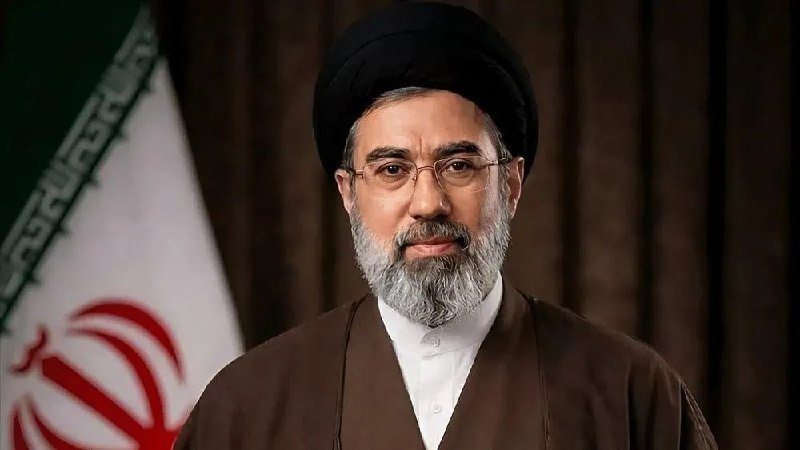
At 02:44 UTC on 4 July 2026, Tasnim News broadcast footage of a coffin being moved to a stand inside a central Tehran mosque. Forty minutes earlier, the same state outlet had shown mourning caravans filing in. The corpse belongs to a man the broadcaster is calling a "martyred leader of the revolution." No name appears in the thread. No cause of death is given. The framing is.
This is the textbook operating mode of the Islamic Republic's domestic media: an event stripped of identifying detail and rebuilt as liturgy. Theatrical ritual is doing the work that a press conference would do elsewhere. The Republic is comfortable, even reliant, on that displacement.
What we are actually watching
Tasnim, the news agency linked to the Islamic Revolutionary Guard Corps, has carried at least seven items in roughly three hours — from doors opening, to the arrival of convoys, to pilgrims thickening, to the coffin on its stand. The progression is choreographed. The caption language is uniform: must rise, martyr, mosque. Even the descriptive photography reads as cue sheet rather than news.
The point is not that the gathering is unreal. Mass turnout at Iranian state funerals is a documented phenomenon; the 2020 mourning for Qassem Soleimani drew millions across multiple cities. The point is the production discipline: which shots are released, in which order, with which captions, and which questions remain unanswered.
Counter-reads worth naming
Two plausible readings compete with the ceremonial one this publication finds most parsimonious.
First, the counter-elite reading: in an administration layered between the Supreme Leader, the IRGC, the regular army, parliament, and the office of the presidency, a high-status funeral is also a realignment ritual. Whose body is on the stand, who carries it, who is absent from the cameras — these are signals that matter inside the building.
Second, the security-services reading: with Iran still operating under the overhang of the June strikes, and with a successor nuclear file unresolved, a Tehran mosque is also a soft-target. The choreography Tasnim is publishing is, among other things, an operational announcement: here is the route, here is the timing, here is the queue. That has intelligence value to anyone watching.
Neither contradicts the dominant frame. Both sharpen it.
Martyrdom as state infrastructure
In the forty-seven years since the revolution, martyrdom has been repurposed from a Shi'a devotional category into a working instrument of state. It justifies military posture. It subsidises recruitment. It narrates sanctions as honour. It absorbs the political cost of casualty. It explains, in the register the state prefers, why a given scientist, general, or official dies young.
Theatrical mourning is the visible layer of that infrastructure. The invisible layer is the budget — clerical foundations, revolutionary foundations, martyrs' foundations, the bonyads — that administers inheritance, education stipends, and housing to the families of the dead. The Republic does not merely commemorate sacrifice. It transacts in it.
What remains genuinely uncertain
The thread does not name the deceased. It does not state a cause of death, a date of the killing, or an institutional affiliation beyond "leader of the revolution." It does not specify which mosque in Tehran is hosting the ceremony, nor which branches of the security services are represented in the carrying party. Independent Western wire reporting on the identity of the figure, the circumstances, and the official casualty statement is not present in this thread. Until those are independently corroborated, the operational claims in Tasnim's coverage remain the property of Tasnim's coverage.
That is the structural point the cable tends to skip. A ceremony broadcast without a press conference is still, formally, a press conference. The unanswered questions are the briefing.
Desk note: Monexus read Tasnim as primary document and as performance, not as neutral wire. Where the thread permits only state-source framing, this article flags what that framing does not disclose.
Wire provenance
This editorial synthesis draws on the following public wire/social posts:
- https://t.me/s/tasnimnews_en